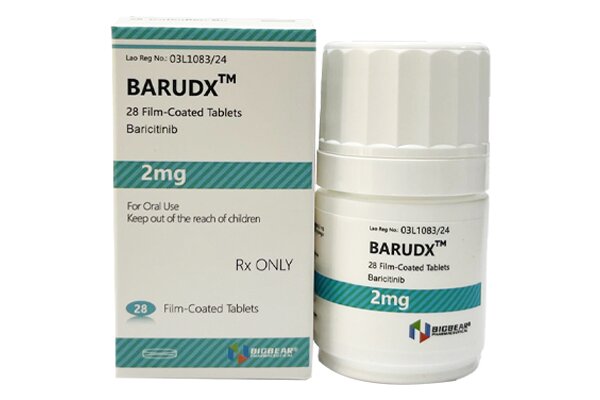
Approval Announcement
INDIANAPOLIS, June 1, 2018 /PRNewswire/ -- Eli Lilly and Company (NYSE: LLY) and Incyte Corporation (NASDAQ: INCY) announced that the U.S. Food and Drug Administration (FDA) has approved the 2-mg dose of Olumiant (baricitinib), a once-daily oral medication, for the treatment of adults with moderately-to-severely active rheumatoid arthritis (RA) who have had an inadequate response to one or more tumor necrosis factor (TNF) inhibitor therapies.
Recommended Use and Dosing
Recommended Dose: Olumiant 2 mg once daily
Monotherapy or Combination: Olumiant may be used as monotherapy or in combination with methotrexate (MTX) or other non-biologic disease-modifying antirheumatic drugs (DMARDs).
Contraindicated Combinations: Use of Olumiant in combination with other Janus kinase (JAK) inhibitors, biologic DMARDs (bDMARDs), or potent immunosuppressants such as azathioprine and cyclosporine is not recommended.
Expert Commentary
“We are pleased to provide RA patients in the U.S. an effective treatment option with Olumiant, as people with RA who have had an inadequate response to TNF inhibitors are generally considered to be some of the most difficult to treat RA patients,” said Christi Shaw, president, Lilly Bio-Medicines.
Basis for Approval: RA-BEACON Clinical Trial
The approval was supported by data from the RA-BEACON study, a randomized, double-blind, placebo-controlled trial.
Study Design
Participants: 527 adult patients with moderately-to-severely active RA who had an inadequate response or intolerance to one or more TNF inhibitor therapies. Patients could have had prior therapy with other bDMARDs.
Intervention: Patients were randomly assigned to receive Olumiant 2 mg, baricitinib 4 mg, or placebo, in addition to their conventional DMARD therapy.
Key Efficacy Results at Week 12
ACR20 Response Rate: Significantly higher in Olumiant-treated patients versus placebo (49% vs. 27%).
Early Symptom Relief: ACR20 responses were observed as early as Week 1.
Physical Function Improvement: Significant improvements were reported in the Health Assessment Questionnaire Disability Index (HAQ-DI) for Olumiant-treated patients (average pre-treatment score 1.71, Week 12 score 1.31) compared to placebo-treated patients (average pre-treatment score 1.78, Week 12 score 1.59).
Safety Profile
Boxed Warning
The U.S. FDA-approved labeling for Olumiant includes a Boxed Warning for the following risks:
Serious infections
Malignancies
Thrombosis
Serious Risks and Warnings
Serious Infections: Cases leading to hospitalization or death, including tuberculosis, bacterial, invasive fungal, viral, and other opportunistic infections, have occurred.
Malignancies: Lymphoma and other malignancies have been observed.
Thrombosis: Cases including deep venous thrombosis, pulmonary embolism, and arterial thrombosis (some fatal) have occurred.
Other Warnings and Precautions
Gastrointestinal perforations
Laboratory abnormalities (including neutropenia, lymphopenia, anemia, liver enzyme elevations, lipid elevations)
Warning against the use of live vaccines
Most Common Adverse Events (≥1% in placebo-controlled trials)
Upper respiratory tract infections, nausea, herpes simplex, and herpes zoster.
Post-Approval Commitment
As part of the approval, the companies have agreed to conduct a randomized controlled clinical trial to evaluate the long-term safety of baricitinib in patients with rheumatoid arthritis.