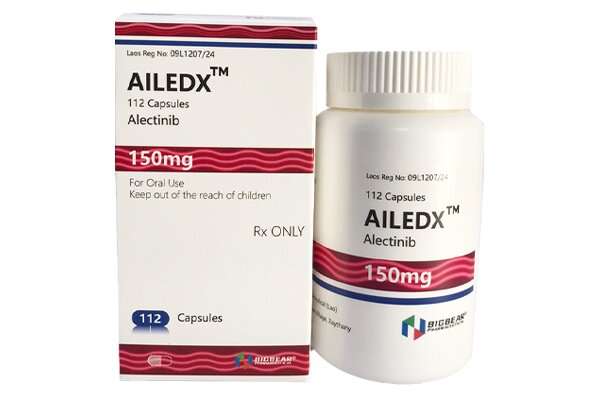
FDA Approval Announcement
December 11, 2015 -- The U.S. Food and Drug Administration today approved Alecensa (alectinib) to treat people with advanced (metastatic) ALK-positive non-small cell lung cancer (NSCLC) whose disease has worsened after, or who could not tolerate treatment with, another therapy called Xalkori (crizotinib).
Background on ALK-Positive NSCLC
Lung cancer is the leading cause of cancer death in the United States, with an estimated 221,200 new diagnoses and 158,040 deaths in 2015, according to the National Cancer Institute. An ALK (anaplastic lymphoma kinase) gene mutation can occur in several different types of cancer cells, including lung cancer cells. ALK gene mutations are present in about 5 percent of patients with NSCLC. In metastatic cancer, the disease spreads to new parts of the body; for ALK-positive NSCLC metastatic patients, the brain is a common site of spread.
FDA Official Commentary
“Today’s approval provides a new therapy for a group of patients who would have few treatment options once their disease no longer responds to treatment with Xalkori,” said Richard Pazdur, M.D., director of the Office of Hematology and Oncology Products in the FDA’s Center for Drug Evaluation and Research. “In addition to the primary effect on tumors in the lung, Alecensa clinical trials provide evidence of an effect on tumors that had spread to the brain, which is an important effect for clinicians to understand.”
Mechanism of Action
Alecensa is an oral medication that blocks the activity of the ALK protein, which may prevent NSCLC cells from growing and spreading.
Clinical Trial Basis for Approval
The safety and efficacy of Alecensa were studied in two single-arm clinical trials of patients with metastatic ALK-positive NSCLC whose disease was no longer controlled by Xalkori. Participants received Alecensa twice daily, and the drug’s effect on lung tumors was measured:
In the first study, 38% of participants had partial tumor shrinkage, lasting an average of 7.5 months.
In the second study, 44% of participants had partial tumor shrinkage, lasting an average of 11.2 months.
For participants with measurable brain metastases, 61% had complete or partial reduction in brain tumors, lasting an average of 9.1 months.
Adverse Reactions
Common side effects: Fatigue, constipation, edema (swelling), and myalgia (muscle pain).
Serious side effects: Liver problems, severe or life-threatening lung inflammation, very slow heartbeats, severe muscle problems, and sunburn with sun exposure.
Regulatory Designations and Approval Pathway
Alecensa was approved via the accelerated approval pathway, which allows FDA approval for serious/life-threatening diseases based on evidence of a clinically meaningful outcome (here, tumor response and duration of response). A confirmatory study is required to verify clinical benefit.
It received breakthrough therapy designation and priority review status to expedite development and review.
It also received orphan drug designation, which provides incentives to support development of drugs for rare diseases.