
BIGBEAR
PHARMACEUTICAL
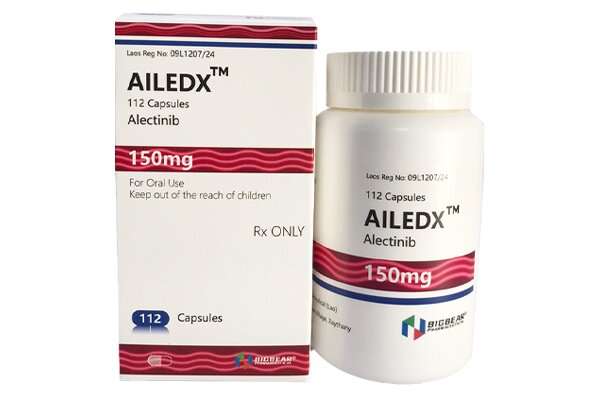
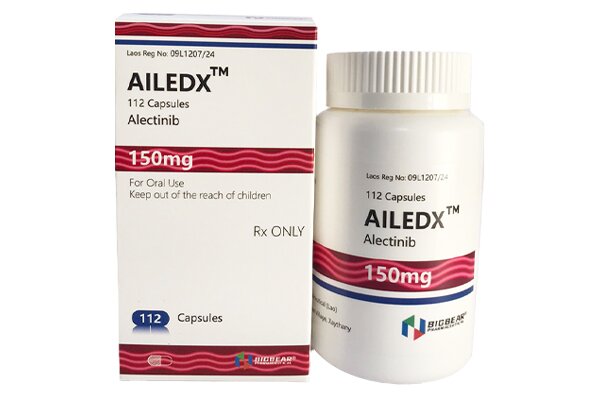
Alectinib is a tyrosine kinase inhibitor that exerts its effects by selectively inhibiting the activities of anaplastic lymphoma kinase (ALK) and RET.

 AuthenticGuaranteeFast DeliveryPrivacy
 In non-clinical studies, alectinib can block the phosphorylation of ALK and the activation of its downstream signaling proteins (e.g., STAT3 and AKT), thereby inhibiting the proliferation of tumor cells.
This product, as monotherapy, is indicated for the treatment of patients with anaplastic lymphoma kinase (ALK)-positive locally advanced or metastatic non-small cell lung cancer (NSCLC).
This product must be used in medical institutions with experience in its administration and under the guidance of specialized healthcare professionals. Before initiating treatment, patients must have a confirmed ALK-positive status using a fully validated detection method.
Administration: The hard capsules should be taken with food, swallowed whole, and must not be opened or dissolved before ingestion.
Dose: The recommended dose is 600 mg (four 150 mg capsules) orally twice daily, resulting in a total daily dose of 1200 mg (see [Pharmacokinetics]).
Treatment should continue until disease progression or the occurrence of intolerable toxicity.
Missed dose: If a scheduled dose is missed, take it as soon as possible unless the next dose is due within 6 hours.
Vomiting after administration: If vomiting occurs after taking a dose, do not take an additional dose; proceed with the next scheduled dose.
If adverse events occur during treatment, temporary interruption, dose reduction, or permanent discontinuation may be required. Doses should be reduced gradually by 150 mg per adjustment based on patient tolerance. If a patient cannot tolerate a dose of 300 mg twice daily, permanent discontinuation is recommended.
Standard Dose: 600 mg twice daily.
First Reduction: 450 mg twice daily.
Second Reduction: 300 mg twice daily.
Immediately discontinue treatment. If no other cause of ILD/non-infectious pneumonia is identified, permanently discontinue treatment.
Withhold treatment until recovery to baseline or ≤ Grade 1 (<3×ULN), then resume at the next lower dose level according to the general dose reduction scheme.
Permanently discontinue treatment.
Withhold treatment until recovery to baseline or ≤1.5×ULN, then resume at the next lower dose level according to the general dose reduction scheme.
Withhold treatment until serum creatinine recovers to ≤1.5×ULN, then resume at the next lower dose level according to the general dose reduction scheme.
Permanently discontinue treatment.
Withhold treatment until bradycardia recovers to ≤ Grade 1 (asymptomatic) or heart rate ≥60 bpm:
1.If bradycardia is caused by a concomitant medication, discontinue or adjust the offending drug, then resume treatment at the previous dose once recovery occurs.
2.If no offending drug is identified or cannot be discontinued, resume treatment at the next lower dose level according to the general dose reduction scheme once recovery occurs.
Permanently discontinue treatment if no offending drug is identified.
If an offending drug is identified, discontinue or adjust the drug, then resume treatment at the next lower dose level according to the general dose reduction scheme once recovery occurs, and monitor closely. If bradycardia recurs, permanently discontinue treatment.
Withhold treatment until recovery to ≤2.5×ULN, then resume at the previous dose.
Withhold treatment until recovery to ≤2.5×ULN, then resume at the next lower dose level according to the general dose reduction scheme.
Abbreviations:
ALT = Alanine Aminotransferase
AST = Aspartate Aminotransferase
CPK = Creatine Phosphokinase
ULN = Upper Limit of Normal
CTCAE = National Cancer Institute (NCI) Common Terminology Criteria for Adverse Events
bpm = beats per minute
The safety and efficacy of this product in children and adolescents (<18 years) have not been established.
No dose adjustment is required for patients aged ≥65 years.
No dose adjustment is needed for patients with mild to moderate renal impairment. No studies have been conducted in patients with severe renal impairment, but since renal excretion of alectinib is negligible, no dose adjustment is required.
No dose adjustment is needed for patients with mild (Child-Pugh A) or moderate (Child-Pugh B) hepatic impairment. For patients with severe (Child-Pugh C) hepatic impairment, the recommended dose is 450 mg orally twice daily (total daily dose of 900 mg).
Females of reproductive potential, or female partners of males receiving this treatment, must use highly effective contraception during treatment and for at least 3 months after the last dose of this product.
Females of reproductive potential must use contraception while taking this product. No clinical studies have been conducted in pregnant women. Based on its mechanism of action, this product may cause fetal harm if administered during pregnancy.If a female patient or the female partner of a male patient becomes pregnant during treatment or within 3 months after the last dose, contact a healthcare provider immediately, who will inform them of the potential risk to the fetus.
In animal studies, alectinib caused embryo-fetal toxicity.
The safety of this product during labor and delivery has not been established.
It is unknown whether alectinib is excreted in human milk. No studies have evaluated the effects of this product on milk production or its excretion in breast milk. Since many drugs are excreted in human milk and may cause harm to the infant, lactating women are advised to discontinue breastfeeding during treatment with this product.
The safety and efficacy of this product in patients under 18 years of age have not been established.
Population pharmacokinetic analysis of patients aged 21 to 83 years showed that age does not affect the exposure to this product.
The most common adverse drug reactions (≥20%) include:
Constipation (36%).
Edema (34%), including peripheral edema, generalized edema, eyelid edema, and periorbital edema.
Myalgia (31%), including myalgia and musculoskeletal pain.
Nausea (22%).
Increased bilirubin (21%), including increased blood bilirubin, hyperbilirubinemia, and increased conjugated bilirubin.
Anemia (20%), including anemia and decreased hemoglobin and hematocrit.
Rash (20%), including rash, maculopapular rash, acneiform dermatitis, erythema, generalized rash, papular rash, pruritic rash, and macular rash.
This product is contraindicated in patients with known hypersensitivity to alectinib or any of its excipients.
Cases of ILD/non-infectious pneumonia have been reported in clinical trials of this product.
Monitor patients for pulmonary symptoms suggestive of non-infectious pneumonia.
If ILD/non-infectious pneumonia is confirmed, immediately interrupt treatment. If no other potential cause is identified, permanently discontinue the product.
In pivotal clinical trials, elevations in ALT and AST (>5×ULN) and total bilirubin (>3×ULN) were observed (see [Adverse Reactions]). Most events occurred within the first 3 months of treatment.
3 patients with Grade 3–4 ALT/AST elevations developed drug-induced liver injury.
1 patient experienced concurrent ALT/AST elevations (>3×ULN) and total bilirubin elevation (≥2×ULN) with normal alkaline phosphatase.
Monitoring and Management:
Monitor liver function (ALT, AST, total bilirubin) every 2 weeks for the first 3 months, then periodically thereafter, as events may occur after 3 months.
For patients with increased liver enzymes or bilirubin, perform more frequent monitoring.
Withhold treatment based on the severity of adverse reactions, then resume at a reduced dose or permanently discontinue.
Myalgia, musculoskeletal pain, and CPK elevations (including 3 serious events) have been reported in pivotal clinical trials.
Monitoring and Management:
Advise patients to report any unexplained myalgia, tenderness, or weakness.
Assess CPK levels every 2 weeks for the first month, then clinically as needed based on patient-reported symptoms.
Withhold treatment based on the severity of CPK elevation, then resume at the same or reduced dose .
For Grade 4 toxicity: Permanently discontinue treatment.
For Grade 3 toxicity: Withhold treatment until recovery to ≤1.5×ULN, then resume at a reduced dose.
Treatment with this product can cause symptomatic bradycardia.
Monitor heart rate and blood pressure regularly.
Asymptomatic bradycardia does not require dose adjustment.
For symptomatic or life-threatening bradycardia: Evaluate concomitant medications known to cause bradycardia or hypotension, and adjust the dose of this product as described in Table 2.
Photosensitivity reactions to sunlight have been reported in clinical trials.
Advise patients to avoid prolonged sun exposure during treatment and for 7 days after the last dose.
Recommend using broad-spectrum sunscreen and lip balm (SPF ≥50) to protect against UVA and UVB radiation and prevent sunburn.
This product may cause fetal harm when administered to pregnant women. In animal studies, alectinib demonstrated embryo-fetal toxicity in rats and rabbits.
Females of reproductive potential, or female partners of males receiving this treatment, must use highly effective contraception during treatment and for at least 3 months after the last dose.
None reported.
This product may have a minor impact on the ability to drive or operate machinery.
Caution patients to be vigilant when driving or operating machinery, as symptomatic bradycardia (e.g., syncope, dizziness, hypotension) or visual disturbances may occur during treatment.
If any issues arise, please contact us immediately.
Email:laosbigbear@gmail.com
Alectinib is a prescription medicine used to treat people with NSCLC:
1.that is caused by an abnormal ALK gene, and
2.that has spread to other parts of your body
It is not known if alectinib is safe and effective in children.
Avoid spending time in the sunlight during treatment with alectinib and for 7 days after the final dose of alectinib. You may burn more easily and get severe sunburns. Use sunscreen and lip balm with an SPF 50 or greater to help protect against sunburn.
Before you take alectinib, tell your healthcare provider about all of your medical conditions, including if you:
have liver problems
have lung or breathing problems
have a slow heartbeat
Take alectinib exactly as your healthcare provider tells you to take it. Do not change your dose or stop taking alectinib unless your healthcare provider tells you to.
Your healthcare provider may change your dose, temporarily stop, or permanently stop treatment with alectinib if you have side effects.
Take alectinib 2 times a day.
Take alectinib with food.
Swallow alectinib capsules whole. Do not open or dissolve the capsule contents.
If you vomit after taking a dose of alectinib, do not take an extra dose. Take your next dose at your regular time.
Copyright2024@ BIGBEAR All right reserved Bigbear | Bigbear Pharmaceutical | Bigbear Laos


