
BIGBEAR
PHARMACEUTICAL
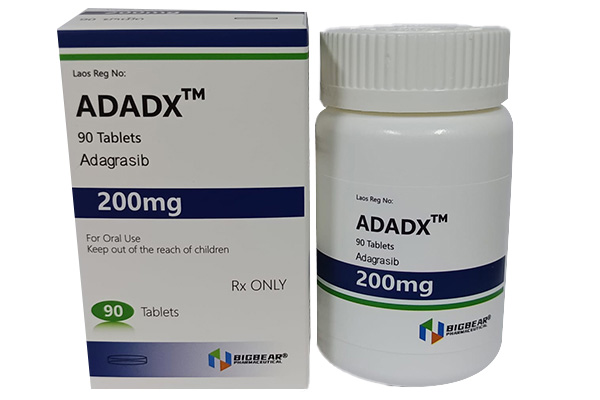
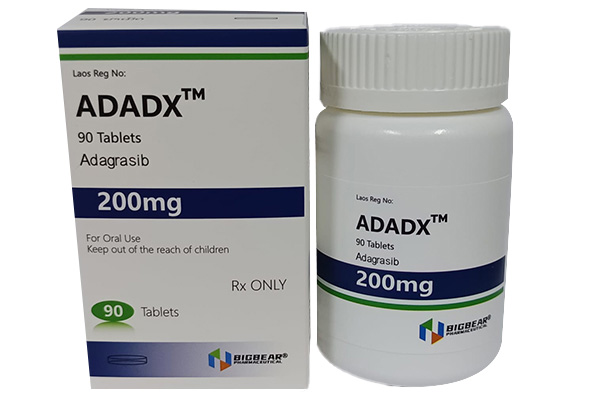
Adagrasib is a highly selective, orally administered KRAS G12C inhibitor used for the treatment of patients with advanced cancers harboring a KRAS G12C mutation.

 AuthenticGuaranteeFast DeliveryPrivacy
 Adagrasib covalently and irreversibly binds to the cysteine residue at position 12 of the KRAS G12C mutant protein, locking KRAS in its inactive GDP-bound state. This action thereby blocks the transduction of downstream MAPK signaling pathways, inhibits tumor cell proliferation, and induces apoptosis.
This medicinal product is indicated as monotherapy for the treatment of adult patients with advanced non-small cell lung cancer (NSCLC) harboring a KRAS G12C mutation, whose disease has progressed on or after at least one prior systemic therapy. Treatment should only be initiated upon confirmation of KRAS G12C mutation status using a validated test.
For oral use. May be taken with or without food. Swallow tablets whole with water. For patients with dysphagia, tablets may be dispersed in 120mL of non-carbonated room temperature water (no other liquids should be used), stirred until dispersed, and immediately administered. The container should be rinsed with 120mL of water and the contents consumed. Tablet fragments must not be chewed.
The recommended dose is 600mg (three 200mg tablets) taken orally twice daily until disease progression or unacceptable toxicity.
If a dose is missed by less than 4 hours, take the missed dose immediately. If a dose is missed by more than 4 hours, skip the missed dose and take the next dose at the regularly scheduled time. If vomiting occurs after taking the dose, do not take an additional dose; resume dosing at the next scheduled time.
For severe or intolerable adverse reactions, dose reduction should be implemented as follows:
First dose reduction: 400mg (two 200mg tablets) twice daily.
Second dose reduction: 600mg (three 200mg tablets) once daily.
Specific dose modifications corresponding to adverse reactions should follow the guidance in the table (e.g., for Grade 3/4 diarrhea, nausea, or vomiting, withhold dose until symptoms resolve to ≤ Grade 1 or baseline, then resume at the next lower dose level).
No specific antidote is available. In case of overdose, treatment should be withheld and supportive care initiated.
The safety and efficacy of this medicinal product in patients aged 0-18 years have not been established. Use in this population is not recommended.
No clinically relevant differences in safety or efficacy were observed between patients < 65 years and those ≥ 65 years. Data in patients ≥ 75 years are limited; no dose adjustment is required.
No dose adjustment is required for patients with mild, moderate, or severe hepatic impairment (Child-Pugh Class A-C) or for patients with renal impairment.
There are no data on the use of this medicinal product in pregnant women. Animal reproductive toxicity data are insufficient. Use is not recommended.
It is unknown whether this medicinal product or its metabolites are excreted in human milk. A risk to the breastfed child cannot be excluded. Breastfeeding is contraindicated during treatment.
Effective contraception must be used during treatment and for at least 5 days after the last dose.
Clinical data on the effects of this medicinal product on human fertility are not available.
Diarrhea (65.2%, Grade ≥3: 5.1%), nausea (59.9%, Grade ≥3: 4.6%), fatigue (54.3%, Grade ≥3: 9.0%), vomiting (50.3%, Grade ≥3: 3.3%), decreased appetite (32.9%), anemia (32.4%, Grade ≥3: 7.2%), blood creatinine increased (31.7%), AST increased (29.0%, Grade ≥3: 4.6%), ALT increased (28.3%, Grade ≥3: 6.6%), peripheral edema (23.0%), hyponatremia (17.1%, Grade ≥3: 4.0%), dizziness (17.1%), etc.
Pneumonia (3.9%, Grade ≥3: 1.1%), lymphocyte count decreased (9.9%, Grade ≥3: 3.7%).
QTc Interval Prolongation: Incidence 11.0% (Grade ≥3: 3.4%). May lead to life-threatening arrhythmias. Electrocardiogram monitoring is required.
Hepatotoxicity: Incidence 41.1% (Grade ≥3: 11.3%). Manifestations include elevated transaminases and bilirubin. Median time to onset: 22-63 days.
Severe Cutaneous Adverse Reactions (SCARs): Including Stevens-Johnson syndrome (SJS), toxic epidermal necrolysis (TEN), etc. May be life-threatening.
Gastrointestinal Reactions: Severe cases may lead to dehydration and acute kidney injury. Prompt supportive care is required.
Hypersensitivity to adagrasib or to any of the excipients.
Concomitant use with CYP3A substrates with a narrow therapeutic window (e.g., alfuzosin, amiodarone, cisapride, etc.) may lead to serious or life-threatening adverse reactions.
In the event of diarrhea, nausea, or vomiting, prompt administration of antidiarrheals, antiemetics, and fluid/electrolyte support is required. Based on severity, treatment should be temporarily withheld, dose reduced, or permanently discontinued.
Hepatotoxicity Monitoring: Liver function (AST, ALT, alkaline phosphatase, bilirubin) should be assessed prior to treatment initiation, monthly during the first 3 months of treatment, and subsequently as clinically indicated. In case of liver function abnormalities, dose adjustment or permanent discontinuation is required based on severity.
Baseline electrocardiogram (ECG) is required prior to treatment initiation, with periodic monitoring during treatment. Avoid use in patients with congenital long QT syndrome or a history of torsades de pointes. Concomitant use with QT-prolonging medicinal products should be avoided; if concomitant use cannot be avoided, increased ECG monitoring frequency is required.
Avoid concomitant use with strong CYP3A inducers (e.g., rifampin, carbamazepine, St. John's wort) as this may reduce efficacy.
Avoid concomitant use with strong CYP3A inhibitors (e.g., itraconazole, clarithromycin) as this may increase plasma concentration.
This medicinal product is a strong CYP3A4 inhibitor. Concomitant use with sensitive CYP3A, CYP2C9, or CYP2D6 substrates or P-glycoprotein (P-gp) substrates (e.g., digoxin) should be avoided unless otherwise recommended in the prescribing information.
Suspected SCARs (e.g., rash, blisters, mucosal ulceration, fever) require immediate treatment discontinuation and referral for specialist evaluation. Upon confirmed diagnosis, this medicinal product should be permanently discontinued.
This medicinal product may cause dizziness and fatigue. Patients experiencing these symptoms should avoid driving or operating machinery.
If any issues arise, please contact us immediately.
Email:laosbigbear@gmail.com
Adagrasib is used in adults to treat non-small cell lung cancer.
Adagrasib is also used in adults to treat colorectal cancer.
Adagrasib is used when the cancer has spread to other parts of the body (metastatic), or cannot be removed by surgery.
Adagrasib can be used alone or in combination with other cancer drugs.
Adagrasib is sometimes given after other cancer treatments did not work or have stopped working.
Your doctor may perform a biopsy to test your cancer for a specific genetic marker (an abnormal "KRAS G12C" gene).
Adagrasib may also be used for purposes not listed in this medication guide.
Use the medicine as soon as you can, but skip the missed dose if you are more than 4 hours late for the dose. Do not use two doses at one time.
Follow your doctor's instructions about any restrictions on food, beverages, or activity.
Adagrasib can cause a serious heart problem. Your risk may be higher if you also use certain other medicines for infections, asthma, heart problems, high blood pressure, depression, mental illness, cancer, malaria, or HIV.
Sometimes it is not safe to use certain medicines at the same time. Some drugs can affect your blood levels of other drugs you use, which may increase side effects or make the medicines less effective.
Other drugs may affect adagrasib, including prescription and over-the-counter medicines, vitamins, and herbal products. Tell your doctor about all other medicines you use.
Copyright2024@ BIGBEAR All right reserved Bigbear | Bigbear Pharmaceutical | Bigbear Laos


