FDA Approval Announcement
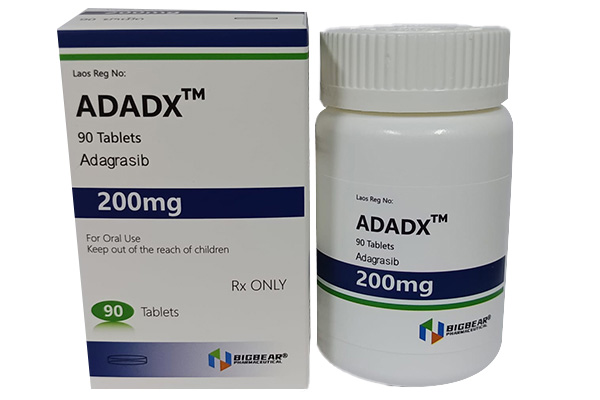
On June 21, Bristol Myers Squibb announced that the U.S. FDA has granted accelerated approval to KRAZATI (adagrasib) in combination with Eli Lilly’s Erbitux (cetuximab) for the treatment of adult patients with locally advanced or metastatic colorectal cancer (CRC) harboring a KRAS G12C mutation detected by an FDA-approved test, who have received prior chemotherapy with fluoropyrimidine-, oxaliplatin-, and irinotecan-based regimens.
This indication is approved under accelerated approval based on objective response rate (ORR) and duration of response (DOR). Continued approval is contingent upon verification and description of clinical benefit in confirmatory trials. This marks the second FDA-approved indication for KRAZATI.
In December 2022, KRAZATI received its initial accelerated approval for the treatment of adult patients with locally advanced or metastatic KRAS G12C-mutated non-small cell lung cancer (NSCLC) who have received at least one prior systemic therapy.
Comparison with Other KRAS Inhibitors
KRAZATI is the second KRAS-targeted agent approved in the U.S., following Amgen’s Lumakras, which received accelerated approval in May 2021 as second-line monotherapy for KRAS G12C-mutated NSCLC.
Last December, the FDA declined to grant regular approval to Lumakras for NSCLC after its confirmatory trial failed to meet its endpoint. Amgen has recently resubmitted for full approval following positive results from the Phase 3 CodeBreaK 200 trial, which demonstrated significant improvement in progression-free survival.
Clinical Background of Colorectal Cancer
Colorectal cancer (CRC) arises in the colon or rectum, components of the human digestive or gastrointestinal tract.KRAS is the most commonly mutated oncogene in human cancers, driving tumor development in up to 50% of CRC patients.The KRAS G12C mutation occurs in approximately 3–4% of CRC cases.
Mechanism of Action of Adagrasib
Adagrasib is a highly selective, potent oral small-molecule inhibitor of KRAS G12C, designed to sustain target inhibition by irreversibly locking the mutant protein in its inactive conformation.
Combination therapy with adagrasib plus cetuximab showed enhanced antitumor activity compared with either agent alone in multiple cell line-derived and patient-derived xenograft models of KRAS G12C-mutated CRC.
Companion Diagnostic
Bristol Myers Squibb has collaborated with QIAGEN to develop a tissue-based companion diagnostic (CDx) for KRAZATI, which is now commercially available.
Basis for Approval: Phase 2 KRYSTAL-1 Study (NCT03785249)
The accelerated approval was supported by data from the single-arm, open-label Phase 2 KRYSTAL-1 trial enrolling patients with locally advanced or metastatic KRAS G12C-mutated CRC who had received prior fluoropyrimidine, oxaliplatin, irinotecan, and (if eligible) VEGF inhibitor therapy.
Patients received:
Adagrasib 600 mg orally twice daily
Plus cetuximab intravenously every 2 weeks or weeklyuntil disease progression or unacceptable toxicity.
Key Efficacy Results
Among 94 enrolled patients:
ORR: 34% (95% CI: 25–45)
All responses were partial responses
Median DOR: 5.8 months (95% CI: 4.2–7.6)
31% of responders had DOR ≥ 6 months
Median PFS: 6.9 months
Median OS: 15.9 months
Safety Profile
Most Common Adverse Reactions
Rash, nausea, diarrhea, vomiting, fatigue, musculoskeletal pain, hepatotoxicity, headache, dry skin, abdominal pain, decreased appetite, edema, anemia, and cough.
Common Grade 3/4 Laboratory Abnormalities
Decreased lymphocytes, potassium, magnesium, hemoglobin, and albumin; increased aspartate aminotransferase, lipase, and alanine aminotransferase.