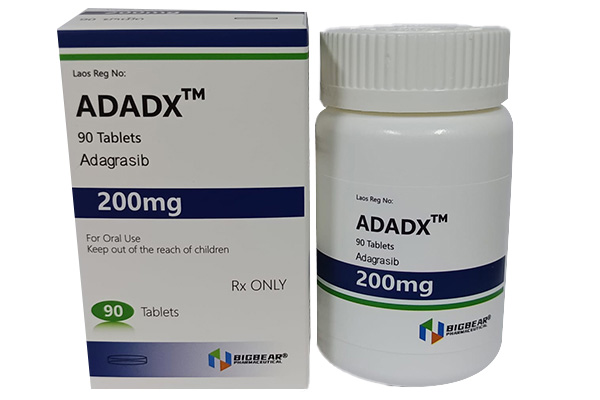
FDA Approval Announcement
On December 12, 2022, Mirati Therapeutics announced that the U.S. Food and Drug Administration (FDA) granted accelerated approval to Krazati (adagrasib, investigational code: MRTX849).It is the second targeted therapy for KRAS G12C mutation, following Lumakras.Full approval of this accelerated indication may depend on the results of future confirmatory trials.
Approved Indication
Krazati is indicated for the treatment of adult patients with locally advanced or metastatic non-small cell lung cancer (NSCLC) harboring a KRAS G12C mutation detected by an FDA-approved test, who have received at least one prior systemic therapy.
Companion Diagnostics
The FDA also approved two companion diagnostics for Krazati:
Qiagen therascreen KRAS RGQ PCR Kit (tissue)
Agilent Resolution ctDx FIRST Assay (plasma)
If no mutation is detected in a plasma specimen, tumor tissue testing should be performed.
Mechanism of Action
Krazati is a highly selective and potent oral small-molecule inhibitor of KRAS G12C.
Basis for Approval: Phase 2 KRYSTAL-1 Study (NCT03785249)
Accelerated approval was based on data from the open-label registration cohort of the Phase 2 KRYSTAL-1 study, which enrolled 112 adult patients with KRAS G12C-mutated NSCLC after prior systemic therapy.Patients received 600 mg of Krazati orally twice daily until disease progression or unacceptable toxicity.
Key Efficacy Results
After a median follow-up of 9 months, per blinded independent central review:
Objective Response Rate (ORR): 43% (95% CI: 34–53)
Disease Control Rate: 80% (95% CI: 71–87)
Median Duration of Response (DOR): 8.5 months (95% CI: 6.2–13.8)
58% of patients had a DOR of at least 6 months
Safety Profile
Most Common Adverse Reactions
Diarrhea, nausea, fatigue, vomiting, musculoskeletal pain, hepatotoxicity, renal impairment, dyspnea, edema, decreased appetite, cough, pneumonia, dizziness, constipation, abdominal pain, and QTc interval prolongation.
Common Laboratory Abnormalities
Lymphopenia, increased aspartate aminotransferase, decreased sodium, decreased hemoglobin, increased creatinine, decreased albumin, increased alanine aminotransferase, increased lipase, thrombocytopenia, decreased magnesium, and decreased potassium.