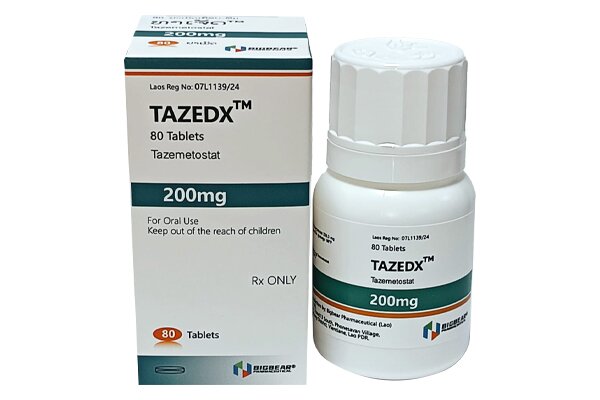
Tazemetostat is an antitumor agent, a potent and selective inhibitor of enhancer of zeste homolog 2 (EZH2), a histone methyltransferase, indicated for epithelioid sarcoma and follicular lymphoma.
Tazemetostat Warnings and Precautions
1. Risk of Secondary Malignancies
(1) Secondary malignancies (e.g., myelodysplastic syndrome [MDS], acute myeloid leukemia [AML], B-cell acute lymphoblastic leukemia [B-ALL], T-cell lymphoblastic lymphoma [T-LBL]) have been reported following initiation of Tazemetostat therapy.
(2) Monitor patients long-term for the development of secondary malignancies.
2. Fetal/Neonatal Morbidity and Mortality Risk
(1) May cause fetal harm. Animal studies have shown teratogenicity (e.g., skeletal abnormalities).
(2) Avoid pregnancy during treatment. Perform pregnancy testing in females of reproductive potential prior to initiating Tazemetostat. Females of reproductive potential should use effective non-hormonal contraception during therapy and for 6 months after the last dose. Male partners of such females should use effective contraception during therapy and for at least 3 months after the last dose. If used during pregnancy or if the patient becomes pregnant, apprise the patient of the potential hazard to the fetus.
Tazemetostat Common Adverse Reactions
1. Epithelioid sarcoma (≥20%): pain, fatigue, nausea, decreased appetite, vomiting, constipation, anemia, lymphopenia.
2. Follicular lymphoma (≥20%): fatigue, upper respiratory tract infection, musculoskeletal pain, nausea, abdominal pain, lymphopenia, hyperglycemia, leukopenia, neutropenia, thrombocytopenia, anemia.
Tazemetostat Drug Interactions
1. Tazemetostat is primarily metabolized by CYP3A.
2. Does not inhibit CYP isoenzymes 1A2, 2B6, 2C9, or 2D6 at clinically relevant concentrations.
3. Is a substrate of P-glycoprotein (P-gp), but not a substrate of breast cancer resistance protein (BCRP), organic cation transporter (OCT) 2, organic anion transporter (OAT) 3, multidrug and toxin extrusion (MATE) transporter 1, organic anion transporting polypeptide (OATP) 1B1, and OATP1B3.
4. Inhibits MATE1 and MATE2K, but does not inhibit P-gp, BCRP, OATP1B1, OATP1B3, OCT1, OCT2, OAT1, OAT3, or bile salt export pump (BSEP) at clinically relevant concentrations.
5. Drugs and food affecting hepatic microsomal enzymes:
(1) Strong or moderate CYP3A inhibitors: May increase systemic exposure and toxicity of Tazemetostat. Avoid concomitant use. If concomitant use with a strong or moderate CYP3A inhibitor is unavoidable, reduce the daily dose of Tazemetostat as follows:
Current dose 800 mg twice daily: reduce to 400 mg twice daily.
Current dose 600 mg twice daily: reduce to 600 mg once daily (administered in two divided doses, e.g., 400 mg in the morning and 200 mg in the evening).
Current dose 400 mg twice daily: reduce to 200 mg twice daily.
If the strong or moderate CYP3A inhibitor is discontinued, resume the Tazemetostat dose that was used prior to initiating the inhibitor after 3 elimination half-lives of the inhibitor have elapsed.
(2) Strong or moderate CYP3A inducers: May decrease systemic exposure of Tazemetostat and reduce its efficacy. Avoid concomitant use.
6. Drugs metabolized by hepatic microsomal enzymes:
CYP3A substrates: May decrease systemic exposure of the CYP3A substrate and reduce its efficacy.