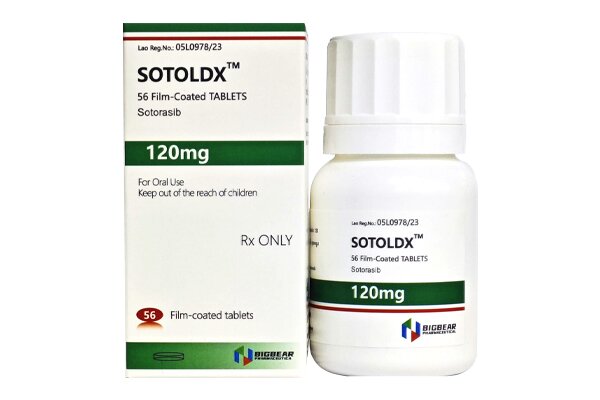
On January 17, 2025, Amgen announced that the U.S. Food and Drug Administration (FDA) has approved the combination of sottorazib (Lumakras) and panitumumab (Vectibix) for the treatment of adult patients diagnosed by FDA-approved methods with KRAS G12C-mutant metastatic colorectal cancer (mCRC) who have previously received chemotherapy based on fluoropyrimidine, oxaliplatin, and irinotecan. This approval is based on the pivotal Phase 3 CodeBreaK300 study, which demonstrated that sottorazib in combination with veectibix is the first and only targeted therapy combination for chemotherapy-refractory KRAS G12C-mutant metastatic colorectal cancer, showing superior progression-free survival (PFS) compared to the study's standard of care (SOC).
“Colorectal cancer is the third leading cause of cancer-related death in the United States, and less than one in five patients diagnosed with metastatic disease survive more than five years after diagnosis,” said Jay Bradner, MD, Executive Vice President of Research and Development at Amgen. “The combination of sotorazib (Lumakras) and victibi provides a biomarker-guided targeted combination therapy that more effectively slows disease progression compared to the standard treatment regimen studied. This new option validates the value of our combination therapy in improving the prognosis of patients with advanced KRAS G12C-mutant metastatic colorectal cancer.”
“Continued innovation and precision medicine are urgently needed to help with metastatic colorectal cancer,” said Michael Sapienza, CEO of the Colorectal Cancer Alliance. "This new combination therapy represents a significant breakthrough for patients with KRAS G12C-mutant metastatic colorectal cancer, providing a new and beneficial treatment option for those suffering from this devastating and challenging disease."
About Metastatic Colorectal Cancer (mCRC) and KRAS G12C Mutations
Colorectal cancer (CRC) is the second leading cause of cancer death worldwide and the third most common cancer diagnosed globally. Patients with previously treated metastatic colorectal cancer require more effective treatment options. For patients receiving third-line therapy, the median overall survival (OS) with standard therapy is less than one year, and the response rate is less than 10%. KRAS mutations are among the most common genetic alterations in colorectal cancer, and approximately 3%–5% of colorectal cancer cases are identified by FDA-approved biomarker testing as having KRAS G12C mutations.
About Sotorasirb (Lumakras)
Sortorasirb (Lumakras) received accelerated approval from the U.S. Food and Drug Administration (FDA) on May 28, 2021. On December 26, 2023, the FDA completed its review of Amgen's supplemental New Drug Application (sNDA), which sought full approval for sotorasistacilin (Lumakras), and issued a full response letter.
Furthermore, the FDA determined that the post-marketing requirements (PMRs) for comparing the safety and efficacy of the 960 mg daily dose with lower daily doses, as requested during the accelerated approval of sotorasistacilin (Lumakras), were met. The company stated that under accelerated approval, the dose of sotorasistacilin (Lumakras) for patients with KRAS G12C-mutant non-small cell lung cancer (NSCLC) remains 960 mg once daily.