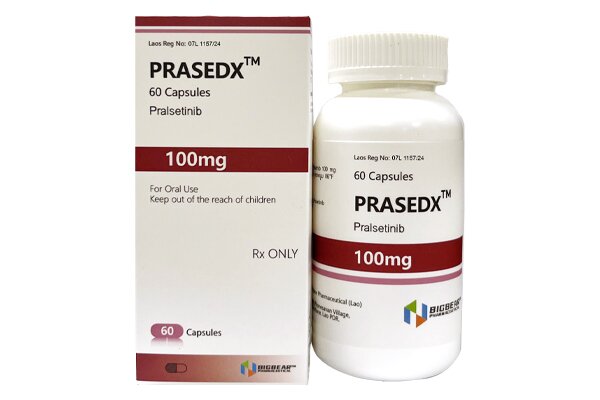
Pralsetinib is a receptor tyrosine kinase (RET) inhibitor. It was approved for marketing by the US FDA in 2020.
Side effects requiring immediate medical attention for pralatinib
If any of the following side effects occur while taking pralatinib, please seek immediate medical attention:
1. Common side effects
(1) Bleeding gums, blurred vision, chest pain, chills, cough, hemoptysis, dark urine, decreased or changed urine output, difficulty breathing or swallowing, dizziness, syncope, rapid or slow heartbeat, fever, malaise or feeling sick;
(2) Headache, increased menstrual flow or vaginal bleeding, pulse... Irregular heartbeat, joint pain, stiffness or swelling, loss of appetite, lower back, flank or abdominal pain, nausea, nervousness, nosebleeds, paralysis, tinnitus, persistent bleeding from wounds;
(3) Rapid weight gain, red or black tarry stools, red or dark brown urine, slow or fast heartbeat, severe stomach pain, swelling around the eyes, eyelid swelling, swelling of the feet or calves, facial swelling or edema;
(4) Increased bronchial secretions, unusual fatigue or weakness, vomiting, yellowing of the eyes or skin.
2. Less common side effects
(1) Black tarry stools, bladder pain, blood or cloudy urine, chest pain or tightness, confusion, difficulty urinating, burning or pain, frequent urge to urinate;
(2) Dizziness, lower back or flank pain, pale skin, sneezing, sore throat, ulcers, sores or white spots on the lips or inside the mouth, swollen glands, abnormal bleeding or bruising.
Mild Side Effects of Pralsetinib
If any of the following side effects persist or bother you while taking pralatinib, or if you have any questions about these side effects, please consult a healthcare professional:
1. More Common Side Effects
(1) Bone pain, burning, numbness, tingling, or aching sensations; altered taste; constipation; decreased appetite; difficulty moving; dry mouth; joint pain; weakness; loss of taste; muscle aches or cramps; muscle pain or stiffness.
(2) Neck pain; joint pain, swelling, or redness; swelling or inflammation of the mouth; tenderness; unsteadiness or clumsiness; watery or bloody diarrhea; weakness in the arms, hands, legs, or feet.
Side effects of pralistinib for healthcare professionals:
1. Respiratory system adverse reactions
Very common: Cough (including cough, sputum production, upper airway cough syndrome), dyspnea (22%), pneumonia (including pneumonia, atypical pneumonia, pulmonary infection, Pneumocystis pneumonia, bacterial pneumonia, cytomegalovirus pneumonia, Haemophilus influenzae pneumonia, influenza-associated pneumonia, streptococcal pneumonia).
Common: Cough (grade 3 or 4), pneumonia (grade 3 or 4).
Uncommon: Tuberculosis.
Incidence not reported: Interstitial lung disease, pneumonia (non-infectious).
2. Cardiovascular system adverse reactions
Very common: Hypertension of all grades, grade 3 or 4 hypertension (up to 21%), bleeding.
3. Hepatic adverse reactions
Very common: Elevated aspartate aminotransferase (AST), elevated alanine aminotransferase (ALT), elevated bilirubin.
Incidence not reported: Hepatotoxicity.
4. Hematologic Adverse Reactions
Very common: Neutropenia, lymphopenia, thrombocytopenia, decreased hemoglobin, grade 3 or 4 neutropenia, grade 3 or 4 lymphopenia, decreased albumin, increased potassium, thrombocytopenia.
Common: Decreased hemoglobin (grade 3 or 4), thrombocytopenia (grade 3 or 4), bleeding.
5. Tumor-Related Adverse Reactions
Incidence not reported: Tumor lysis syndrome.
6. Gastrointestinal Adverse Reactions
Very common: Constipation, diarrhea, dry mouth, abdominal pain (including abdominal discomfort, abdominal pain, epigastric pain, abdominal tenderness, epigastric discomfort), stomatitis (including mucosal inflammation, stomatitis, tongue ulcers) (up to 17%), nausea (17%), vomiting.
Common: Diarrhea, colitis, enteritis (grade 2 or 4), constipation (grade 3 or 4).
7. Musculoskeletal System Adverse Reactions
Very common: Musculoskeletal pain (including back pain, myalgia, arthralgia, limb pain, musculoskeletal pain, neck pain, non-cardiac chest pain, musculoskeletal chest pain, bone pain, musculoskeletal stiffness, arthritis, limb pain, spinal pain).
Incidence not reported: Elevated creatine kinase.
8. Metabolic System Adverse Reactions
Very common: Elevated alkaline phosphatase, decreased corrected calcium, decreased sodium, decreased phosphate, increased phosphate, decreased appetite.
9. Renal Adverse Reactions
Very common: Elevated creatinine.
10. Nervous System Adverse Reactions
Common: Headache (including migraine, tension headache), dizziness (including vertigo, postural dizziness, vertigo), peripheral neuropathy (including paresthesia, hyperesthesia, hypoesthesia, neuralgia, peripheral neuropathy, paresthesia, peripheral sensory neuropathy, polyneuropathy), taste disturbance/loss of taste, taste disorder.
11. Skin Adverse Reactions
Very common: Rash (including dermatitis, acneiform dermatitis, eczema, palmoplantar erythema sensory disturbance syndrome, rash, erythema, macules, maculopapules, papules, pustules).
12. Genitourinary Adverse Reactions
Common: Urinary tract infection.
13. Other Adverse Reactions
Very common: Fatigue/asthenia, fever, edema (including peripheral edema, facial edema, periorbital edema, eyelid edema, generalized edema, swelling).
Common: Fatigue/asthenia (grade 3 or 4).
Incidence not reported: Impaired wound healing, embryo-fetal toxicity.
Note: Pralsetinib has very common adverse reactions (10% or more); common adverse reactions (1%-10%); and uncommon adverse reactions (0.1%-1%).