
BIGBEAR
PHARMACEUTICALS
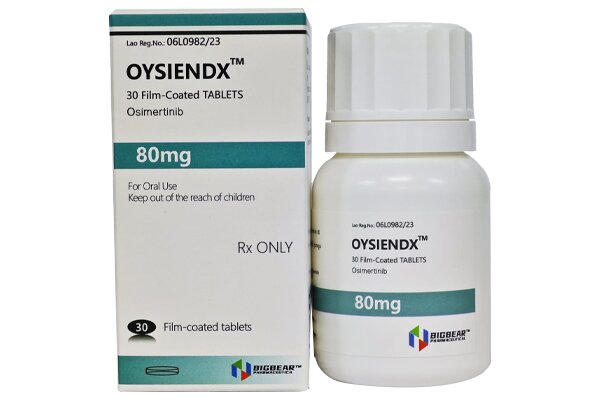
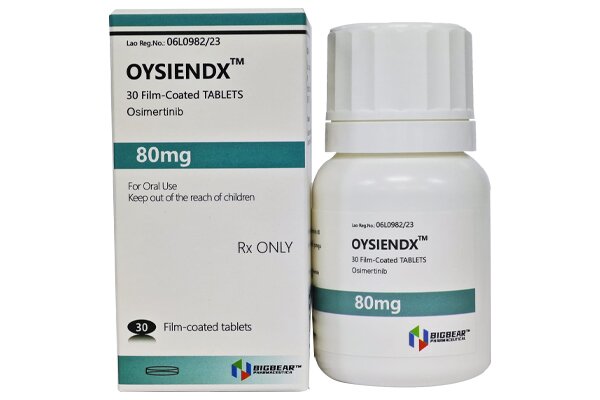
Osimertinib is a third-generation targeted therapy for lung cancer, specifically designed to treat non-small cell lung cancer driven by specific genetic mutations.

 AuthenticGuaranteeFast DeliveryPrivacy
 Unlike traditional chemotherapy, this drug primarily acts by interfering with the abnormal growth signals in cancer cells, which can both prolong patient survival and reduce damage to normal body cells.
For patients with advanced lung cancer:
1.Indicated for adult patients with locally advanced or metastatic NSCLC who have progressed on prior EGFR tyrosine kinase inhibitor therapy and are confirmed to harbor the EGFR T790M mutation via professional testing. This scenario typically occurs after resistance develops to initial targeted therapy.
2.For newly diagnosed patients: Can be used as first-line therapy in adult patients with locally advanced or metastatic NSCLC confirmed to have EGFR mutations via genetic testing.
Important Reminder: Whether for initial or subsequent treatment, the decision to use this drug must be strictly based on genetic testing results. EGFR genetic testing is the key to unlocking precision treatment, helping clinicians determine if patients are suitable for this novel targeted therapy.
Before using this medication, you must consult a qualified physician and must not use it without authorization. For safe medication use, patients should pay special attention to important information such as contraindicated populations and drug-drug interactions.
Recommended Daily Dose: The recommended fixed dose is 80 mg taken orally once daily, at regular intervals.
Standard Oral Administration: Swallow the tablet whole with a glass of warm water; do not crush, break, or chew the tablet.
Administration for Patients with Difficulty Swallowing: For patients who have difficulty swallowing whole tablets, the tablet may be placed in 50 mL of non-carbonated drinking water (e.g., cool boiled water). Keep the tablet intact in the water, do not crush it, and stir until evenly dispersed. Drink the resulting solution immediately, then rinse the container with an additional half glass of water (approximately 100 mL) and drink the rinse to ensure no residue remains. Do not use any other liquid to dissolve the tablet.
Nasogastric (NG) Tube Administration Procedure:
1.For initial dissolution, use 15 mL of non-carbonated water.
2.Stir until evenly dispersed and administer immediately via the NG tube.
3.Rinse the container with an additional 15 mL of water and administer via the NG tube.
4.Both steps must be completed within 30 minutes of placing the tablet in water.
5.Follow the specific instructions provided with the NG tube product for detailed administration.
6.Flush the tube with an appropriate amount of water after each use.
The specific dosage and administration must be strictly followed as directed by a physician; do not adjust without authorization.
If a dose is missed, take it as soon as you remember. However, if it is less than 12 hours until your next scheduled dose, skip the missed dose. It is recommended to take this medication at a fixed time each day; it can be taken with or without food, which does not affect efficacy.
Discontinue use immediately if the product's appearance changes (e.g., discoloration, deformation). Do not continue use if the tablets show any abnormal changes. Store the product out of reach of children during routine storage. Pay special attention to missed doses, overdose, or adverse reactions, and contact a physician promptly if any issues arise.
Contraception: Strict contraception is required during treatment and after discontinuation. Females should continue contraception for at least 2 months, and males for at least 4 months. Note that this medication may reduce the efficacy of hormonal contraceptives.
Pregnancy: Animal studies have shown that this drug may cause abnormal embryonic development, and data on its use in pregnant women are currently lacking. Use in pregnancy is contraindicated unless absolutely necessary.
Lactation: The drug components may pass into breast milk, potentially affecting infant development and causing adverse effects. It is recommended to temporarily suspend breastfeeding during treatment.
Fertility: Animal studies have found that the drug may impair reproductive system function, but relevant human data are currently unavailable.
The safety and efficacy of this medication in patients under 18 years of age have not been established, and relevant research data are currently lacking.
In terms of treatment efficacy, no significant differences were observed between patients aged 65 years and older and younger patients. However, data indicate that elderly patients are more likely to experience adverse reactions requiring dose adjustment (14.3% vs 8.4%) and have a higher incidence of severe adverse reactions (10.7% vs 7.6%).
Patients with mild (Child-Pugh A) or moderate (Child-Pugh B) hepatic impairment generally do not require dose adjustment.
The safety and efficacy of this drug in patients with severe hepatic impairment have not been established. Until more research data are available, use in patients with severe hepatic impairment is not recommended.
Patients with mild to severe renal impairment generally do not require dose adjustment, but two specific situations require special attention:
The safety and efficacy of this drug in patients with end-stage renal disease (creatinine clearance < 15 mL/min, calculated by formula) or those undergoing dialysis have not been established; these patients should use this medication with caution.
Common side effects include diarrhea, skin rash, paronychia, dry skin, and stomatitis. Severe side effects requiring special attention include pneumonia and pulmonary embolism (blood clots in the pulmonary vessels).
Patients with a known hypersensitivity to the active ingredient or any other excipients of this product.
Patients taking St. John's Wort preparations, as this herbal extract may interact with the drug.
Discontinue use immediately if new or worsening pulmonary symptoms occur, such as sudden or unexplained dyspnea, persistent cough, or fever, or if a CT scan reveals a ground-glass opacity. A thorough evaluation, including high-resolution CT and blood tests, must be performed to rule out other causes like metastatic spread or infection. If pulmonary inflammation or fibrotic changes are confirmed, permanent discontinuation and appropriate treatment are required.
Closely monitor and reduce the dose or discontinue use if skin abnormalities such as red patches or blisters appear. If life-threatening symptoms like extensive skin desquamation or mucosal erosion develop, discontinue use immediately.
Temporarily suspend treatment until values normalize if two consecutive ECGs show a QTc interval exceeding 500 milliseconds. If accompanied by life-threatening symptoms such as palpitations or syncope, permanent discontinuation is required.
If any issues arise, please contact us immediately.
Email:haiousales@gmail.com

If you forget to take a dose, simply skip the missed one and take your next dose at your usual scheduled time. Do not take two doses at once to make up for the missed one
In case of an overdose, get emergency medical help immediately or call the Poison Help line.
While taking osimertinib, follow all dietary, beverage, and activity restrictions provided by your doctor.
Osimertinib may cause a severe heart condition. Your risk may be increased if you also take certain other medications used to treat infections, asthma, heart disease, high blood pressure, depression, psychiatric disorders, cancer, malaria, or HIV.
Copyright2024@ BIGBEAR All right reserved BIGBEAR


