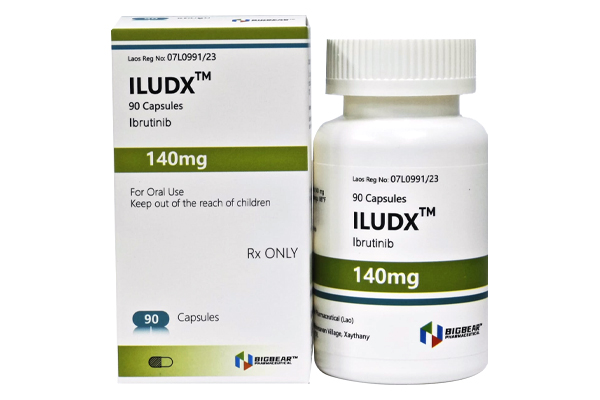
NORTH CHICAGO, Ill., Jan. 19, 2017 /PRNewswire/ -- AbbVie (NYSE: ABBV), a global biopharmaceutical company, announced today that the U.S. Food and Drug Administration (FDA) has approved Imbruvica (ibrutinib) for the treatment of patients with relapsed/refractory (R/R) marginal zone lymphoma (MZL) who require systemic therapy and have received at least one prior anti-CD20-based therapy.¹ Notably, this indication is approved under accelerated approval, based on overall response rate (ORR), with continued approval contingent upon verification and description of clinical benefit in a confirmatory trial. Imbruvica is jointly developed and commercialized by Pharmacyclics LLC, an AbbVie company, and Janssen Biotech, Inc.
Perspective from Pharmacyclics LLC
Darrin Beaupre, M.D., Ph.D., Head of Early Development and Immunotherapy at Pharmacyclics LLC, an AbbVie company, commented on the milestone: “The FDA approval of Imbruvica for relapsed/refractory marginal zone lymphoma is significant, and we are proud of the culmination of this extensive clinical research program, representing the first approved treatment specifically for patients with this rare type of non-Hodgkin's lymphoma. This milestone marks the fifth patient population for whom Imbruvica is now approved and broadens the number of patients who may be treated with the medication. We continue to research Imbruvica across many disease areas, including but not limited to other B-cell malignancies.”
Clinical Trial Basis: Phase 2 PCYC-1121 Study
The FDA’s approval of Imbruvica for R/R MZL is supported by data from the Phase 2, open-label, multi-center, single-arm PCYC-1121 study. This trial evaluated the safety and efficacy of Imbruvica in MZL patients who require systemic therapy and have received at least one prior anti-CD20-based therapy. The efficacy analysis included 63 patients across three MZL subtypes: mucosa-associated lymphoid tissue (MALT; N=32), nodal (N=17), and splenic (N=14).
As assessed by an Independent Review Committee (IRC) using criteria adopted from the International Working Group criteria for malignant lymphoma, nearly half (46%) of the patients achieved an overall response rate (ORR) (95% CI: 33.4-59.1), with efficacy observed across all three MZL subtypes. The median time to response was 4.5 months (range, 2.3-16.4 months), while 3.2% of patients had a complete response (CR) and 42.9% had a partial response (PR). The median duration of responses was not reached (NR) (range 16.7 months to NR).¹ These data were previously presented at the American Society of Hematology (ASH) Annual Meeting in December 2016.
Expert Perspective: Dr. Ariela Noy
Ariela Noy, M.D., Hematologic Oncologist at Memorial Sloan Kettering Cancer Center in New York and lead investigator of the PCYC-1121 study, noted: “In the Phase 2 trial, Imbruvica demonstrated impressive response rates and duration of response in relapsed/refractory marginal zone lymphoma patients. The hematology-oncology community welcomes a new option like Imbruvica, which helps fill a significant treatment gap for previously treated MZL patients who are in need of non-chemotherapy options.”
Safety Profile of Imbruvica in MZL Patients
Overall, the safety data from the PCYC-1121 study was consistent with Imbruvica’s known safety profile in B-cell malignancies. The most common adverse events (AEs) of all Grades (occurring in ≥20% of MZL patients treated with Imbruvica) included thrombocytopenia (49%), fatigue (44%), anemia (43%), diarrhea (43%), bruising (41%), musculoskeletal pain (40%), hemorrhage (30%), rash (29%), nausea (25%), peripheral edema and arthralgia (24% each), neutropenia and cough (22% each), and dyspnea and upper respiratory tract infection (21% each).
The most common (>10%) Grade 3 or 4 AEs were decreases in hemoglobin and neutrophils (13% each) and pneumonia (10%).¹ The risks associated with Imbruvica, as listed in the Warnings and Precautions section of the prescribing information, include hemorrhage, infections, cytopenias, atrial fibrillation, hypertension, secondary primary malignancies, tumor lysis syndrome, and embryo fetal toxicities.
Imbruvica’s Current Approved Indications
In addition to the newly approved R/R MZL indication (for patients who require systemic therapy and have received at least one prior anti-CD20-based therapy), Imbruvica is also approved to treat patients with other non-Hodgkin's lymphomas. These include chronic lymphocytic leukemia/small lymphocytic lymphoma (CLL/SLL), including patients with 17p deletion; patients with mantle cell lymphoma (MCL) who have received at least one prior therapy; and patients with Waldenström's macroglobulinemia (WM).¹ It is important to note that continued approval for the MZL and MCL indications may be contingent upon verification and description of clinical benefit in a confirmatory trial.