
BIGBEAR
PHARMACEUTICALS
Highly Selective, Targeted Inhibition.
Dual Mechanisms, Synergistic Effects.

 AuthenticGuaranteeFast DeliveryPrivacy
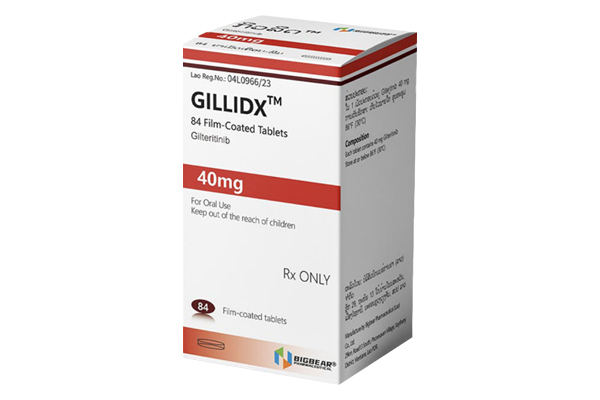
 The main component of Gilteritinib Fumarate Tablets is gilteritinib fumarate, which is an antineoplastic drug.This medication should be used under the guidance and supervision of a physician experienced in antineoplastic therapy. Before use, testing for FLT3 gene mutation in peripheral blood or bone marrow is mandatory.
Gilteritinib Fumarate Tablets belong to the class of second-generation tyrosine kinase receptor inhibitors (tyrosine kinases are important substances that regulate cell growth; when abnormally active, they may promote cancer cell proliferation). This drug precisely inhibits FLT3 receptor signaling, including FLT3-ITD mutations and tyrosine kinase domain mutations (such as D835Y). In simple terms, it works by blocking abnormal signal transmission, inhibiting the proliferation of leukemia cells, and promoting the gradual death of these abnormal cells, thereby controlling disease progression.
This medication should be used under the continuous guidance of a physician experienced in antitumor therapy. Before starting treatment, two important tests are required: first, it is necessary to test peripheral blood or bone marrow samples to determine whether the FLT3 gene has mutated (this is a key indicator for determining whether the medication can be used). Second, an electrocardiogram and blood biochemistry tests must be completed to assess physical condition.
This medication is not recommended for women during pregnancy and lactation. Male patients who require the medication must take effective contraceptive measures to prevent pregnancy in their partners.
This medication should be used according to the doctor's guidance and under medical supervision. The usual recommended starting dose is 120 mg (i.e., three 40 mg tablets) taken orally once daily, with a 28-day period constituting one complete treatment cycle. The specific dosing regimen must be strictly followed as prescribed by the doctor.
Testing for FLT3 gene mutations must be performed using peripheral blood or bone marrow samples (by analyzing whether specific genes have abnormal changes). This medication is only suitable for patients confirmed to have this gene mutation.
The medication must be taken under the guidance of a doctor experienced in anticancer therapy. The standard starting dose is 120 mg daily (equivalent to three 40 mg tablets), taken continuously for 28 days as one complete treatment cycle.
Try to take the medication at approximately the same time each day. It may be taken before or after meals. Tablets must be swallowed whole; do not split, chew, or crush them.
As long as the patient's condition continues to improve without severe side effects, long-term use is recommended. If intolerable side effects occur or therapeutic efficacy diminishes, contact the doctor promptly to adjust the treatment plan.
It may take a considerable amount of time for the therapeutic effects to become apparent. Therefore, even if there is no obvious improvement initially, do not stop or change the dose on your own. Treatment must be strictly followed according to the doctor's prescribed plan.
During the medication period, it is necessary to follow the doctor's instructions and undergo regular essential monitoring, such as blood routine tests, blood biochemistry tests, and electrocardiograms. The interval between two doses must absolutely not be less than 12 hours.
The use of this medication during pregnancy may have adverse effects on fetal development. Therefore, it is not recommended for pregnant women or women of childbearing potential who are not using contraception.
To avoid the transfer of drug components through breast milk and potential harm to the infant, breastfeeding should be discontinued during treatment and for at least two months after the last dose.
Currently, there are no data on the safety and efficacy for patients under 18 years of age. Therefore, its use in minor patients is not recommended.
Patients aged 65 and above do not require dosage adjustment.
Patients with mild to moderate hepatic impairment can use the standard dosage. However, the use of this medication is not recommended for patients with severe hepatic impairment.
Patients with renal impairment, regardless of severity, do not require dosage adjustment. However, there is currently a lack of clinical experience in patients with severe renal impairment.
Patients with cardiac disease or those with ECG findings showing QT interval prolongation (an abnormality in the heart's electrical activity) should use this medication with caution.
abnormal liver function (elevated ALT/AST), anemia, thrombocytopenia, fever with neutropenia, diarrhea, nausea, fatigue, weakness, etc. If these discomforts occur, you should promptly contact your doctor to assess whether dosage adjustment is needed.
Differentiation Syndrome: Symptoms may include fever, difficulty breathing, sudden weight gain, edema, etc., which can be life-threatening in severe cases. This condition requires immediate hospitalization.
Posterior Reversible Encephalopathy Syndrome (PRES): A rare neurological disorder that may cause seizures, headache, confusion, visual disturbances, etc. If these symptoms occur, discontinue the medication immediately and seek medical attention promptly.
QT Interval Prolongation on ECG: Can be detected through regular electrocardiogram monitoring. A doctor should evaluate whether dose adjustment is necessary.
Pancreatitis: Although a direct link with the drug has not been clearly established, if severe upper abdominal pain, nausea, vomiting, or other related symptoms occur, seek medical attention immediately and discontinue the medication as instructed by your doctor.
Discontinuation is required in the following situations:
Differentiation syndrome shows no improvement after 48 hours of hormonal therapy;
Symptoms related to reversible posterior leukoencephalopathy occur;
Other severe adverse reactions assessed by the physician as requiring discontinuation.
If any issues arise, please contact us immediately.
Email:haiousales@gmail.com

During medication, it is necessary to perform routine blood tests, blood biochemistry tests, and electrocardiograms regularly as prescribed by the doctor; the interval between two doses must never be less than 12 hours.
After oral administration, the drug concentration in the blood reaches its peak in approximately 4 to 6 hours; this time point is known as the "time to peak." Simply put, it takes about half a day after taking medication for it to exert its maximum effect in the body.
This medication has a relatively long duration of action in the body, taking an average of 113 hours to be half metabolized. This means that the drug will continue to accumulate in the body during continuous use, therefore it is essential to strictly adhere to the doctor's prescribed dosing intervals.
Medication should be taken at the same time every day, with at least 12 hours between doses.
If you forget to take your medication or miss the scheduled time, take it as soon as possible on the same day. However, make sure that there is at least 12 hours between the missed dose and the next scheduled dose.
The day after taking the supplementary dose, you should resume your original fixed medication schedule.
If vomiting occurs after taking the medication, there is no need to take another dose, but you should continue to take the medication on time the next day.
The medicine can be taken before or after meals. It should be swallowed whole with water and should not be broken or crushed.
Treatment with this product should continue until the patient no longer experiences clinical benefit or develops unacceptable toxicity. Because clinical remission may be delayed, continued treatment at the prescribed dose for up to six treatment cycles should be considered to ensure sufficient time to achieve clinical remission. Therefore, after initiating treatment, medication use and discontinuation should be based on the assessment and guidance of a specialist physician experienced in anti-tumor therapy.
If you accidentally ingest more than the dose prescribed by your doctor, contact them immediately. You may need to be hospitalized for observation and have your body's reactions monitored using professional medical methods.
Copyright2024@ BIGBEAR All right reserved BIGBEAR


