
BIGBEAR
PHARMACEUTICALS
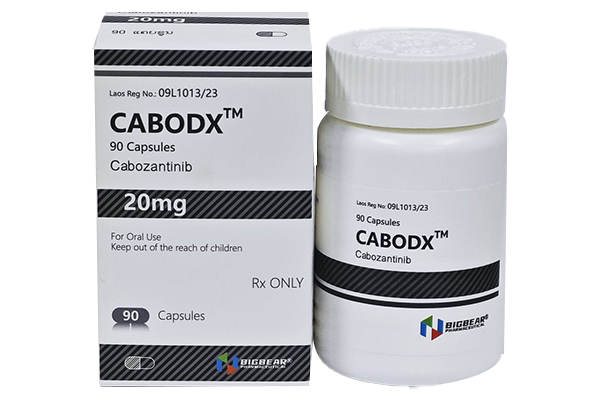
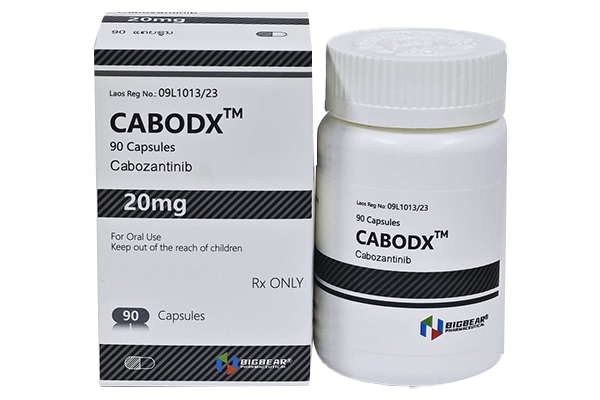
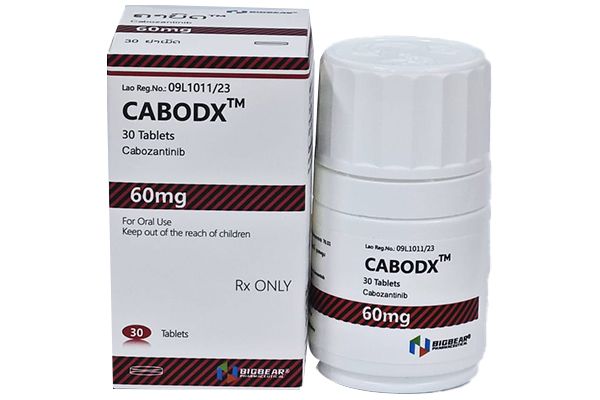
Cabozantinib is an oral multi-targeted tyrosine kinase inhibitor with broad-spectrum anticancer activity.

 AuthenticGuaranteeFast DeliveryPrivacy
 Cabozantinib is a multi-targeted tyrosine kinase inhibitor (TKI) that selectively inhibits the activity of receptor tyrosine kinases including MET, VEGFR-1/2/3, AXL, RET and ROS1, thereby blocking tumor angiogenesis and inhibiting tumor cell proliferation and metastasis.
Cabozantinib as monotherapy is indicated for adult patients with advanced renal cell carcinoma:
For first-line treatment of patients with intermediate or poor risk.
For patients who have previously received vascular endothelial growth factor (VEGF)-targeted therapy.
Cabozantinib in combination with nivolumab is indicated for the first-line treatment of adult patients with advanced renal cell carcinoma.
Cabozantinib as monotherapy is indicated for adult patients with hepatocellular carcinoma who have previously received sorafenib treatment.
Cabozantinib as monotherapy is indicated for adult patients with locally advanced or metastatic differentiated thyroid cancer who are refractory to or ineligible for radioactive iodine therapy, and have experienced disease progression during or after prior systemic therapy.
Cabozantinib is indicated for the treatment of adult patients with unresectable or metastatic, well-differentiated extra-pancreatic and pancreatic neuroendocrine tumors who have experienced disease progression following at least one prior systemic therapy excluding somatostatin analogs.
Cabozantinib tablets are not bioequivalent to cabozantinib capsules and should not be used interchangeably.
For renal cell carcinoma, hepatocellular carcinoma, differentiated thyroid cancer and neuroendocrine tumors, the recommended dose of cabozantinib is 60 mg once daily.
Treatment should be continued until the patient no longer derives clinical benefit or experiences unacceptable toxicity.
The recommended dose of cabozantinib is 40 mg once daily, in combination with nivolumab infusion administered intravenously at a dose of 240 mg once every 2 weeks or 480 mg once every 4 weeks, or with nivolumab injection administered subcutaneously at a dose of 600 mg once every 2 weeks or 1200 mg once every 4 weeks. Treatment should be continued until disease progression or unacceptable toxicity occurs. Nivolumab should be administered until disease progression, unacceptable toxicity, or for a maximum of 24 months in patients without disease progression (see the Summary of Product Characteristics for nivolumab for its dosage and administration).
Cabozantinib is for oral use. Tablets should be swallowed whole and must not be crushed. Patients should be instructed to fast for at least 2 hours before and 1 hour after taking the medication.
Management of suspected adverse drug reactions may require temporary interruption of treatment and/or dose reduction. For dose reduction in monotherapy, it is recommended to first reduce to 40 mg once daily, and subsequently to 20 mg once daily if needed.
When cabozantinib is administered in combination with nivolumab, the dose of cabozantinib is recommended to be reduced to 20 mg once daily, and subsequently to 20 mg every other day if needed (see the Summary of Product Characteristics for nivolumab for its recommended treatment modifications).
Dose interruption is recommended for CTCAE Grade 3 or higher toxicities or intolerable Grade 2 toxicities. Dose reduction is recommended for events that, if persistent, may progress to severe or intolerable conditions.
If a patient misses a dose and less than 12 hours remain until the next scheduled dose, the missed dose should not be taken.
Grade 1 adverse reactions and tolerable, manageable Grade 2 adverse reactions: No dose adjustment is usually required. Supportive care may be added as appropriate.
Intolerable Grade 2 adverse reactions uncontrolled by dose reduction or supportive care: Interrupt treatment until the adverse reaction resolves to ≤ Grade 1. Add supportive care as appropriate. Consider resuming treatment at a reduced dose.
Grade 3 adverse reactions (excluding clinically irrelevant laboratory abnormalities): Interrupt treatment until the adverse reaction resolves to ≤ Grade 1. Add supportive care as appropriate. Resume treatment at a reduced dose.
Grade 4 adverse reactions (excluding clinically irrelevant laboratory abnormalities): Interrupt treatment and initiate appropriate medical management. If the adverse reaction resolves to ≤ Grade 1, resume treatment at a reduced dose. Discontinue treatment permanently if the adverse reaction does not resolve.
ALT or AST > 3× upper limit of normal (ULN) and ≤ 10× ULN, without total bilirubin ≥ 2× ULN: Interrupt cabozantinib and nivolumab until the above adverse reactions resolve to ≤ Grade 1. Corticosteroid therapy may be considered if an immune-mediated reaction is suspected (see the Summary of Product Characteristics for nivolumab). For resumption of treatment, monotherapy or sequential resumption of the two drugs may be considered. Refer to the Summary of Product Characteristics for nivolumab if resuming nivolumab.
ALT or AST > 10× ULN, or > 3× ULN with total bilirubin ≥ 2× ULN: Discontinue cabozantinib and nivolumab permanently. Corticosteroid therapy may be considered if an immune-mediated reaction is suspected (see the Summary of Product Characteristics for nivolumab).
Note: Toxicity grading is based on the National Cancer Institute Common Terminology Criteria for Adverse Events (CTCAE) Version 4.0.
Concomitant use of strong CYP3A4 inhibitors should be undertaken with caution, and long-term concomitant use of strong CYP3A4 inducers should be avoided. Alternative concomitant medications with no or minimal potential to induce or inhibit CYP3A4 should be considered.
Reproductive-age females must be advised to avoid pregnancy during cabozantinib treatment. Female partners of male patients receiving cabozantinib must also avoid pregnancy. Male and female patients and their partners should use effective contraception during treatment and for at least 4 months after the end of treatment. Since oral contraceptives may not be considered an effective form of contraception, an additional contraceptive method (e.g., barrier contraception) should be used in combination.
There are no studies of cabozantinib in pregnant women. Animal studies have shown that this drug has embryofetal toxicity and teratogenic effects. The potential unknown risks to humans are unclear. Cabozantinib should not be used during pregnancy unless the woman's clinical condition necessitates treatment with cabozantinib.
It is unknown whether cabozantinib and/or its metabolites are excreted in human milk. Due to the potential risk to infants, breastfeeding mothers should discontinue breastfeeding during cabozantinib treatment and for at least 4 months after the end of treatment.
There are no data on the effects of cabozantinib on human fertility. Based on non-clinical safety studies, cabozantinib treatment may impair male and female fertility. Male and female patients should be advised to seek counseling and consider fertility preservation before treatment.
No special dose adjustment is required for geriatric patients (≥ 65 years of age).
No dose adjustment is required based on race.
Cabozantinib should be used with caution in patients with mild or moderate renal impairment.
Use of cabozantinib is not recommended in patients with severe renal impairment, as safety and efficacy have not been established in this population.
No dose adjustment is required for patients with mild hepatic impairment. Limited data are available for patients with moderate hepatic impairment, and no dosing recommendations can be provided. Close overall safety monitoring is recommended for these patients. No clinical experience is available for patients with severe hepatic impairment, and therefore use of cabozantinib is not recommended in this population.
Limited data are available for patients with cardiac impairment, and no specific dosing recommendations can be provided.
The safety and efficacy of cabozantinib in children and adolescents under 18 years of age have not been established, and no dosing recommendations can be made.
The most common serious adverse drug reactions (incidence ≥ 1%) are pneumonia, abdominal pain, diarrhea, nausea, hypertension, embolism, hyponatremia, pulmonary embolism, vomiting, dehydration, fatigue, asthenia, decreased appetite, deep vein thrombosis, dizziness, hypomagnesemia, and palmar-plantar erythrodysesthesia syndrome (PPES).
The most common serious adverse drug reactions (incidence ≥ 1%) are hepatic encephalopathy, asthenia, fatigue, PPES, diarrhea, hyponatremia, vomiting, abdominal pain, and thrombocytopenia.
The most common serious adverse drug reactions (incidence ≥ 1%) are diarrhea, pleural effusion, pneumonia, pulmonary embolism, hypertension, anemia, deep vein thrombosis, hypocalcemia, osteonecrosis of the jaw, pain, PPES, vomiting, and renal impairment.
The most common serious adverse drug reactions (incidence ≥ 1%) are hypertension, fatigue, pulmonary embolism, vomiting, diarrhea, nausea, and embolism.
The most common adverse reactions of any grade (occurring in at least 25% of patients) are diarrhea, fatigue, nausea, decreased appetite, PPES, and hypertension.
Hypersensitivity to the active substance of this product or any of its excipients.
Elevations in liver function tests (alanine aminotransferase, aspartate aminotransferase, and bilirubin) are frequently observed in patients receiving cabozantinib. Liver function tests are recommended before the initiation of cabozantinib treatment and should be closely monitored during treatment. For patients with worsening liver function tests considered to be related to cabozantinib treatment (i.e., no obvious other causes), dose adjustment recommendations should be followed.
When cabozantinib is administered in combination with nivolumab, a higher frequency of Grade 3 and 4 ALT and AST elevations has been reported in patients with advanced renal cell carcinoma compared with cabozantinib monotherapy. Liver enzymes should be monitored regularly before and during treatment. The medical management guidelines for both drugs should be followed.
Rare cases of vanishing bile duct syndrome have been reported. All cases occurred in patients who had previously received or were concurrently receiving immune checkpoint inhibitors during cabozantinib treatment.
Cabozantinib is primarily eliminated via the hepatic route. Closer overall safety monitoring is recommended for patients with mild or moderate hepatic impairment. A relatively higher proportion of patients with moderate hepatic impairment receiving cabozantinib develop hepatic encephalopathy. Use of cabozantinib is not recommended in patients with severe hepatic impairment.
In the hepatocellular carcinoma study (CELESTIAL), the incidence of hepatic encephalopathy was higher in the cabozantinib group than in the placebo group. Cabozantinib is associated with diarrhea, vomiting, decreased appetite, and electrolyte abnormalities. In patients with hepatocellular carcinoma and impaired liver function, these non-hepatic effects may act as precipitating factors for the development of hepatic encephalopathy. Patients should be monitored for signs and symptoms of hepatic encephalopathy.
Severe gastrointestinal perforation and fistula, some fatal, have been observed with cabozantinib use. Patients with inflammatory bowel disease (e.g., Crohn's disease, ulcerative colitis, peritonitis, diverticulitis, or appendicitis), gastrointestinal tumor infiltration, or a history of gastrointestinal surgical complications (particularly those associated with delayed or incomplete healing) should be carefully evaluated before initiating cabozantinib treatment and subsequently closely monitored for symptoms of perforation and fistula (including abscess and sepsis). Persistent or recurrent diarrhea during treatment may be a risk factor for anal fistula development. Patients who develop gastrointestinal perforation or fistula that cannot be adequately managed should discontinue cabozantinib.
Diarrhea, nausea/vomiting, decreased appetite, and stomatitis/oral pain are the most commonly reported gastrointestinal events. Immediate medical management should be initiated, including supportive care with antiemetics, antidiarrheals, or antacids to prevent dehydration, electrolyte imbalance, and weight loss. For persistent or recurrent severe gastrointestinal adverse reactions, interruption of administration, dose reduction, or permanent discontinuation of cabozantinib should be considered.
Venous thromboembolic events (including pulmonary embolism) and arterial thromboembolic events, some fatal, have been observed with cabozantinib use. Cabozantinib should be used with caution in patients with a risk of or history of such events.
In the hepatocellular carcinoma study (CELESTIAL), portal vein thrombosis, including one fatal event, was observed in patients receiving cabozantinib. Patients with a history of portal vein invasion appear to have a higher risk of developing portal vein thrombosis. Patients who develop acute myocardial infarction or any other clinically significant thromboembolic complication should discontinue cabozantinib.
In the CABINET study, the frequency of venous thromboembolism was higher in the pancreatic neuroendocrine tumor cohort (19%) than in the extra-pancreatic neuroendocrine tumor cohort (3.8%) receiving cabozantinib.
Severe bleeding, some fatal, has been observed with cabozantinib use. Patients with a history of severe bleeding before treatment initiation should be carefully evaluated before starting cabozantinib treatment. Cabozantinib should not be administered to patients with severe bleeding or at high risk of severe bleeding.
In the hepatocellular carcinoma study (CELESTIAL), the incidence of fatal bleeding events was higher in the cabozantinib group than in the placebo group. Predisposing risk factors for severe bleeding in the advanced hepatocellular carcinoma population may include tumor invasion of large blood vessels and underlying cirrhosis leading to esophageal varices, portal hypertension, and thrombocytopenia. The CELESTIAL study excluded patients receiving concomitant anticoagulant or antiplatelet therapy. Patients with untreated or incompletely treated varices with bleeding or high bleeding risk were also excluded from this study.
The study of cabozantinib in combination with nivolumab for first-line treatment of advanced renal cell carcinoma (CA2099ER) excluded patients using therapeutic-dose anticoagulants.
Use of VEGF pathway inhibitors may promote the development of aneurysm and/or arterial dissection in patients with or without hypertension. This risk should be carefully considered before initiating cabozantinib in patients with risk factors such as hypertension or a history of aneurysm.
Thrombocytopenia and decreased platelet counts have been reported in the hepatocellular carcinoma study (CELESTIAL), differentiated thyroid cancer study (COSMIC-311), and neuroendocrine tumor study (CABINET). Platelet levels should be monitored during cabozantinib treatment, and dose adjustment should be made based on the severity of thrombocytopenia.
Wound complications have been observed with cabozantinib use. Cabozantinib should be discontinued at least 28 days before elective surgery (including dental surgery or invasive dental procedures). Resumption of cabozantinib treatment after surgery should be based on clinical judgment that the wound has fully healed. Patients who develop wound healing complications requiring medical intervention should discontinue cabozantinib.
Hypertension, including hypertensive crisis, has been observed with cabozantinib use. Blood pressure should be well-controlled before initiating cabozantinib. Blood pressure should be monitored early and regularly after the start of cabozantinib treatment, and appropriate antihypertensive therapy should be initiated as needed. For patients with persistent hypertension despite antihypertensive therapy, cabozantinib treatment should be interrupted until blood pressure is controlled, and then cabozantinib may be resumed at a reduced dose. Cabozantinib should be discontinued if hypertension is severe and persistent despite antihypertensive therapy and cabozantinib dose reduction. Cabozantinib should be discontinued in the event of a hypertensive crisis.
Cases of osteonecrosis of the jaw have been observed with cabozantinib use. Oral examinations are recommended before the initiation of cabozantinib treatment and regularly during treatment. Patients should be advised on oral hygiene practices. Cabozantinib treatment should be suspended for at least 28 days if possible before elective dental surgery or invasive dental procedures. Caution should be exercised in patients receiving concomitant medications associated with osteonecrosis of the jaw (e.g., bisphosphonates). Patients who develop osteonecrosis of the jaw should discontinue cabozantinib.
Palmar-plantar erythrodysesthesia syndrome has been observed with cabozantinib use. Interruption of cabozantinib treatment should be considered if PPES is severe. Once PPES resolves to Grade 1, cabozantinib treatment may be resumed at a lower dose.
Proteinuria has been observed with cabozantinib use. Urinary protein should be monitored regularly during cabozantinib treatment. Patients who develop nephrotic syndrome should discontinue cabozantinib.
Posterior reversible encephalopathy syndrome has been observed with cabozantinib use. This syndrome should be considered in any patient presenting with a combination of symptoms including seizures, headache, visual disturbances, confusion, or altered mental function. Patients who develop PRES should discontinue cabozantinib treatment.
Cabozantinib should be used with caution in patients with a history of QT interval prolongation, patients receiving antiarrhythmic drugs, or patients with underlying cardiac disease, bradycardia, or electrolyte imbalance. When using cabozantinib, consideration should be given to regular monitoring of electrocardiograms and electrolytes (serum calcium, potassium, magnesium) during treatment.
Baseline thyroid function laboratory tests are recommended for all patients. Patients with underlying hypothyroidism or hyperthyroidism should be treated in accordance with standard medical practice before initiating cabozantinib treatment. All patients should be closely observed for signs and symptoms of thyroid dysfunction during cabozantinib treatment. Thyroid function should be monitored regularly throughout cabozantinib treatment. Patients who develop thyroid dysfunction should be treated in accordance with standard medical practice.
Cabozantinib is associated with an increased incidence of electrolyte abnormalities (including hypokalemia, hyperkalemia, hypomagnesemia, hypocalcemia, and hyponatremia). Compared with patients with other cancers, patients with thyroid cancer receiving cabozantinib have a higher frequency and/or severity (including Grade 3 and 4) of hypocalcemia. Biochemical parameters should be monitored during cabozantinib treatment, and appropriate replacement therapy should be initiated as needed in accordance with standard clinical practice. Cases of hepatic encephalopathy in patients with hepatocellular carcinoma may be attributed to the development of electrolyte abnormalities. For persistent or recurrent significant abnormalities, interruption of administration, dose reduction, or permanent discontinuation of cabozantinib should be considered.
Cabozantinib is a substrate of CYP3A4. Concomitant administration of cabozantinib with ketoconazole, a strong CYP3A4 inhibitor, results in increased plasma exposure of cabozantinib. Concomitant use of cabozantinib with strong CYP3A4 inhibitors should be undertaken with caution. Concomitant administration of cabozantinib with rifampicin, a strong CYP3A4 inducer, results in decreased plasma exposure of cabozantinib. Therefore, long-term concomitant use of cabozantinib with strong CYP3A4 inducers should be avoided.
In a bidirectional assay system using MDCK-MDR1 cells, cabozantinib is an inhibitor of P-glycoprotein transport activity (IC50=7.0 μM) but not a substrate thereof. Therefore, cabozantinib may have the potential to increase the plasma concentrations of concomitantly administered P-gp substrates. Subjects should be advised to use P-gp substrates (e.g., fexofenadine, aliskiren, ambrisentan, dabigatran etexilate, digoxin, colchicine, maraviroc, posaconazole, ranolazine, saxagliptin, sitagliptin, talinolol, tolvaptan) with caution during cabozantinib treatment.
Administration of MRP2 inhibitors may result in increased plasma concentrations of cabozantinib. Therefore, concomitant use with MRP2 inhibitors (e.g., cyclosporine, efavirenz, emtricitabine) should be undertaken with caution.
Patients with rare hereditary forms of galactose intolerance, total lactase deficiency, or glucose-galactose malabsorption should not take this product.
Each tablet of this product contains less than 1 mmol (23 mg) of sodium, i.e., essentially sodium-free.
If any issues arise, please contact us immediately.
Email:haiousales@gmail.com

Take the medication as soon as you remember. However, skip the missed dose if your next scheduled dose is in less than 12 hours. Do not take a double dose to make up for the one you missed.
Seek emergency medical help immediately or call the Poison Help line.
Grapefruit and grapefruit products may interact with cabozantinib and increase the risk of adverse side effects. Do not consume grapefruit products during treatment.
Also, avoid using any herbal supplement that contains St. John’s wort.
Certain medications should not be used together due to safety concerns. Some drugs can alter the blood levels of others you are taking, which may increase side effects or reduce the effectiveness of your treatment.
Many prescription and over‑the‑counter medicines, vitamins, and herbal supplements can interact with cabozantinib. Be sure to tell your doctor about all medications you are currently taking, as well as any you start or stop using.
Copyright2024@ BIGBEAR All right reserved BIGBEAR


