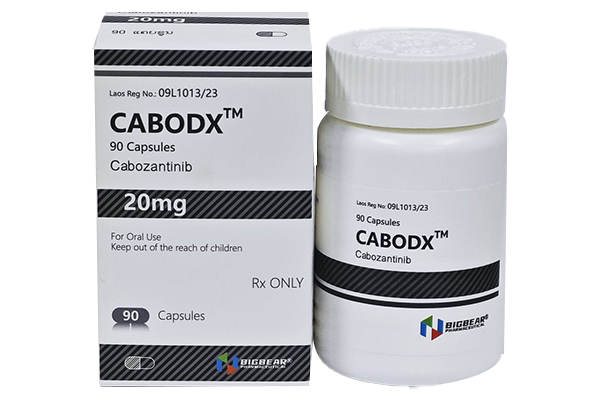
Cabozantinib is a small-molecule, multi-target tyrosine kinase inhibitor developed by Exelixis in the United States. In November 2012, the FDA first approved it for the treatment of advanced metastatic medullary thyroid carcinoma, and its indications have since been continuously expanded, earning it the reputation of a "targeted cure-all."
Common Dosage of Cabozantinib
FDA (Instructions for Use) Recommended Common Dosage:
1. Common Dosage for Adults with Thyroid Cancer
(1) Cabozantinib Capsules
140 mg orally daily until the patient no longer experiences clinical benefit or develops unacceptable toxicity.
(1) Cabozantinib Tablets
Body surface area (BSA) greater than or equal to 1.2 m²: 60 mg daily until disease progression or unacceptable toxicity.
2. Adult Dosage for Renal Cell Carcinoma
(1) Cabozantinib Tablets
Monotherapy: 60 mg orally daily until the patient no longer receives clinical benefit or experiences unacceptable toxicity.
Combination Therapy: In combination with nivolumab, 40 mg daily until disease progression or unacceptable toxicity.
3. Adult Dosage for Hepatocellular Carcinoma
Tablets: 60 mg orally daily until the patient no longer receives clinical benefit or experiences unacceptable toxicity.
4. Pediatric Dosage for Thyroid Cancer
Cabozantinib Tablets
Body surface area ≥ 1.2 m²: 60 mg daily until disease progression or unacceptable toxicity.
Body surface area < 1.2 m²: 40 mg daily until disease progression or unacceptable toxicity.
The above information is from the drug's official website and only reflects the dosage range of the drug in countries where it is registered outside of mainland China. It does not represent the approved use range in mainland China. Please do not make any treatment decisions based on this information.
Cabozantinib Dosage Instructions
1. Cabozantinib tablets and capsules are not interchangeable.
2. Cabozantinib should be taken on an empty stomach, at least 2 hours before or 1 hour after a meal.
3. Do not open, break, crush, or chew tablets or capsules. Swallow the whole tablet or capsule with a full glass of water.
4. If less than 12 hours have passed since the next dose, skip the missed dose.
5. While taking cabozantinib, avoid foods (such as grapefruit) or nutritional supplements (such as St. John's wort) known to inhibit or induce CYP450 activity.
Monitoring and Management of Cabozantinib
Cardiovascular System: Blood Pressure (monitor regularly before and during treatment).
Musculoskeletal System: Oral Examination (due to the risk of osteonecrosis of the mandible, perform regular examinations before and during treatment).
Kidneys: Proteinuria (monitor regularly during treatment).
Endocrine System: Thyroid (monitor regularly before and during treatment).
Metabolism: Serum Calcium (monitor regularly during treatment).
Dose Adjustment for Cabozantinib in Special Populations
1. Dose Adjustment for Renal Impairment
(1) Cabozantinib Capsules/Tablets
Mild to Moderate Renal Impairment: Dosage adjustment is not recommended.
Severe Renal Impairment: No relevant data available.
2. Dose Adjustment for Hepatic Impairment
(1) Cabozantinib Capsules (for medullary thyroid carcinoma)
Mild to Moderate Hepatic Impairment: 80 mg orally daily
Severe Hepatic Impairment: Not recommended.
(2) Cabozantinib Tablets (for medullary thyroid carcinoma)
Mild Hepatic Impairment: Dosage adjustment is not recommended. Moderate hepatic impairment: 40 mg daily, or for pediatric patients with a body surface area less than 1.2 m², reduce the daily dose from 40 mg to 20 mg.
Severe hepatic impairment: Not recommended.
(3) Cabozantinib tablets (for renal cell carcinoma)
Mild to moderate hepatic impairment: 40 mg orally daily.
Severe hepatic impairment: Not recommended.
3. When used in combination with nivolumab
(1) If alanine aminotransferase (ALT) or aspartate aminotransferase (AST) is greater than 3 times the upper limit of normal (ULN) but not more than 10 times the upper limit of normal, and total bilirubin is less than 2 times the upper limit of normal, discontinue cabozantinib and nivolumab treatment until adverse reactions recover to grade 0 or 1, and consider using corticosteroids as appropriate. After recovery, one or both drugs may be considered for resumption.
(2) If ALT or AST is greater than 10 times the upper limit of normal, or greater than 3 times the upper limit of normal and total bilirubin is at least 2 times the upper limit of normal, cabozantinib and nivolumab should be permanently discontinued. If an immune-mediated response is suspected, corticosteroid therapy may be considered.