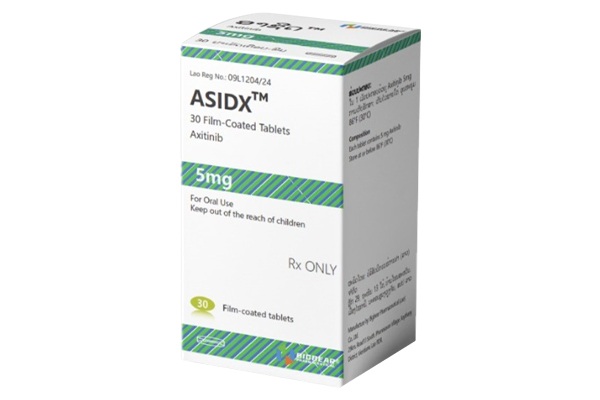
Axitinib is an oral targeted anti-tumor medication classified as a tyrosine kinase inhibitor (TKI). It functions by inhibiting Vascular Endothelial Growth Factor Receptors (VEGFR) to block tumor angiogenesis, thereby suppressing the growth and metastasis of cancer cells. It is primarily indicated as a second-line treatment for advanced renal cell carcinoma (RCC) in patients who have failed prior therapies or are intolerant to other treatments.
Mechanism of Action and Indications
Mechanism: Axitinib selectively inhibits receptors such as VEGFR-1, VEGFR-2, and VEGFR-3. By disrupting tumor angiogenesis signaling pathways, it reduces the blood and nutrient supply to the tumor, ultimately limiting its growth and spread.
Clinical Efficacy: Clinical studies have confirmed that Axitinib significantly improves progression-free survival (PFS) and the objective response rate (ORR) in patients with advanced renal cancer.
Administration and Dosage Adjustment
Recommended Dosage
The standard initial dose is 5 mg taken orally twice daily. It should be taken on an empty stomach (either 1 hour before or 2 hours after a meal).
Dosage Adjustment
The dose may be adjusted based on patient tolerance (e.g., side effects like hypertension or diarrhea). It can be gradually escalated to 7 mg or reduced to 3 mg. Regular monitoring of blood pressure, liver function, and thyroid function is required during treatment.
Common Side Effects and Management
Common adverse reactions associated with Axitinib include:
Hypertension (approx. 40%)
Requires close blood pressure monitoring; anti-hypertensive medication may be co-administered if necessary.
Diarrhea (approx. 55%)
Mild cases can be managed through dietary adjustments, while severe cases require anti-diarrheal medication and fluid replacement.
Fatigue and Hand-Foot Syndrome
Characterized by redness, swelling, or peeling of the palms and soles. Patients are advised to reduce friction and use moisturizers to alleviate symptoms.
Thyroid Dysfunction
Regular testing of thyroid hormone levels is necessary, with thyroid hormone replacement therapy administered if required.
Precautions and Contraindications
Contraindicated Populations
Individuals with a known allergy to any component of the drug, and pregnant or breastfeeding women (due to potential fetal malformation risks).
Drug Interactions
Avoid concurrent use with potent CYP3A4/5 inhibitors (e.g., ketoconazole) or inducers (e.g., rifampin), as these may significantly affect plasma drug concentrations.
Special Populations
Patients with hepatic impairment require a dose reduction, while elderly patients generally do not require specific dose adjustments.
As a critical targeted therapy for advanced renal cancer, Axitinib works through the precise inhibition of tumor angiogenesis. Patients must strictly adhere to medical advice, manage side effects proactively, and undergo regular follow-ups to evaluate efficacy. Treatment plans should be tailored to individual conditions and tolerance under the guidance of a professional oncologist.