
BIGBEAR
PHARMACEUTICALS
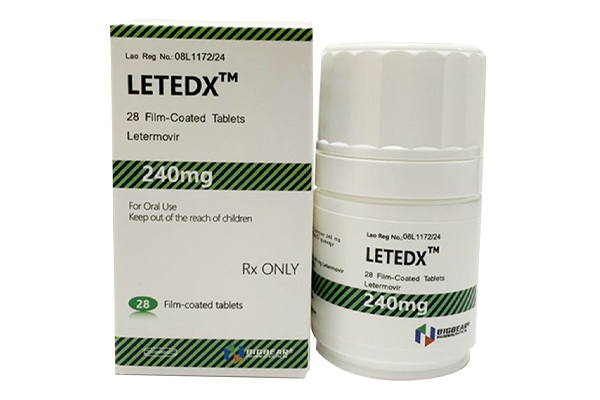
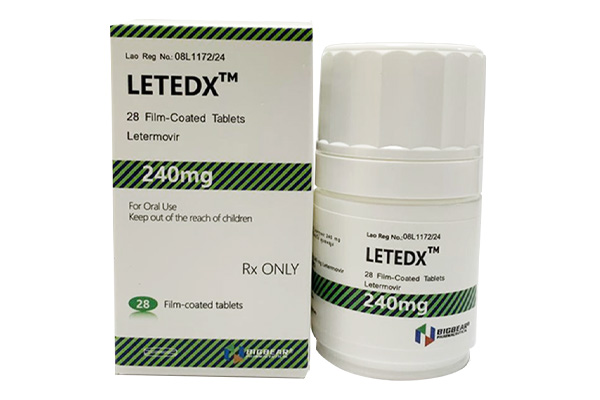
pecifically indicated for preventing complications caused by cytomegalovirus infection in adult patients undergoing allogeneic hematopoietic stem cell transplantation.

 AuthenticGuaranteeFast DeliveryPrivacy
 The drug acts by blocking a key step in CMV replication. Specifically, it inhibits the activity of the viral DNA terminase complex, which consists of the pUL51, pUL56, and pUL89 proteins and serves as the "assembly tool" required for viral replication. Biochemical experiments and electron microscopy observations have shown that letermovir disrupts the normal assembly of the viral genome and interferes with the maturation of viral particles.
It is primarily indicated for adult patients undergoing allogeneic hematopoietic stem cell transplantation (HSCT) who are seropositive for cytomegalovirus (CMV) (i.e., have prior evidence of CMV infection). The medication prevents two potential post-transplant outcomes:
1.Reactivation of latent CMV leading to infection.
2.Organ damage and other diseases caused by such infection.
This product is a prescription medication and must be used strictly in accordance with a physician's instructions. Special attention is required:
Contraindicated in patients with hypersensitivity to any component of the drug.
Use with caution in patients with abnormal liver or kidney function, pregnant women, lactating women, and pediatric patients. If use is deemed necessary after a physician's risk assessment, continuous patient monitoring is mandatory.
Patients currently taking other medications must inform their doctor or pharmacist of all medications, diagnosed illnesses, and current treatment plans before starting this therapy.
Patients planning pregnancy, who are pregnant, or who are breastfeeding must proactively inform their doctor of their status.
The tablets may be taken with or without food. They must be swallowed whole and should not be split, crushed, or chewed.
Letermovir injection contains sulfobutylether β-cyclodextrin (an excipient to aid drug solubility) and is only for patients who are unable to take oral medication. Once the patient's oral function is restored, treatment should be switched immediately to the tablet formulation. The tablet and injection formulations are interchangeable without dose adjustment.
1.Standard adult dose: 480 mg once daily.
2.Initiation timing: Start after hematopoietic stem cell transplantation, which can be on the day of transplantation, but no later than 28 days post-transplant.
3.Treatment duration: Continue until 100 days after transplantation.
1.If cyclosporine is being taken concomitantly, reduce the letermovir dose to 240 mg once daily.
2.If cyclosporine is initiated after starting letermovir, reduce the letermovir dose to 240 mg at the next scheduled dose.
3.If cyclosporine is discontinued after starting letermovir, increase the letermovir dose back to 480 mg at the next scheduled dose.
4.Temporary interruption of cyclosporine does not require a dose adjustment of letermovir.
For patients with a negative CMV viral load test result, monitor the viral load weekly until 14 weeks post-transplant, then every two weeks until 24 weeks post-transplant.
If an increase in viral load or signs of infection are detected, discontinue prophylactic treatment and initiate targeted therapy.
If a patient has a positive viral load test result that does not meet the criteria for treatment, prophylactic treatment can be continued.
Important Note: Prescribing information for letermovir may vary between manufacturers. If discrepancies are identified during use, consult a doctor or pharmacist immediately for confirmation.
This is a prescription medication. The package insert must be read carefully, and the medication must be used strictly in accordance with a doctor's instructions.
It may be taken with or without food. Tablets must be swallowed whole and should not be split, crushed, or chewed.
Storage: Store in a tightly sealed container below 30°C. Discontinue use immediately if the product changes color, deforms, or develops an unusual odor. Keep out of reach of children.
The following populations are at serious risk of severe adverse reactions or disease exacerbation, and are therefore strictly prohibited from using this drug:
Patients with known hypersensitivity to letermovir or any inactive ingredient in this product.
The impact on pregnancy outcomes is not yet clear. Medication requires a strict assessment to determine if the potential benefit to the mother outweighs the risk to the fetus.
It is unclear whether the drug enters breast milk, affects the breastfeeding process, or exerts an effect on the infant. A comprehensive evaluation is needed, weighing the necessity of breastfeeding, the need for treatment, and the potential risks.
The safety and efficacy of the drug in individuals under 18 years of age have not been verified.
In clinical trials of hematopoietic stem cell transplant recipients, the safety and efficacy profiles of letermovir were similar between elderly and younger patients.
No dose adjustment is required for patients with mild, moderate, or severe renal impairment.
There are no data available for patients with end-stage renal disease requiring dialysis (glomerular filtration rate < 10 mL/min).
No dose adjustment is required for patients with mild (Child-Pugh A) to moderate (Child-Pugh B) hepatic impairment.
Use is not recommended for patients with severe (Child-Pugh C) hepatic impairment.
Use is also not recommended for patients with concurrent moderate hepatic impairment and moderate or severe renal impairment.
Individuals who are pregnant, planning a pregnancy, or breastfeeding must promptly inform their doctor of their specific situation, and treatment plans will be formulated based on professional recommendations.
Individual responses may vary based on physical constitution and medication use. It is important to monitor your body closely during treatment; seek immediate medical attention if you experience any discomfort. Your doctor may monitor vital signs such as blood pressure, heart rate, and respiratory frequency as needed.
Based on clinical trial data, common adverse reactions are categorized by frequency:
Very common: ≥10%
Common: 1%–10%
Uncommon: 0.1%–1%
Rare: 0.01%–0.1%
Very rare: <0.01%
Immune system: Hypersensitivity reactions (Uncommon)
Metabolism and nutrition: Decreased appetite (Uncommon)
Nervous system: Dysgeusia (unusual taste sensation), headache (Uncommon)
Ear and labyrinth disorders: Dizziness (Uncommon)
Gastrointestinal system: Nausea, diarrhea, vomiting (Common); abdominal pain (Uncommon)
Hepatobiliary system: Hepatic function abnormalities (elevated alanine aminotransferase, aspartate aminotransferase) (Uncommon)
Musculoskeletal and connective tissue: Muscle spasms (Uncommon)
Renal and urinary system: Renal function abnormalities (elevated serum creatinine) (Uncommon)
General disorders and administration site conditions: Fatigue, peripheral edema (Uncommon)
If you experience severe discomfort after taking the medication, seek immediate medical care. Your doctor will determine whether to discontinue the medication or take other measures based on the severity of the adverse reaction.
Immediate discontinuation may be required in cases such as:
1.Severe hypersensitivity reactions.
2.Persistent vomiting.
3.Severe hepatic function abnormalities.
If any issues arise, please contact us immediately.
Email:haiousales@gmail.com

Copyright2024@ BIGBEAR All right reserved BIGBEAR


