
BIGBEAR
PHARMACEUTICALS
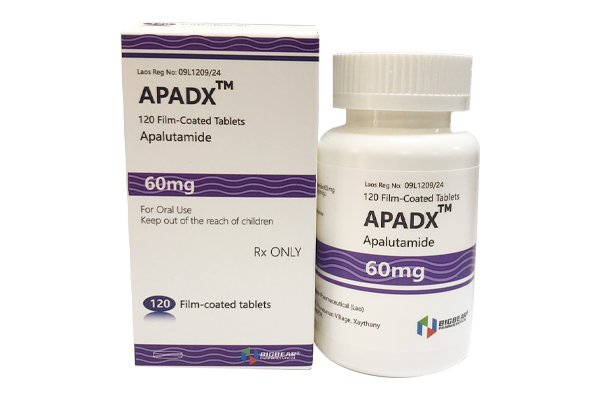
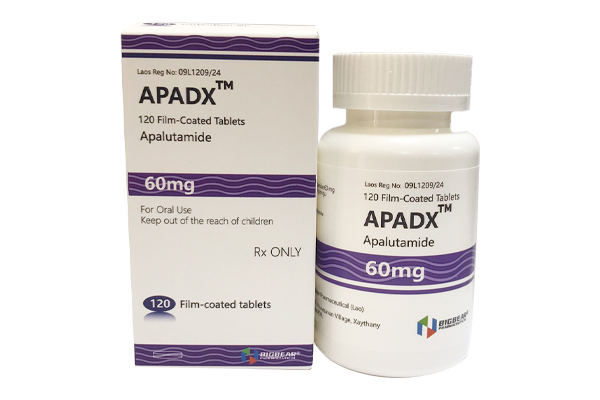
It is indicated for patients with specific types of prostate cancer and must be used in combination with a GnRH analog or in patients who have undergone bilateral orchiectomy.

 AuthenticGuaranteeFast DeliveryPrivacy
 Apalutamide is an androgen receptor inhibitor indicated for the treatment of prostate cancer. By directly binding to the androgen receptor, it inhibits its nuclear translocation, DNA binding and transcriptional activity, thereby suppressing tumor growth.
This product is indicated for the treatment of:
Adult patients with metastatic hormone-sensitive prostate cancer (mHSPC).
Adult patients with non-metastatic castration-resistant prostate cancer (NM-CRPC) who are at high risk of metastasis.
The recommended dose is 240 mg (four 60 mg tablets) once daily, taken orally.
Administration: Swallow tablets whole. It may be taken with or without food.
Patients must also receive concurrent androgen deprivation therapy (ADT), which includes treatment with a gonadotropin-releasing hormone (GnRH) analog or prior bilateral orchiectomy.
If a dose is missed, take it as soon as possible on the same day. Resume the regular schedule the next day. Do not take an extra dose to make up for the missed dose.
If a patient experiences Grade ≥3 toxicities or intolerable adverse reactions, temporarily discontinue treatment until symptoms improve to Grade ≤1 or baseline. If necessary, resume treatment at the same dose or a reduced dose (180 mg or 120 mg).
Apalutamide is contraindicated in women who are pregnant or planning to become pregnant. Based on its mechanism of action, administration during pregnancy may cause fetal harm.
There are no data on the use of apalutamide in pregnant women, and no animal reproductive studies have been conducted with this drug.
It is unknown whether apalutamide or its metabolites are excreted in human milk. The risk to breastfed infants cannot be ruled out. Apalutamide should not be used during lactation.
1.Based on animal studies, apalutamide may reduce fertility in males of reproductive potential.
2.It is unknown whether apalutamide or its metabolites are present in semen. This drug may cause harm to a developing fetus. During treatment and for 3 months after the last dose, patients who have sexual intercourse with female partners of reproductive potential should use a condom plus another highly effective contraceptive method.
The safety and efficacy of this product in pediatric patients have not been established.
No dose adjustment is required for elderly patients (see [Geriatric Use]).
No dose adjustment is needed for patients with mild to moderate renal impairment.
There are no studies in patients with severe renal impairment; use with caution (see [Pharmacokinetics]). If treatment is initiated, monitor closely for adverse reactions listed in [Adverse Reactions] and reduce the dose as per the administration instructions.
No dose adjustment is needed for patients with mild or moderate hepatic impairment (Child-Pugh A and B).
Use in patients with severe hepatic impairment is not recommended, as there are no relevant data and the drug is primarily eliminated via hepatic metabolism (see [Pharmacokinetics]).
Due to the varying conditions of clinical trials, the incidence of adverse reactions observed in different drug trials is not directly comparable and cannot reflect the incidence observed in clinical practice.
In randomized, placebo-controlled clinical trials (TITAN and SPARTAN), the most common adverse reactions (≥10%) that occurred more frequently in the apalutamide group (≥2% higher than the placebo group) included:
Fatigue
Arthralgia
Rash
Decreased appetite
Falls
Weight loss
Hypertension
Hot flushes
Diarrhea
Fractures
For more information on adverse reactions, please consult your doctor or refer to the package insert.
Hypersensitivity to the active ingredient or any excipients of this product.
Women who are pregnant or planning to become pregnant.
Ischemic heart disease and ischemic cerebrovascular disease, including fatal events, have been reported in patients receiving this product. Monitor for signs and symptoms of these conditions and manage risk factors such as hypertension, diabetes, or dyslipidemia.
Fractures have been reported in patients treated with apalutamide.
Assess patients' fracture risk and manage those at risk according to established clinical guidelines, considering the use of bone-targeted agents.
Falls have been reported, with an increased incidence in elderly patients (see [Geriatric Use]). Assess patients' fall risk.
Seizures have been reported in patients treated with apalutamide.
Discontinue apalutamide permanently in patients who experience a seizure during treatment.
It is unknown whether anti-epileptic drugs can prevent apalutamide-induced seizures.
Advise patients that seizures may occur suddenly, causing loss of consciousness and potential harm to themselves or others.
Apalutamide is a strong enzyme inducer, which may reduce the efficacy of many commonly used medications.
Review all concomitant medications before starting apalutamide.
Avoid co-administration with drugs that are sensitive substrates of multiple metabolic enzymes or transporters, unless the benefit outweighs the risk and dose adjustment is not feasible via therapeutic monitoring.
Avoid co-administration with warfarin and coumarin anticoagulants. If co-administered with a CYP2C9-metabolized anticoagulant (e.g., warfarin, acenocoumarol), additional monitoring of the International Normalized Ratio (INR) is required.
For patients with a history of QT prolongation, risk factors for QT prolongation, or concomitant use of QT-prolonging drugs, assess the benefit-risk ratio before initiating apalutamide, including the potential for torsades de pointes.
In an open-label, uncontrolled study of 45 CRPC patients receiving apalutamide 240 mg daily, the maximum mean change in QTcF from baseline was 12.4 ms (two-sided 90% CI upper limit: 16.0 ms). Exposure-QT analysis showed a concentration-dependent increase in QTcF for apalutamide and its active metabolites.
Apalutamide has no or negligible effect on the ability to drive or operate machinery. However, seizures have been reported. Advise patients of the risk when driving or operating machinery.
If any issues arise, please contact us immediately.
Email:haiousales@gmail.com

Sometimes it is not safe to use certain medicines at the same time. Some drugs can affect your blood levels of other drugs you use, which may increase side effects or make the medicines less effective.
Other drugs may interact with apalutamide, including prescription and over-the-counter medicines, vitamins, and herbal products. Tell your doctor about all other medicines you use.
Apalutamide can cause seizures. Avoid activities that could be dangerous if you have an unexpected seizure.
Take the missed dose on the same day you remember it. Take your next dose at the regular time and stay on your once-daily schedule. Do not take two doses in one day.
Apalutamide is to treat prostate cancer that has spread to other parts of the body (metastatic) and still responds to a medical or surgical treatment that lowers testosterone.
Apalutamide is also used to treat prostate cancer that has not spread to other parts of the body, after surgery or other treatments did not work or have stopped working.
Apalutamide belongs to a class of medications called androgen receptor inhibitors. It works by blocking the effects of androgen (a male reproductive hormone) to stop the growth and spread of cancer cells.
This medicine is not approved for use in women or children.
Copyright2024@ BIGBEAR All right reserved BIGBEAR


