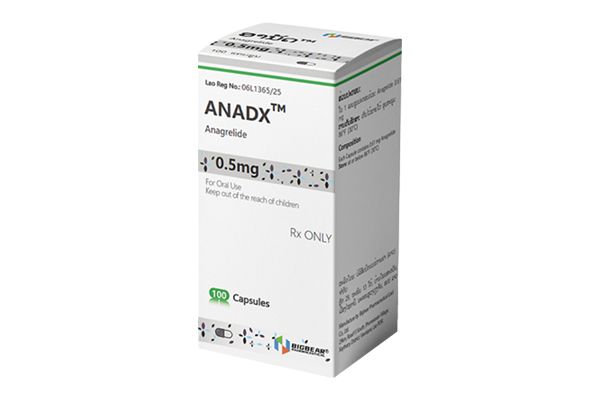
Anagrelide is a platelet-reducing agent, also known as a platelet production inhibitor. Domestically produced Anagrelide capsules were launched in China in 2024. The original imported Anagrelide is not yet available in China.
Anagrelide Indications
Thrombocytosis
Used to reduce platelet counts in patients with essential thrombocytosis (ET) and other myeloproliferative disorders, thereby reducing the risk of thromboembolic and bleeding events. It has been designated as an orphan drug by the U.S. Food and Drug Administration (FDA) for the treatment of essential thrombocytosis.
Anagrelide Dosage and Administration
1. Monitoring Requirements
After initiation of treatment, monitor platelet counts every 2 days for the first week, and then at least weekly until a maintenance dose is determined.
2. Route of Administration
Oral administration, with or without food.
3. Standard Dosage
(1) Children with Thrombocytosis
Children and adolescents aged 7-14 years: The initial dose is 0.5 mg daily. An initial dose of up to 0.5 mg four times daily may also be used.
Maintain the initial dose for ≥1 week, then adjust to the lowest effective dose that maintains a platelet count <600,000/mm³ (ideally within the normal range). The usual maintenance dose is 1.5-3 mg daily.
Dose increases within any 1-week period should be ≤0.5 mg/day. If the treatment is effective, continue indefinitely.
(2) Adults with Thrombocytosis
The initial dose is 0.5 mg four times daily or 1 mg twice daily. Lower doses (e.g., 0.5 mg twice daily) may also be used to improve tolerability.
The initial dose should be maintained for ≥1 week, then adjusted to the lowest effective dose that maintains a platelet count <600,000/mm³ (ideally within the normal range, such as 150,000-400,000/mm³). The maintenance dose is usually 1.5-3 mg daily.
Dose increases within any week should be ≤0.5 mg/day. If the therapeutic effect is satisfactory, treatment should be continued indefinitely.
4. Prescription Restrictions
(1) Children
Children and adolescents aged 7-14 years: The maximum dose is 10 mg daily or a single dose of 2.5 mg.
(2) Adults
The maximum dose is 10 mg daily or a single dose of 2.5 mg.
(3) Special Populations
Hepatic Impairment
For patients with moderate hepatic impairment, the initial dose should be reduced to 0.5 mg daily and maintained for ≥1 week. Dose increases within any week should be ≤0.5 mg/day. Contraindicated in patients with severe hepatic impairment.
Renal Impairment
No dose adjustment is required for patients with renal impairment.
Common Adverse Reactions of Anagrelide
Headache, palpitations, diarrhea, fatigue, edema, nausea, abdominal pain, dizziness, headache, dyspnea, flatulence, vomiting, fever, peripheral edema, rash, chest pain, loss of appetite, tachycardia, pharyngitis, malaise, cough, paresthesia, back pain, pruritus, indigestion.
Precautions for Anagrelide
1. Cardiovascular Effects
Adverse cardiovascular effects (such as vasodilation, tachycardia, palpitations, edema, congestive heart failure) have been reported with conventional doses of anagrelide, including rare cases of sudden death. The risks and benefits of treatment should be assessed. Caution should be exercised even when used in patients with known or suspected cardiovascular disease. Assess cardiac status before and during treatment. Consider dose reduction.
2. Laboratory Monitoring
During the period of decreased platelet count (usually the first 2 weeks of treatment), monitor complete blood count, liver function tests, and kidney function tests. To assess treatment response and prevent thrombocytopenia, monitor platelet count every 2 days during the first week of treatment, and at least weekly thereafter until the maintenance dose is reached.
3. Rebound Thrombocytosis
A rapid increase in platelet count (e.g., within 4 days) is usually observed after discontinuation or interruption of anagrelide. If the treatment is satisfactory, treatment should be continued indefinitely to prevent rebound thrombocytosis.
4. Anemia
Reports of decreased hemoglobin and hematocrit (anemia) have been reported, usually occurring with prolonged use.
5. Bleeding Tendency
Concomitant use with aspirin may increase bleeding tendency. Such combined therapy should be used with caution. Some clinicians recommend that patients with a history of bleeding should not use aspirin with anagrelide.
6. Kidney Effects
A small number of patients have experienced renal impairment following anagrelide treatment; most patients have pre-existing renal impairment. Monitor renal function during platelet count decline.
7. Fetal/Neonatal Risk
The safety of anagrelide during pregnancy has not been established; embryotoxicity and fetal toxicity have been shown in animals. It is generally not recommended for use in pregnant women unless the potential benefit outweighs the possible risk to the fetus. Women of childbearing age should avoid pregnancy and use contraception during treatment.
Specific Populations for Anagrelide Use
1. Lactation
It is unclear whether anagrelide is distributed into human milk. Due to the potential risk to breastfeeding infants, breastfeeding should be discontinued or the drug should be discontinued.
2. Pediatric Use
It has been evaluated in a small number of children and adolescents aged 7–14 years with thrombocytosis secondary to myeloproliferative disorders; preliminary data suggest no overall difference in dosage or adverse reactions compared to adults.
3. Elderly Use
Responses in patients ≥65 years of age appear to be no different from those in younger adults. Due to age-related decline in hepatic, renal, and/or cardiac function, caution should be exercised when using this drug.
4. Hepatic Impairment
(1) Extensively metabolized in the liver; systemic exposure to anagrelide may be increased in patients with hepatic impairment.
(2) Patients with mild to moderate hepatic impairment should weigh the treatment risks against potential benefits. Reduce the dose and closely monitor for adverse cardiovascular effects or other toxicities.
(3) Contraindicated in patients with severe hepatic impairment.
5. Renal Impairment
Patients with known or suspected renal impairment should be closely monitored for cardiovascular effects or other toxicities.
Anagrelide Drug Interactions
1. Drugs Affecting Hepatic Microsomal Enzymes
CYP1A2 Inhibitors: Pharmacokinetic interactions may exist (decreased anagrelide clearance).
2. Drugs Metabolized by Hepatic Microsomal Enzymes
CYP1A2 Substrates: Pharmacokinetic interactions may exist (decreased substrate clearance).
3. Specific Medications or Foods
Aspirin, digoxin, fluvoxamine, grapefruit juice, omeprazole, phosphodiesterase type 3 inhibitors (such as amrinone, cilostazol, milrinone), sucralfate, theophylline, warfarin, etc.
Note: For detailed information, please refer to the original drug instructions. Specific medication use should be followed as directed by your doctor.
Storage Method for Anagrelide
Anagrelide should be stored at 25°C protected from light; it can be exposed to environments between 15-30°C.