
BIGBEAR
PHARMACEUTICALS
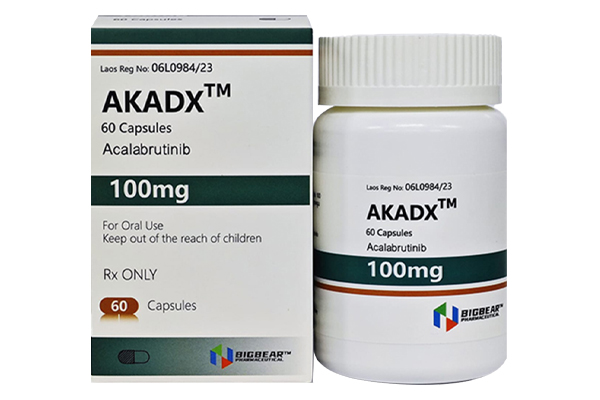
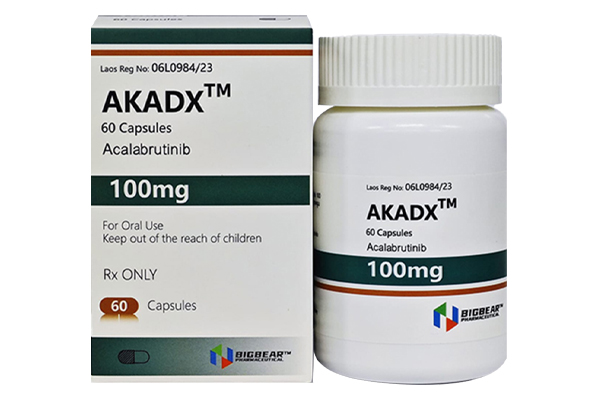
Acalabrutinib is a prescription medication indicated for the treatment of adult patients with mantle cell lymphoma (MCL) who have received at least one prior therapy.

 AuthenticGuaranteeFast DeliveryPrivacy
 As a second-generation Bruton's tyrosine kinase (BTK) inhibitor, acalabrutinib precisely inhibits the activity of BTK, effectively blocking the B-cell signaling pathway and thereby suppressing the growth and spread of tumor cells.
This product is indicated as monotherapy for:
1.Adult patients with chronic lymphocytic leukemia (CLL)/small lymphocytic lymphoma (SLL) who have received at least one prior therapy.
2.Adult patients with mantle cell lymphoma (MCL) who have received at least one prior therapy. This indication is approved conditionally based on the overall response rate from a single-arm clinical trial; regular approval will depend on the results of an ongoing confirmatory randomized controlled clinical trial.
This product should be used under the supervision of a physician experienced in antineoplastic therapy.
The recommended dose of this product is 100 mg (1 capsule) twice daily.An interval of approximately 12 hours should be maintained between doses.Treatment with this product may be continued until disease progression or unacceptable toxicity occurs.
This product should be swallowed whole with water at approximately the same time each day, with or without food.The capsules should not be chewed, dissolved, or opened.
If a patient misses a dose by more than 3 hours, the missed dose should not be taken. The patient should be instructed to take the next dose at the regularly scheduled time.
For grade 3 or higher adverse reactions, the recommended dose adjustment plan for acalabrutinib capsules is as follows:
1.Grade 3 or higher non-hematologic toxicity, grade 3 thrombocytopenia with significant bleeding, grade 4 thrombocytopenia, or grade 4 neutropenia lasting more than 7 days
(1)First and second occurrence of adverse reaction:
Suspend treatment with this product.Once toxicity has resolved to grade 1 or baseline level (recovery achieved), treatment may be restarted at 100 mg twice daily.
(2)Third occurrence of adverse reaction:
Suspend treatment with this product.Once toxicity has resolved to grade 1 or baseline level (recovery achieved), treatment may be restarted at 100 mg once daily.
(3)Fourth occurrence of adverse reaction:
Discontinue treatment with this product permanently.
Note: Adverse reactions are graded according to the National Cancer Institute Common Terminology Criteria for Adverse Events (NCI CTCAE).
The recommended dose adjustment plan is as follows (see also [Drug Interactions]):
1.Concomitant Use with CYP3A Inhibitors
(1)Strong CYP3A inhibitors:
Avoid concomitant use.If short-term treatment with these inhibitors is necessary (e.g., use of anti-infective agents for no more than 7 days), discontinue this product.
(2)Moderate CYP3A inhibitors:
Concomitant use should be avoided as much as possible, considering alternative agents that are not moderate CYP3A inhibitors.If concomitant use cannot be avoided, monitor the patient closely and watch for adverse reactions.
2.Concomitant Use with CYP3A Inducers
Strong CYP3A inducers:
Avoid concomitant use.If these inducers cannot be avoided, increase the dose of this product to 200 mg twice daily.
3.Concomitant Use with Acid-Reducing Agents
(1)Proton pump inhibitors:
Avoid concomitant use.
(2)H2-receptor antagonists:
Take this product at least 2 hours before using an H2-receptor antagonist.
(3)Antacids:
Allow an interval of at least 2 hours between doses of this product and the antacid.
There are no data on the use of acalabrutinib in pregnant women. Based on findings from animal studies, exposure to acalabrutinib during pregnancy may cause fetal harm. This product is contraindicated during pregnancy unless the patient's clinical condition necessitates treatment with acalabrutinib.
It is unknown whether acalabrutinib is excreted in human milk. There are no data on the effects of acalabrutinib on breastfed infants or on milk production. Acalabrutinib and its active metabolites are present in the milk of lactating rats. Risks to infants cannot be excluded. Breastfeeding mothers are advised not to breastfeed during treatment with this product and for 2 days after the last dose.
There are no data on the effects of this product on human fertility. In non-clinical studies of acalabrutinib in male and female rats, no adverse effects on fertility parameters were observed; however, women of reproductive potential should avoid pregnancy while taking this product.
The safety and efficacy of this product in patients under 18 years of age have not been established.
No clinically significant differences in safety or efficacy were observed between patients aged >65 years and younger patients.
No specific clinical studies have been conducted in patients with renal impairment; however, patients with mild or moderate renal impairment were included in clinical studies of this product.
No dose adjustment is recommended. Maintain adequate hydration and monitor serum creatinine levels regularly.
Treatment with this product should be administered only if the benefit outweighs the risk, and these patients should be closely monitored for signs of toxicity. No data are available on the use of this product in patients with severe renal impairment or those receiving dialysis.
No dose adjustment is recommended. However, patients with moderate hepatic impairment should be closely monitored for adverse reactions.
Use of this product is not recommended.
Patients with severe cardiovascular disease were not included in clinical studies of this product.
Bleeding, infections, various cytopenias, second primary malignancies, atrial fibrillation/flutter, etc.
Hypersensitivity to the active substance of this product or any of its excipients.
1.Major bleeding events, including central nervous system and gastrointestinal bleeding (some with fatal outcomes), have occurred in patients with hematologic malignancies receiving this product as monotherapy. These events have been reported in both patients with and without thrombocytopenia. Overall, most bleeding events are mild, including contusions and ecchymoses.
2.The mechanism of bleeding events associated with acalabrutinib is not fully understood. The risk of bleeding may be increased in patients receiving antithrombotic therapy. Antithrombotic agents should be used with caution; when concomitant use is medically necessary, additional monitoring for signs of bleeding should be considered. Warfarin or other vitamin K antagonists should not be used concomitantly with this product.For patients undergoing surgery, the benefits and risks of discontinuing acalabrutinib for at least 3 days before and after surgery should be assessed.
1.Severe infections (bacterial, viral, or fungal), including fatal events, have occurred in patients with hematologic malignancies receiving this product as monotherapy.
2.Most of these infections occurred in the absence of grade 3 or 4 neutropenia; neutropenic infections were reported in 1.9% of all patients. Infections due to reactivation of hepatitis B virus (HBV) and herpes zoster virus (HZV), aspergillosis, and progressive multifocal leukoencephalopathy (PML) have been reported.
1.Cases of hepatitis B reactivation have been reported in patients receiving this product. HBV status should be confirmed before initiating treatment with this product. If a patient is positive for HBV serology, a hepatologist should be consulted before starting treatment, and the patient should be monitored and managed according to local medical standards to prevent HBV reactivation.
2.Cases of progressive multifocal leukoencephalopathy (PML), including fatal cases, have been reported with the use of this product, both in the context of prior or concomitant immunosuppressive therapy. Physicians should consider PML in the differential diagnosis of patients with new or worsening neurocognitive or behavioral signs or symptoms. If PML is suspected, appropriate diagnostic evaluation should be performed, and treatment with this product should be suspended until PML is ruled out.If there is any doubt, referral to a neurologist and appropriate PML diagnostic measures, including MRI scan (preferably contrast-enhanced MRI), cerebrospinal fluid (CSF) testing for JC virus DNA, and repeated neurological assessments, should be considered.
3.For patients at increased risk of opportunistic infections, prophylaxis according to standard treatment should be considered. Signs and symptoms of infection should be monitored and treated appropriately.
Treatment-emergent grade 3 or 4 cytopenias, including neutropenia, anemia, and thrombocytopenia, have occurred in patients with hematologic malignancies receiving this product as monotherapy. Monitor complete blood counts as clinically indicated.
1.Second primary malignancies, including skin cancers and cancers at non-cutaneous sites, have occurred in patients with hematologic malignancies receiving this product as monotherapy.
2.Skin cancers are the most common; monitor patients for the appearance of skin cancers and advise avoidance of sun exposure.
1.Atrial fibrillation/flutter has occurred in patients with hematologic malignancies receiving this product as monotherapy. Monitor for symptoms of atrial fibrillation and flutter (e.g., palpitations, dizziness, syncope, chest pain, dyspnea) and perform electrocardiograms as clinically indicated.
2.For patients who develop atrial fibrillation during treatment with this product, a comprehensive assessment of the risk of thromboembolic disease should be performed. In patients at high risk of thromboembolic disease, consideration should be given to rigorous anticoagulation therapy and alternative treatment options to this product.
1.Concomitant administration of strong CYP3A inhibitors with this product may increase acalabrutinib exposure, resulting in a higher risk of toxicity. Conversely, concomitant administration with CYP3A inducers may decrease acalabrutinib exposure, leading to a risk of reduced efficacy. Concomitant use of strong CYP3A inhibitors should be avoided.
2.If these inhibitors are used for short-term treatment (e.g., anti-infective agents for up to 7 days), treatment with this product should be suspended. If use of moderate CYP3A inhibitors cannot be avoided, patients should be closely monitored for signs of toxicity. Due to the risk of reduced efficacy, concomitant use with strong CYP3A4 inducers should be avoided.
This product contains <1 mmol sodium (23 mg) per dose, which is essentially “sodium-free”.
If any issues arise, please contact us immediately.
Email:haiousales@gmail.com

Cancer cells get signals to grow and divide from a protein called Bruton tyrosine kinase (BTK). Acalabrutinib mechanism of action is by blocking BTK this helps to stop cancer cells from growing and multiplying, to help reduce cancer growth. Acalabrutinib class of medications is called BTK inhibitors and is a targeted therapy. Acalabrutinib is not chemotherapy.
Acalabrutinib is used for adult patients with:
chronic lymphocytic leukemia (CLL)
small lymphocytic lymphoma (SLL)
mantle cell lymphoma (MCL) patients
who have already received at least one other treatment for their cancer.
that is untreated, to be used with bendamustine and rituximab, and they are ineligible for autologous hematopoietic stem cell transplantation (HSCT).
Copyright2024@ BIGBEAR All right reserved BIGBEAR


