
BIGBEAR
PHARMACEUTICALS
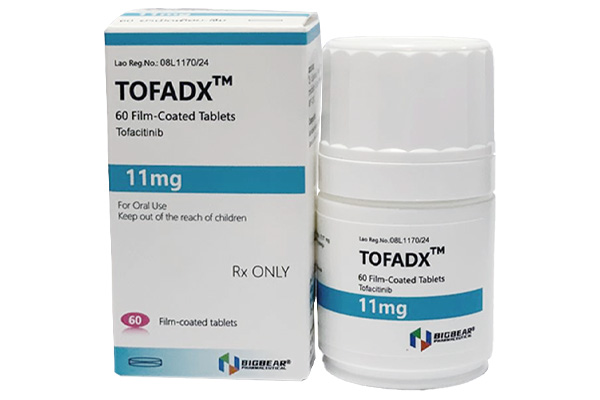
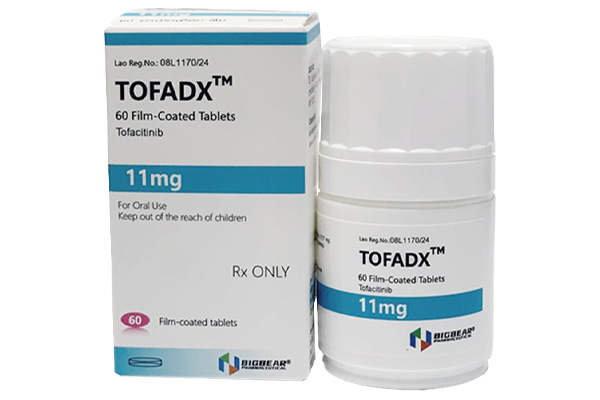
Tofacitinib is a Janus kinase (JAK) inhibitor that precisely regulates the immune system's JAK-STAT pathway, blocking abnormal immune signaling.

 AuthenticGuaranteeFast DeliveryPrivacy
 Tofacitinib modulates immune cell activity and inflammatory responses by selectively inhibiting the JAK-STAT signaling pathway. It is indicated for the treatment of a variety of autoimmune and inflammatory diseases, demonstrating clinical value particularly in patients with an inadequate response to or intolerance of tumor necrosis factor (TNF) blockers.
Tofacitinib is primarily used for the long-term management of rheumatoid arthritis. Patients must meet two criteria:
1.They are currently receiving methotrexate (a common foundational therapy for rheumatoid arthritis) but have an inadequate response.
2.They have moderate to severe active disease, characterized by persistent inflammation in multiple joints.
Tofacitinib may also be considered for patients who cannot tolerate the side effects of methotrexate, such as nausea and liver function abnormalities.
Tofacitinib is a prescription medication and must be obtained with a doctor’s prescription. It should be used strictly in accordance with medical advice; do not adjust the dosing regimen without authorization. If you belong to a contraindicated, cautious use, or special population, be sure to communicate with your doctor to select an appropriate treatment approach.
Before use, always check the expiration date and physical condition of the medication. Do not continue use if the product is expired, or if the tablets show discoloration, breakage, or deterioration.
Before initiating tofacitinib therapy, your doctor will conduct a comprehensive patient assessment, including: screening for latent or active tuberculosis infection, screening for viral hepatitis, and a detailed review of past history of major illnesses such as tumors.
Tofacitinib should be administered as a whole tablet swallowed whole, and must be used after medical evaluation. Dosing time is flexible; it can be taken with or without food, but should be taken at a consistent time each day.
The standard dose for adult patients is 5 mg twice daily, with doses ideally separated by approximately 12 hours.
Dose adjustment for concomitant medications:
Reduce to 5 mg once daily when co-administered with strong CYP3A4 inhibitors (e.g., the antifungal ketoconazole).
Reduce to 5 mg once daily when co-administered with a moderate CYP3A4 inhibitor plus a strong CYP2C19 inhibitor (e.g., fluconazole).
Dose adjustment for renal/hepatic impairment:
Reduce to 5 mg once daily in patients with moderate or severe renal impairment (assessed via creatinine clearance).
Reduce to 5 mg once daily in patients with moderate hepatic impairment (assessed via liver function tests).
Special considerations for combination use:
Use caution when co-administering with conventional DMARDs such as methotrexate.
Hemodialysis patients should take the dose immediately after dialysis; no supplemental dose is needed if dialysis occurs after dosing.
Management of abnormal laboratory findings:
If absolute neutrophil count (ANC) is 500–1000 cells/mm³: Temporarily suspend dosing until ANC recovers to >1000 cells/mm³, then resume at 5 mg twice daily.
If hemoglobin < 8 g/dL or decreases by >2 g/dL within a short period: Immediately stop treatment and closely monitor; resume only after values normalize and per medical advice.
If the missed dose is discovered shortly after the scheduled time, take it as soon as possible. However, if it is almost time for the next dose (more than half the interval between two regular doses has passed), skip the missed dose and take the next dose at the usual time.
Do not take a double dose to make up for a missed one, as this increases the risk of side effects.
If you have questions about adjusting the dose, consult your doctor or pharmacist for advice.
Tofacitinib should be stored in a sealed container below 30°C, out of reach of children.
If adverse reactions occur or symptoms do not improve, seek immediate medical attention.
Regular follow-up and monitoring are required during treatment as directed by a physician.
Women who are pregnant, planning to become pregnant, or breastfeeding must proactively inform their doctor of their status, so that the treatment plan can be evaluated by a healthcare provider.
Tofacitinib must be used under the full supervision of a physician, and parents/guardians should ensure appropriate medication monitoring.
Due to reduced metabolic function in the elderly, special attention should be paid to medication safety.
Dose adjustment is required for patients with moderate to severe renal impairment or moderate hepatic impairment.
Tofacitinib is contraindicated in patients with severe hepatic impairment.
1.Patients with a history of atopy (e.g., allergies to multiple substances such as pollen or seafood) should exercise special care.
2.Patients with chronic pulmonary diseases (e.g., COPD or interstitial lung disease) are at increased risk of respiratory infections and should use caution.
3.Patients at elevated risk of gastrointestinal perforation, such as those with a history of diverticulitis, should use tofacitinib cautiously.
4.Diabetic patients are more susceptible to infections and require enhanced monitoring during treatment.
Serious infections: Including pneumonia (pulmonary inflammation), cellulitis (deep skin infection), herpes zoster (painful blistering rash), urinary tract infection, diverticulitis (inflammation of small pouches in the intestine), appendicitis, etc.
Malignancies: Most commonly lung and breast cancer, followed by gastric cancer, colorectal cancer, renal cancer, prostate cancer, lymphoma, melanoma, and gastrointestinal perforation.
Thromboembolic events: May include pulmonary embolism (blockage of a blood vessel in the lungs), deep vein thrombosis (blood clot in the lower extremities), and arterial thrombosis (blockage of an artery).
Gastrointestinal perforation: Mainly presents as severe, persistent abdominal pain.
Severe hypersensitivity: May include angioedema (subcutaneous swelling) and urticaria (extensive, itchy skin rashes).
Abnormal laboratory findings: Including lymphocytopenia (reduced immune cell count), neutropenia (reduced anti-infective cell count), elevated liver enzymes, and dyslipidemia.
Upper respiratory tract infection, nasopharyngitis (inflammation of the nasal and throat passages), diarrhea, headache, elevated blood pressure.
Anemia (reduced red blood cell count), diverticulitis, dehydration.
Sleep disturbances, limb numbness.
Dyspnea, persistent cough, nasal congestion, interstitial lung disease (some severe cases may be fatal).
Abdominal pain, gastric burning, vomiting, gastritis, nausea and reflux.
Hepatic steatosis (fatty liver), skin redness and rashes, joint and muscle pain.
Non-melanoma skin cancers such as basal cell carcinoma.
Fever, fatigue, swelling of the limbs.
The following seven groups of patients are strictly prohibited from using tofacitinib:
Patients with a known hypersensitivity to any component of tofacitinib are contraindicated.
Patients with severe active infections, including localized infections (e.g., skin abscesses, gingivitis), should not use this medication.
Patients at high risk of thrombosis, such as those with a history of thrombosis or abnormal coagulation function, should avoid use.
Do not initiate treatment in patients with an absolute lymphocyte count below 500 cells/mm³ (equivalent to fewer than 500 lymphocytes per cubic millimeter of blood).
Temporarily suspend use in patients with an absolute neutrophil count (a key immune cell) below 1000 cells/mm³.
Do not initiate treatment in patients with a hemoglobin concentration below 9 g/dL (indicating anemia).
Do not use this product concurrently with live vaccines; the specific interval should follow immunization guidelines for immunosuppressants. For example, live vaccines such as measles or varicella require a specific waiting period.
Seek immediate medical attention and discontinue use if any abnormal reactions occur after administration.
Discontinue use as directed by a physician if routine blood tests show a sustained absolute lymphocyte count below 500 cells/mm³ or a sustained absolute neutrophil count below 500 cells/mm³.
If any issues arise, please contact us immediately.
Email:haiousales@gmail.com

Copyright2024@ BIGBEAR All right reserved BIGBEAR


