
BIGBEAR
PHARMACEUTICALS
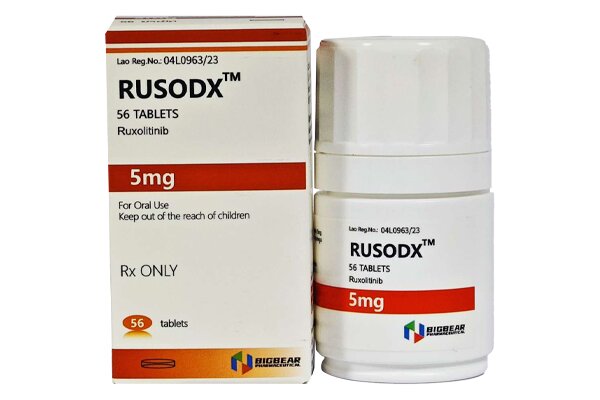
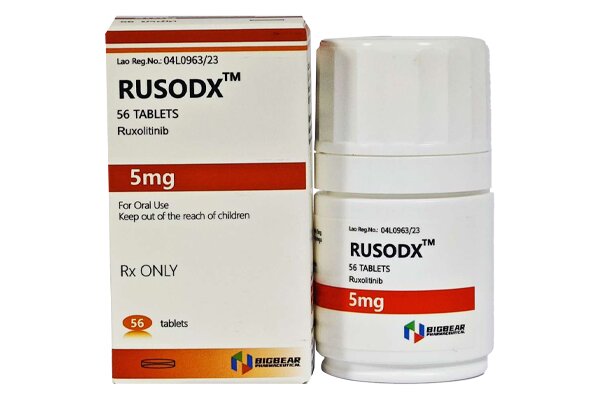
Ruxolitinib exerts its effects by selectively inhibiting the Janus-associated kinases JAK1 and JAK2.

 AuthenticGuaranteeFast DeliveryPrivacy
 Ruxolitinib is an inhibitor of Janus-associated kinases (JAK family), JAK1 and JAK2. These kinases mediate the signal transduction of multiple cytokines and growth factors that play critical roles in hematopoiesis and immune function.
This drug is an inhibitor of Janus-associated kinases (JAK family), JAK1 and JAK2. It is indicated for the treatment of adult patients with intermediate or high-risk primary myelofibrosis (PMF, also known as chronic idiopathic myelofibrosis), post-polycythaemia vera myelofibrosis (PPV-MF), or post-essential thrombocythaemia myelofibrosis (PET-MF), for the management of disease-related splenomegaly or symptoms.
This product is contraindicated in patients with hypersensitivity to the active ingredient or any excipient, and in pregnant or breastfeeding women. It is not recommended for use in patients with hepatic or renal impairment; if use is deemed necessary after a risk-benefit assessment by a physician, close monitoring is required. If you are taking other medications, consult your doctor or pharmacist before starting a new treatment and inform them of all confirmed diagnoses and ongoing therapies. If you are pregnant, planning a pregnancy, or breastfeeding, inform your doctor.
For patients with a platelet count between 100,000/mm³ and 200,000/mm³, the recommended starting dose of this product is 15 mg twice daily. For patients with a platelet count > 200,000/mm³, the recommended starting dose is 20 mg twice daily. For patients with a platelet count between 50,000/mm³ and < 100,000/mm³, the maximum recommended starting dose is 5 mg twice daily. Currently, research data on 5 mg twice daily is limited, and the long-term efficacy of sustained dosing at this level is not established. Long-term use at this dose should be limited to patients where the anticipated benefit is judged to outweigh the potential risks, and the dose should be adjusted with caution.
Dose adjustment guidelines for hematologic toxicity in myelofibrosis patients with a baseline platelet count not less than 100×10⁹/L:
When the platelet count falls below 50×10⁹/L or the absolute neutrophil count (ANC) is below 0.5×10⁹/L, treatment should be interrupted.
Treatment may be reinitiated when the platelet count recovers to ≥50×10⁹/L and the ANC recovers to ≥0.75×10⁹/L.
For the treatment of myelofibrosis (MF), the recommended starting dose is determined based on the patient's platelet count as follows:
For patients with a platelet count > 200×10⁹/L, the recommended starting dose is 20 mg orally, twice daily.
For patients with a platelet count between 100×10⁹/L and 200×10⁹/L, the recommended starting dose is 15 mg orally, twice daily.
For patients with a platelet count between 75×10⁹/L and 100×10⁹/L, the recommended starting dose is 10 mg orally, twice daily.
For patients with a platelet count between 50×10⁹/L and 75×10⁹/L, the recommended starting dose is 5 mg orally, twice daily.
When a reduction in platelet count occurs, dose reduction should be considered as described below to avoid treatment interruption due to thrombocytopenia.
For myelofibrosis patients with a baseline platelet count not less than 100×10⁹/L, the following dose adjustments are recommended for thrombocytopenia:
For patients on 25 mg twice daily:
If the platelet count is between 100×10⁹/L and 125×10⁹/L, reduce to 20 mg twice daily.
If the platelet count is between 75×10⁹/L and 100×10⁹/L, reduce to 10 mg twice daily.
If the platelet count is between 50×10⁹/L and 75×10⁹/L, reduce to 5 mg twice daily.
If the platelet count is < 50×10⁹/L, suspend treatment.
For patients on 20 mg twice daily:
If the platelet count is between 100×10⁹/L and 125×10⁹/L, reduce to 15 mg twice daily.
If the platelet count is between 75×10⁹/L and 100×10⁹/L, reduce to 10 mg twice daily.
If the platelet count is between 50×10⁹/L and 75×10⁹/L, reduce to 5 mg twice daily.
If the platelet count is < 50×10⁹/L, suspend treatment.
Dose adjustment for insufficient response in myelofibrosis patients with a baseline platelet count not less than 100×10⁹/L:
If the response is insufficient and both platelet and neutrophil counts are adequate, the dose may be gradually increased in 5 mg twice daily increments up to a maximum of 25 mg twice daily.
Dose increases should not occur within the first 4 weeks of treatment, and the frequency of increases should not exceed once every 2 weeks.
Consideration for dose escalation may be given to patients who meet all of the following conditions:
The reduction in spleen length on palpation is less than 50%, or the reduction in spleen volume measured by computed tomography (CT) or magnetic resonance imaging (MRI) is less than 35%, compared to baseline.
At week 4, the platelet count exceeds 125×10⁹/L and has not fallen below 100×10⁹/L at any time.
The ANC level exceeds 0.75×10⁹/L.
Dose adjustment for hematologic toxicity in myelofibrosis patients with a baseline platelet count between 50×10⁹/L and 100×10⁹/L:
When the platelet count falls below 25×10⁹/L or the ANC is below 0.5×10⁹/L, treatment should be interrupted.
Treatment may be reinitiated when the platelet count recovers to ≥35×10⁹/L or the ANC recovers to ≥0.75×10⁹/L.
Reinitiation of treatment should be at a dose 5 mg twice daily lower than the maximum dose administered in the week prior to interruption due to a platelet count < 25×10⁹/L or an ANC < 0.5×10⁹/L, or at a starting dose of 5 mg once daily, whichever is higher.
When the platelet count falls below 35×10⁹/L, the dose of ruxolitinib should be reduced as described below.
For myelofibrosis patients with a baseline platelet count between 50×10⁹/L and 100×10⁹/L, the following dose adjustments are recommended for thrombocytopenia:
If the platelet count is < 25×10⁹/L, interrupt dosing.
If the platelet count is between 25×10⁹/L and 35×10⁹/L and has decreased by < 20% within the preceding 4 weeks:
1.Reduce one of the twice-daily doses by 5 mg.
2.If the patient is on 5 mg once daily, continue this dose.
If the platelet count is between 25×10⁹/L and 35×10⁹/L and has decreased by ≥20% within the preceding 4 weeks:
1.Reduce both twice-daily doses by 5 mg.
2.If the patient is on 5 mg twice daily, reduce the dose to 5 mg once daily.
3.If the patient is on 5 mg once daily, continue this dose.
Dose adjustment for insufficient response in myelofibrosis patients with a baseline platelet count between 50×10⁹/L and 100×10⁹/L:
Dose increases should not occur within the first 4 weeks of treatment, and the frequency of increases should not exceed once every 2 weeks.
If insufficient response occurs in a myelofibrosis patient and all of the following conditions are met, the dose may be gradually increased in 5 mg once daily increments up to a maximum of 10 mg twice daily:
The platelet count remains ≥ 40×10⁹/L and has decreased by < 20% within the preceding 4 weeks.
The ANC is > 1×10⁹/L and no dose reductions or treatment interruptions have occurred due to adverse events or hematologic toxicity within the preceding 4 weeks.
Dose adjustment when co-administered with strong CYP3A4 inhibitors or fluconazole:
When this product is co-administered with a strong CYP3A4 inhibitor or a dual CYP2C9 and CYP3A4 inhibitor (e.g., fluconazole), the total daily dose of this product should be reduced by approximately 50%.
Twice-daily dosing should be maintained, or if twice-daily dosing is not feasible, the dosing frequency should be reduced to the corresponding once-daily regimen.
No additional dose adjustment is required for patients with mild or moderate renal impairment.
If a patient has severe renal impairment (creatinine clearance < 30 mL/min), the recommended starting dose should be reduced by approximately 50%, administered twice daily. During treatment with this product, patients should be closely monitored for safety and efficacy.
Data on optimal dosing in patients with end-stage renal disease (ESRD) undergoing hemodialysis is limited. Based on existing pharmacokinetic/pharmacodynamic modeling data in this population, the starting dose for ESRD patients on hemodialysis is a single dose of 15 mg to 20 mg, administered on the day of dialysis after the procedure is completed.
If the patient's platelet count is between 100,000/mm³ and 200,000/mm³, the single dose is 15 mg.
If the patient's platelet count is > 200,000/mm³, the recommended single dose is 20 mg or 10 mg every 12 hours (for a total of 2 doses).
Subsequent dosing (single dose or 10 mg every 12 hours for a total of 2 doses) is administered on the day of hemodialysis during each dialysis period, once daily.
Recommended doses are based on modeling; for ESRD patients, any dose adjustment should be made only after close monitoring of the individual patient's safety and efficacy. There is a lack of data to support dosing recommendations for patients on peritoneal dialysis or continuous veno-venous hemodialysis.
If a patient has mild, moderate, or severe hepatic impairment (corresponding to Child-Pugh A, B, and C), the recommended starting dose based on platelet count should be reduced by approximately 50%, administered twice daily. Subsequent doses should be adjusted based on close monitoring of safety and efficacy.
Patients with a diagnosis of hepatic impairment should undergo complete blood count monitoring, including white blood cell differential and counts, during treatment with this product. Monitoring should be performed at least every 1 to 2 weeks during the first 6 weeks after initiation of treatment. If subsequent hepatic function and blood cell counts stabilize, further monitoring may be determined based on clinical circumstances. To reduce the risk of cytopenias, the dosing of this product may be adjusted.
At the initiation of treatment with this product, complete blood counts, including white blood cells, platelets, and red blood cell differentials, should be monitored weekly. After 4 weeks, monitoring may be performed every 2 to 4 weeks until the dose of this product is stabilized, after which monitoring may be performed as clinically indicated.
If a dose is missed, the patient should not make up for the missed dose, but should adhere to the original dosing schedule and take the next dose at the scheduled time.
This product should be stored below 30°C, with a shelf life of 24 months. Before initiating treatment with this product, a complete blood count, including white blood cell differential counts, must be performed. This product should only be used by physicians with experience in the use of antineoplastic agents. If you are using other medications, consult your physician or pharmacist before using this product. During treatment, patients should maintain a light diet and avoid consuming spicy and irritating foods, such as chili peppers and Sichuan peppercorns, to avoid affecting the efficacy of the medication or exacerbating adverse reactions.
Ruxolitinib phosphate is contraindicated during pregnancy as a precautionary measure.
Ruxolitinib and its metabolites are excreted in breast milk; therefore, breastfeeding should be discontinued when treatment is initiated.
The safety and efficacy of this product in children under 18 years of age have not been established.
No additional dose adjustment is required for elderly patients (≥65 years).
If you are pregnant, planning a pregnancy, or breastfeeding, inform your doctor immediately to seek professional advice and determine the most appropriate treatment plan.
Infections and infestations
Urinary tract infection, herpes zoster, pneumonia, pyogenic verrucosis, tuberculosis, reactivation of hepatitis B.
Blood and lymphatic system diseases
Anemia, thrombocytopenia, neutropenia, pancytopenia.
Metabolism and nutrition disorders
Hypercholesterolemia, hypertriglyceridemia, weight gain.
Nervous system diseases
Dizziness, headache.
Gastrointestinal diseases
Constipation, abdominal distension, elevated lipase.
Hepatic diseases
Elevated alanine aminotransferase, elevated aspartate aminotransferase.
Vascular diseases
Hypertension.
The occurrence of adverse reactions may be related to the patient's physical condition and medication use. During treatment, please closely monitor your physical condition. If adverse reactions occur or you feel unwell, seek medical attention immediately. If necessary, vital signs such as blood pressure, heart rate, and respiratory frequency can be monitored to obtain timely medical guidance and necessary treatment.
Ruxolitinib is contraindicated in patients with hypersensitivity to the active ingredient or any excipient, and in pregnant or breastfeeding women, due to the increased risk of severe disease progression.
Treatment may continue as long as the patient's benefit clearly outweighs the risks. However, if there is no reduction in spleen volume and no improvement in symptoms 6 months after the start of treatment, treatment should be discontinued.
For patients who have achieved some degree of clinical improvement, if the spleen volume increases by 40% (roughly equivalent to a 25% increase in spleen volume) compared to baseline, and there is no substantial improvement in disease-related symptoms, it is recommended to discontinue treatment.
If any issues arise, please contact us immediately.
Email:haiousales@gmail.com

Copyright2024@ BIGBEAR All right reserved BIGBEAR


