
BIGBEAR
PHARMACEUTICALS
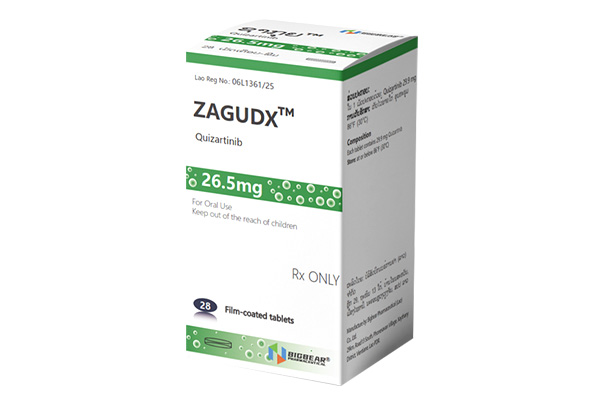
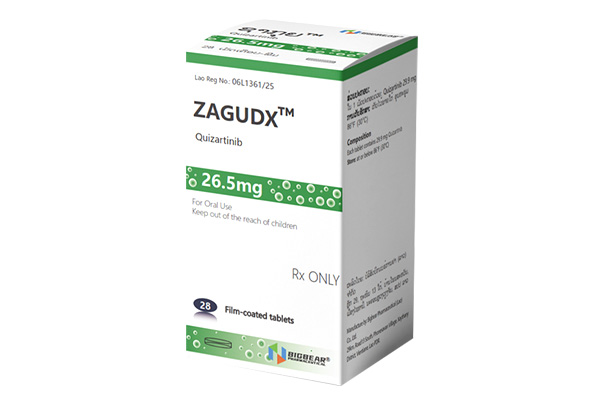
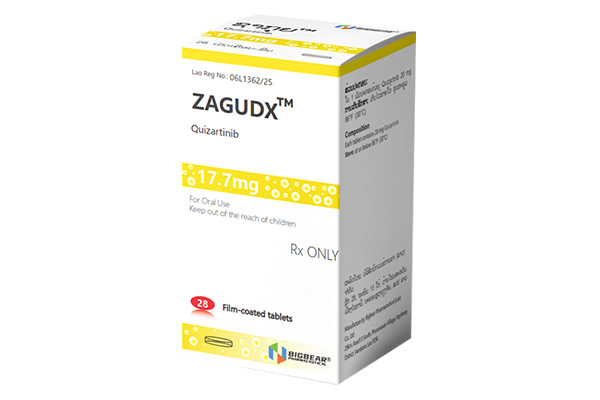
Quizartinib specifically targets the FLT3-ITD mutant protein, blocking downstream MAPK/ERK, PI3K/AKT, and STAT5 signaling pathways, thereby inhibiting leukemia cell proliferation and inducing apoptosis.

 AuthenticGuaranteeFast DeliveryPrivacy
 Quizartinib is clinically used in combination with chemotherapy for the treatment of adult patients with acute myeloid leukemia (AML) harboring the FLT3-ITD gene mutation, and it may also be continued in patients who have recovered well after bone marrow transplantation.
This medicinal product is indicated in combination with chemotherapy for the treatment of adult patients with acute myeloid leukemia (AML, a type of blood cancer) harboring an FLT3-ITD mutation. Patients who have recovered well after bone marrow transplantation may also continue treatment with this product. Treatment should only be initiated upon confirmation of FLT3-ITD mutation positivity in the patient's cancer cells through testing of the FLT3 gene.
Administration: For oral use. Can be taken with or without food, at a fixed time each day. If vomiting occurs after taking the dose, do not take an additional dose that day. If a dose is missed, take it as soon as possible on the same day and resume the regular dose the next day. Double doses must not be taken to compensate for a missed dose.
During the chemotherapy cycle, the recommended starting dose is 35.4 mg (two 17.7 mg tablets) taken once daily for 2 weeks. The maximum recommended dose is 53 mg once daily. If co-administered with specific medicinal products, the starting dose may be adjusted to 17.7 mg once daily.
Upon completion of chemotherapy, treatment may be initiated at 26.5 mg once daily for 2 weeks, subsequently increased to 53 mg (two 26.5 mg tablets) once daily based on patient tolerability.
Dose Adjustments: The physician may temporarily withhold or adjust the dose based on blood test results, adverse reactions, and concomitant medications. Treatment must be discontinued prior to hematopoietic stem cell transplantation; the timing for resuming treatment should follow the physician's instructions.
Continue treatment as prescribed by the physician. The physician will regularly assess the patient's condition to determine whether to continue therapy. Patients should not adjust the dose or discontinue treatment on their own.
In case of accidental overdose, seek immediate medical attention and bring this package insert.
Insufficient data are available in patients < 18 years of age. This medicinal product is contraindicated in this population.
Patients aged ≥ 65 years have an increased risk of developing severe infections during the early phase of treatment. Close monitoring is required.
Contraindicated. This medicinal product may cause fetal harm. Females of reproductive potential must undergo pregnancy testing within 7 days prior to initiating treatment. Effective contraception must be used during treatment and for at least 7 months after the last dose. Male patients must use effective contraception during treatment and for at least 4 months after the last dose.
Contraindicated. It is unknown whether this medicinal product is excreted in human milk. Breastfeeding must be discontinued during treatment and for at least 5 weeks after the last dose.
This medicinal product may impair fertility in both males and females. Patients should consult their physician prior to treatment.
This medicinal product may cause adverse reactions. The incidence and manifestations of adverse reactions by severity grade are described below. Severe adverse reactions require immediate medical attention:
Serious Adverse Reactions: Dizziness, vertigo, near-syncope (indicative of QT prolongation); pyrexia, cough, chest pain, dyspnea, fatigue, dysuria (indicative of infection or febrile neutropenia).
Very Common (incidence >10%): Alanine aminotransferase increased, thrombocytopenia, anemia, neutropenia, diarrhea, nausea, abdominal pain, headache, vomiting, edema, upper respiratory tract infection, decreased appetite, epistaxis, fungal infections, herpes virus infections, dyspepsia, bacteremia.
Common (incidence 1%-10%): Pancytopenia.
Uncommon (incidence 0.1%-1%): Cardiac arrest, ventricular fibrillation.
Hypersensitivity to quizartinib or to any of the excipients.
Patients with congenital long QT syndrome (abnormal electrical activity of the heart affecting heart rate).
Women who are breastfeeding.
Patients with a history of cardiac disease (arrhythmias, myocardial infarction within 6 months, heart failure, uncontrolled angina/hypertension), low blood potassium/magnesium levels, or those taking medicinal products that prolong the QT interval or strong CYP3A inhibitors should consult their physician prior to treatment.
Regular blood tests are required during treatment to monitor blood cell counts and electrolyte levels. Increased frequency of electrolyte monitoring is recommended during episodes of diarrhea/vomiting. Electrocardiograms should be performed before and during treatment; weekly initially, then as advised by the physician. More frequent cardiac monitoring is required when co-administered with medicinal products that prolong the QT interval.
Strong CYP3A inhibitors (e.g., itraconazole, clarithromycin, nefazodone) increase the plasma concentration of this medicinal product and the risk of adverse reactions. Concomitant use should be avoided.
CYP3A inducers (e.g., rifampin, carbamazepine, St. John's wort) may reduce the efficacy of this medicinal product. Concomitant use should be avoided.
Caution is advised when co-administered with HIV treatments: Ritonavir may increase the plasma concentration of this medicinal product, while efavirenz and others may reduce its efficacy.
Concomitant use with medicinal products that prolong the QT interval (e.g., azole antifungals, ondansetron, azithromycin) should be avoided, as this may further increase the risk of QT prolongation.
This medicinal product has no or negligible influence on the ability to drive or operate machinery.
If any issues arise, please contact us immediately.
Email:haiousales@gmail.com

Copyright2024@ BIGBEAR All right reserved BIGBEAR


