
BIGBEAR
PHARMACEUTICALS
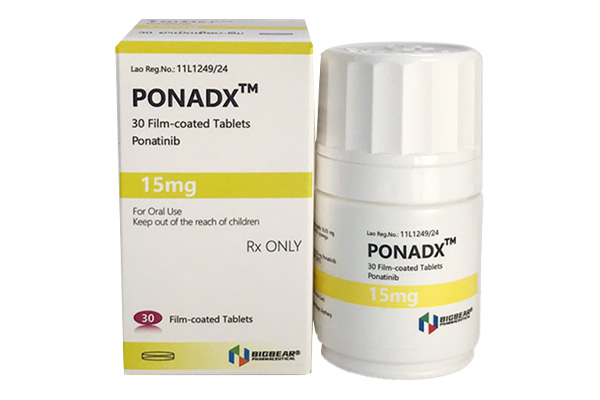
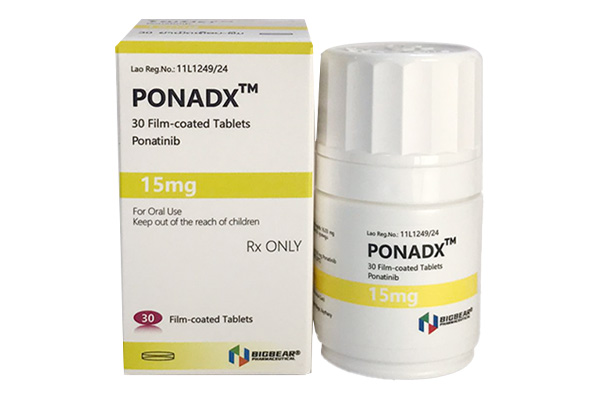
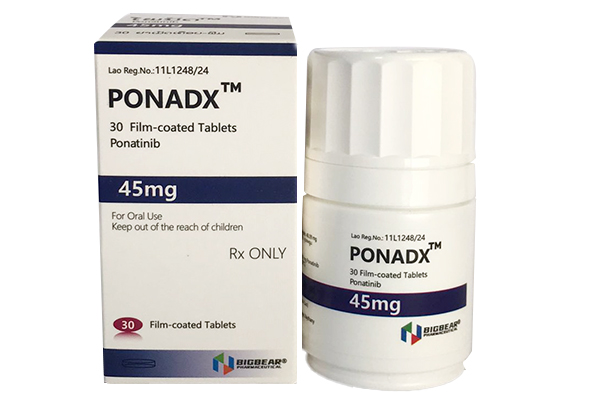
Ponatinib is a tyrosine kinase inhibitor that exerts its effect by selectively inhibiting the activities of BCR-ABL fusion protein and various other kinases.

 AuthenticGuaranteeFast DeliveryPrivacy
 Ponatinib is primarily indicated for the treatment of adult patients with chronic myeloid leukemia (CML) who are resistant or intolerant to prior tyrosine kinase inhibitor therapy, as well as adult patients with Philadelphia chromosome-positive (Ph+) acute lymphoblastic leukemia (ALL).
This product is indicated for the treatment of the following conditions in adult patients:
1.Chronic phase chronic myeloid leukemia (CML) who are resistant and/or intolerant to first- and second-generation tyrosine kinase inhibitors (TKIs).
2.Relapsed or refractory accelerated phase or blast phase CML, and Philadelphia chromosome-positive (Ph+) acute lymphoblastic leukemia (ALL), for which no other tyrosine kinase inhibitors are suitable.
3.Chronic phase, accelerated phase, or blast phase CML, or Ph+ ALL, that is resistant to any tyrosine kinase inhibitor and has a confirmed T315I mutation via a fully validated detection method.
Not indicated and not recommended for patients with newly diagnosed chronic phase (CP) CML (see [Precautions]).
The recommended starting dose is 45 mg orally once daily. When the international normalized ratio (IS) of BCR-ABL1 (breakpoint cluster region-Abelson murine leukemia viral oncogene homolog 1) ≤1%, reduce the dose to 15 mg orally once daily.
Patients who lose treatment response may have their dose re-escalated to the previously tolerated dose of 30 mg or 45 mg orally once daily. Continue treatment until loss of response or unacceptable toxicity occurs. If no hematologic response is achieved within 3 months, consider discontinuing the product.
The optimal dose has not been established. The recommended starting dose is 45 mg orally once daily.
For AP-CML patients who have achieved a major cytogenetic response, consider reducing the dose and continuing treatment until loss of response or unacceptable toxicity occurs. If no response is achieved within 3 months, consider discontinuing the product.
The tablet may be taken with or without food.
Swallow the tablet whole. Do not crush, split, cut, or chew the tablet.
If a dose is missed, take the next dose at the usual scheduled time the following day.
Grade 1: Withhold treatment until the adverse reaction resolves, then resume at the same dose.
Grade 2: Withhold treatment until the adverse reaction resolves to Grade 0 or 1, then resume at the next lower dose. If the adverse reaction recurs, discontinue treatment permanently.
Grade 3 or 4: Discontinue treatment permanently.
Grade 1: Withhold treatment until the adverse reaction resolves, then resume at the same dose.
Grade 2: Withhold treatment until the adverse reaction resolves to Grade 0 or 1, then resume at the same dose. If the adverse reaction recurs, withhold treatment until it resolves to Grade 0 or 1, then resume at the next lower dose.
Grade 3: Withhold treatment until the adverse reaction resolves to Grade 0 or 1, then resume at the next lower dose. If the adverse reaction recurs, discontinue treatment permanently.
Grade 4: Discontinue treatment permanently.
Grade 2 or 3: Withhold treatment until the adverse reaction resolves to Grade 0 or 1, then resume at the next lower dose. If the adverse reaction recurs, discontinue treatment permanently.
Grade 4: Discontinue treatment permanently.
AST or ALT >3×ULN but ≤5×ULN: Withhold treatment until the adverse reaction resolves to Grade 0 or 1, then resume at the next lower dose.
AST or ALT ≥3×ULN with total bilirubin ≥2×ULN and alkaline phosphatase <2×ULN: Discontinue treatment permanently.
Serum lipase 1–1.5×ULN: Consider withholding treatment until the adverse reaction resolves, then resume at the same dose.
Serum lipase 1.5–2.5×ULN and asymptomatic or asymptomatic radiation pancreatitis: Withhold treatment until the adverse reaction resolves to Grade 0 or 1 (lipase <1.5×ULN), then resume at the next lower dose.
Serum lipase 2–5×ULN with symptoms, symptomatic Grade 3 pancreatitis, or serum lipase >5×ULN and asymptomatic: Withhold treatment until symptoms fully resolve, serum lipase decreases to Grade 0 or 1, then resume at the next lower dose.
Symptomatic pancreatitis with serum lipase >5×ULN: Discontinue treatment permanently.
Absolute neutrophil count <1×10⁹/L or platelet count <50×10⁹/L: Withhold treatment until ANC ≥1.5×10⁹/L and platelets ≥75×10⁹/L, then resume at the same dose.
If the adverse reaction recurs, withhold treatment until it resolves, then resume at the next lower dose.
Grade 1: Withhold treatment until the adverse reaction resolves, then resume at the same dose.
Grade 2: Withhold treatment until the adverse reaction resolves to Grade 0 or 1, then resume at the same dose. If the adverse reaction recurs, withhold treatment until it resolves to Grade 0 or 1, then resume at the next lower dose.
Grade 3 or 4: Withhold treatment until the adverse reaction resolves to Grade 0 or 1, then resume at the next lower dose. If the adverse reaction recurs, discontinue treatment permanently.
For CP-CML, AP-CML, BP-CML, and Ph+ ALL patients:
First dose reduction: 30 mg orally once daily.
Second dose reduction: 15 mg orally once daily.
Third dose reduction: If the patient cannot tolerate 15 mg once daily, discontinue treatment permanently.
Avoid concomitant use of ponatinib with strong cytochrome P450 (CYP) 3A inhibitors. If co-administration is unavoidable, reduce the dose of ponatinib according to Table 3. After discontinuing the strong CYP3A inhibitor for 3–5 half-lives, resume ponatinib at the tolerated dose prior to initiation of the strong CYP3A inhibitor (see [Drug Interactions] and [Pharmacology and Toxicology]).
Current ponatinib dose 45 mg once daily: Reduce to 30 mg once daily when concomitantly using a strong CYP3A inhibitor.
Current ponatinib dose 30 mg once daily: Reduce to 15 mg once daily when concomitantly using a strong CYP3A inhibitor.
Current ponatinib dose 15 mg once daily: Avoid concomitant use of ponatinib with strong CYP3A inhibitors.
Abbreviations:
CTCAE = National Cancer Institute (NCI) Common Terminology Criteria for Adverse Events (version 5.0)
ULN = Upper Limit of Normal
AOE = Arterial Occlusive Events
VTE = Venous Thromboembolism
ANC = Absolute Neutrophil Count
Before initiating ponatinib, verify the pregnancy status of females of reproductive potential. Based on animal studies and its mechanism of action, ponatinib may cause fetal harm when administered to pregnant women.
No data are available on the use of ponatinib in pregnant women. In animal reproductive studies, oral administration of ponatinib to pregnant rats during organogenesis at doses below the maximum recommended human dose of 45 mg/day resulted in developmental abnormalities (see [Pharmacology and Toxicology]).
Pregnant females should be informed of the potential risk to the fetus.
It is unknown whether ponatinib is excreted in human milk, or its effects on breastfed infants or milk production. Because ponatinib may cause serious adverse reactions in breastfed infants, females are advised to discontinue breastfeeding during treatment and for 1 week after the last dose.
Based on animal studies, ponatinib may impair fertility in females of reproductive potential. It is unknown whether these effects are reversible.Females of reproductive potential should use effective contraception during treatment and for 3 weeks after the last dose of ponatinib.
Patients with hepatic impairment are more prone to adverse reactions than those with normal hepatic function. For patients with mild, moderate, or severe hepatic impairment (Child-Pugh Class A, B, or C), reduce the starting dose from 45 mg once daily to 30 mg once daily. No safety studies have been conducted with doses higher than 30 mg in patients with hepatic impairment.
No dose adjustment is recommended for patients with mild to moderate renal impairment (creatinine clearance 30–89 mL/min). Use with caution in patients with severe renal impairment (creatinine clearance <30 mL/min) or end-stage renal disease.
Patients aged 65 years or older have a higher incidence of adverse reactions, including vascular occlusion, decreased platelet count, peripheral edema, elevated lipase, dyspnea, fatigue, muscle spasms, and decreased appetite. In addition, elderly patients are more likely to have hepatic, renal, or cardiac dysfunction, concurrent illnesses, or receive other medications, so dosage selection should be made with caution.
No clinical data are available for patients under 18 years of age. In juvenile rat studies, no adverse effects on developmental parameters were observed.
The following clinically significant adverse reactions are described in other sections of the label:
Arterial occlusive events
Venous thromboembolic events
Heart failure
Hepatotoxicity
Hypertension
Pancreatitis
Neuropathy
Ocular toxicity
Hemorrhage
Fluid retention
Cardiac arrhythmias
Myelosuppression
Tumor lysis syndrome
Reversible posterior leukoencephalopathy syndrome
Impaired wound healing and gastrointestinal perforation
This product is contraindicated in patients with known hypersensitivity to the active ingredient or any of its excipients.
Arterial occlusive events (AOE), including fatal cases, have been reported in patients receiving ponatinib in the OPTIC and PACE trials.
Monitor for evidence of AOE. Withhold ponatinib, then resume at the same or reduced dose based on recurrence and severity. Reinitiation should be determined based on a benefit-risk assessment.
Severe or grade 3/4 venous thromboembolic events (VTE) have been reported in patients treated with ponatinib.
Monitor for evidence of VTE. Withhold ponatinib, then resume at the same or reduced dose based on recurrence and severity.
Fatal, severe, or grade 3/4 heart failure events have been reported in patients receiving ponatinib.
Monitor patients for signs or symptoms of heart failure and manage per clinical guidelines. If new or worsening heart failure occurs, withhold ponatinib, then resume at a reduced dose or discontinue.
Ponatinib may cause hepatotoxicity, including liver failure and death. Three patients experienced fatal fulminant hepatitis, with one case occurring within 1 week of initiation; all fatal cases occurred in BP-CML or Ph+ ALL patients.
Monitor liver function at baseline, then monthly or as clinically indicated. Withhold ponatinib, then resume at a reduced dose or discontinue based on recurrence and severity.
Severe or grade 3/4 hypertension, including hypertensive crises, have been reported in patients receiving ponatinib. Patients with confusion, headache, or shortness of breath may require urgent intervention.
Monitor blood pressure at baseline and as clinically indicated, and manage hypertension per clinical guidelines. If hypertension is not medically controlled, withhold, reduce the dose, or discontinue ponatinib).
For severely worsening, unstable, or refractory hypertension, withhold ponatinib and consider evaluating for renal artery stenosis.
Severe or grade 3/4 pancreatitis has been reported in patients receiving ponatinib.
Monitor serum lipase every 2 weeks for the first 2 months, then monthly or as clinically indicated. Patients with a history of pancreatitis or alcohol abuse should undergo additional lipase monitoring. Withhold ponatinib, then resume at the same or reduced dose based on severity. Evaluate for pancreatitis in patients with elevated lipase and abdominal symptoms.
In a prospective randomized trial comparing first-line ponatinib 45 mg once daily vs. imatinib 400 mg once daily in newly diagnosed CP-CML patients, ponatinib was associated with a 2-fold higher risk of serious adverse reactions. The trial was terminated early due to safety concerns, with a median follow-up of <6 months.
Ponatinib was associated with at least twice the rate of arterial and venous thrombosis/occlusion compared to imatinib, as well as higher rates of myelosuppression, pancreatitis, hepatotoxicity, heart failure, hypertension, and skin/subcutaneous tissue disorders.
Use Restriction: Ponatinib is not indicated and not recommended for newly diagnosed CP-CML patients.
Neuropathy, including peripheral neuropathy, has been reported in patients receiving ponatinib.
Monitor patients for symptoms such as decreased tactile sensation, paresthesia, dysesthesia, discomfort, burning pain, or neuralgia. Withhold ponatinib, then resume at the same or reduced dose based on recurrence and severity.
Severe ocular toxicity, leading to blindness or blurred vision, has been reported in patients receiving ponatinib.
Conduct comprehensive ophthalmologic examinations at baseline and periodically during treatment.
Fatal and severe hemorrhage events have been reported in patients receiving ponatinib.
Monitor for hemorrhage and manage per clinical guidelines. Withhold ponatinib, then resume at the same or reduced dose based on recurrence and severity.
Fatal and severe fluid retention events have been reported in patients receiving ponatinib.
Monitor for fluid retention and manage per clinical guidelines. Withhold ponatinib, then resume at the same or reduced dose based on recurrence and severity.
Cardiac arrhythmias have been reported in patients receiving ponatinib.
Monitor for signs or symptoms of bradycardia (dizziness, syncope) or tachycardia (chest pain, palpitations, dizziness) and manage per clinical guidelines. Withhold ponatinib, then resume at the same or reduced dose based on recurrence and severity.
Severe myelosuppression has been reported in patients receiving ponatinib.
Monitor complete blood counts every 2 weeks for the first 3 months, then monthly or as clinically indicated. Withhold ponatinib if ANC <1×10⁹/L or platelets <50×10⁹/L, and resume once ANC ≥1.5×10⁹/L and platelets ≥75×10⁹/L, at the same or reduced dose.
Tumor lysis syndrome has been reported in patients receiving ponatinib.
Ensure adequate hydration and treat hyperuricemia before initiating ponatinib.
Reversible posterior leukoencephalopathy syndrome (RPLS), also known as reversible posterior cerebral syndrome, has been reported in patients receiving ponatinib. Patients may present with hypertension, seizures, headache, altered mental status, visual disturbances, and other neurological deficits.
Perform magnetic resonance imaging (MRI) to confirm diagnosis. Withhold ponatinib until resolution. The safety of reinitiating ponatinib after RPLS resolution is unknown.
Impaired wound healing has been reported in patients receiving ponatinib.
Discontinue ponatinib at least 1 week before elective surgery and do not resume for at least 2 weeks post-surgery until adequate wound healing is confirmed. The safety of resuming ponatinib after wound healing complications is unknown.
Gastrointestinal perforation or fistula has been reported in patients receiving ponatinib. Permanently discontinue ponatinib in patients with gastrointestinal perforation.
Based on its mechanism of action and animal studies, ponatinib may cause fetal harm when administered to pregnant women. In animal reproductive studies, oral ponatinib during organogenesis at doses below the maximum recommended human dose of 45 mg/day caused developmental abnormalities in pregnant rats.
Advise pregnant females of the potential risk to the fetus. Advise females of reproductive potential to use effective contraception during treatment and for 3 weeks after the last dose.
If any issues arise, please contact us immediately.
Email:haiousales@gmail.com

Ponatinib is a cancer medicine that interferes with the growth of some cancer cells.
Ponatinibis used in adults to treat a type of blood cancer called chronic myeloid leukemia (CML), or Philadelphia chromosome positive acute lymphoblastic leukemia (ALL).
Ponatinib is usually given after other similar medications have been tried without success.
Take the medicine as soon as you can, but skip the missed dose if it is almost time for your next dose. Do not take two doses at one time.
Grapefruit may interact with ponatinib and lead to unwanted side effects. Avoid the use of grapefruit products.
Sometimes it is not safe to use certain medications at the same time. Some drugs can affect your blood levels of other drugs you take, which may increase side effects or make the medications less effective.
Many drugs can interact with ponatinib. This includes prescription and over-the-counter medicines, vitamins, and herbal products. Not all possible interactions are listed here. Tell your doctor about all your current medicines and any medicine you start or stop using.
Copyright2024@ BIGBEAR All right reserved BIGBEAR


