
BIGBEAR
PHARMACEUTICALS
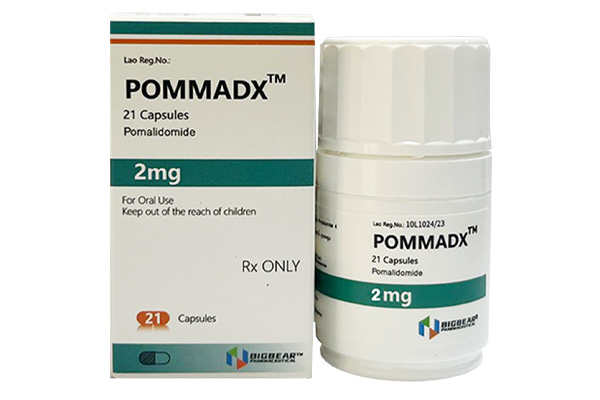
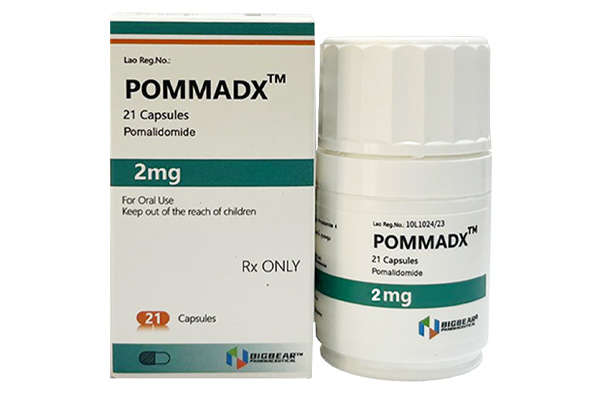
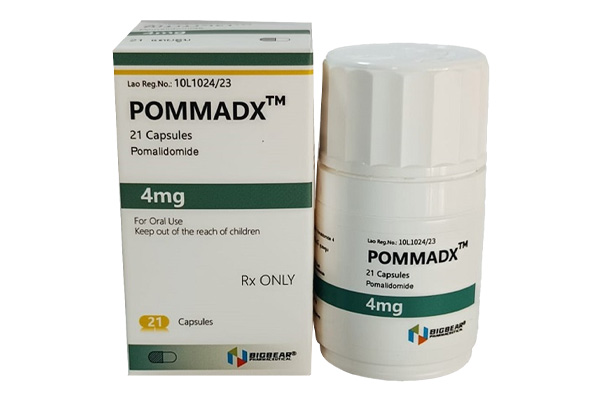
Pomalidomide is a third‑generation oral immunomodulatory antineoplastic agent and a derivative of thalidomide.

 AuthenticGuaranteeFast DeliveryPrivacy
 Pomalidomide exerts multiple antitumor effects by modulating the tumor immune microenvironment, inhibiting angiogenesis, and inducing tumor cell apoptosis. This product is often used in combination with dexamethasone.
Pomalidomide, a thalidomide analog, is indicated for the treatment of patients with multiple myeloma who have received at least two prior therapies including lenalidomide and bortezomib, and have demonstrated disease progression on or within 60 days after completion of the last therapy.
Females of reproductive potential must have a negative pregnancy test before initiating treatment with pomalidomide capsules and use effective contraceptive measures.
The recommended starting dose of this product is 4 mg orally once daily, on days 1–21 of a 28‑day treatment cycle, until disease progression.
It is administered in combination with dexamethasone.
This product should be taken with water.
Patients should be instructed not to break, chew, or open the capsules.
This product may be taken with or without food.
Patients with Severe Renal Impairment Undergoing Hemodialysis
On hemodialysis days, pomalidomide should be administered after completion of dialysis.
The recommended starting dose is 3 mg once daily (25% dose reduction) for patients with severe renal impairment requiring dialysis.
For patients with mild or moderate hepatic impairment (Child‑Pugh Class A or B), the recommended starting dose is 3 mg once daily (25% dose reduction).
For patients with severe hepatic impairment (Child‑Pugh Class C), the recommended dose is 2 mg once daily (50% dose reduction).
No dose adjustment is required in geriatric patients.
The safety and efficacy of this product in pediatric patients have not been established.
This product is contraindicated in pregnant women. Use of this product in pregnant women may cause harm to the fetus. Pomalidomide is a thalidomide analog and has teratogenic effects when administered during the organogenesis period in rats and rabbits. If a patient becomes pregnant during treatment, she should be fully informed of the potential risks to the fetus.
This product is contraindicated in patients with a history of hypersensitivity to pomalidomide or any of its excipients.
Pomalidomide capsules are a thalidomide analog. Do not use this product during pregnancy.
Thalidomide is known to be teratogenic in humans and may cause fetal birth defects or embryo‑fetal death.
Prescribing of this product is subject to strict controls.
Females of Reproductive Potential
Females of reproductive potential must avoid pregnancy for at least 4 weeks prior to initiating pomalidomide therapy, during treatment, during dose interruptions, and for at least 4 weeks after completion of therapy.
Female patients must commit to using two reliable methods of contraception simultaneously, or to complete abstinence from heterosexual intercourse, for 4 weeks before starting this product, during treatment, during dose interruptions, and for 4 weeks after stopping treatment.
Two negative pregnancy test results must be obtained before starting treatment.
Pregnancy testing requirements: first test within 10–14 days before dosing, second test within 24 hours before dosing; weekly testing in the first month of treatment, then monthly for women with regular menses and every 2 weeks for women with irregular menses.
Males
Pomalidomide can be detected in the semen of treated patients.
Therefore, male patients—even those who have undergone successful vasectomy—must always use a latex or synthetic condom during sexual contact with females of reproductive potential while taking this product and for 4 weeks after stopping therapy.
Male patients taking this product must not donate sperm.
Blood Donation
Patients must not donate blood while taking this product and for 1 month after stopping therapy, as the blood may be given to a pregnant woman and the fetus must not be exposed to this product.
In two randomized clinical trials in patients with multiple myeloma, use of pembrolizumab in combination with a thalidomide analog and dexamethasone (off‑label use of a PD‑1 or PD‑L1 antibody) resulted in increased mortality.
Outside of well‑controlled clinical trials, concomitant use of a PD‑1 or PD‑L1 blocking antibody with a thalidomide analog plus dexamethasone is not recommended for the treatment of patients with multiple myeloma.
In Clinical Trials 1 and 2, the most common Grade 3/4 adverse reactions in subjects treated with pomalidomide plus low‑dose dexamethasone were neutropenia, followed by anemia and thrombocytopenia.
Across these two trials, 51% of subjects reported neutropenia of any grade. The incidence of Grade 3/4 neutropenia was 46%. The incidence of febrile neutropenia was 8%.
Monitor for hematologic toxicity, especially neutropenia, during treatment.
Monitor complete blood count (CBC) weekly for the first 8 weeks and monthly thereafter.
Patients may require dose interruption and/or dose adjustment.
Liver failure and even fatal events have been reported in patients treated with pomalidomide.
Increases in alanine aminotransferase (ALT) and bilirubin have also been observed in patients receiving pomalidomide.
Liver function must be monitored monthly.
Discontinuation of treatment should be assessed based on liver enzyme levels.
Resumption of treatment at a reduced dose may be considered when levels return to normal.
If any issues arise, please contact us immediately.
Email:haiousales@gmail.com

Copyright2024@ BIGBEAR All right reserved BIGBEAR


