
BIGBEAR
PHARMACEUTICALS
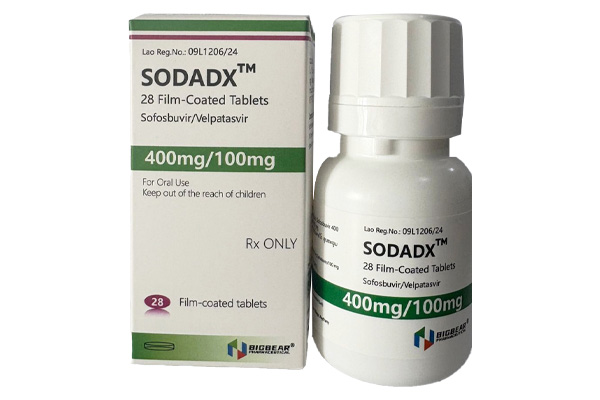
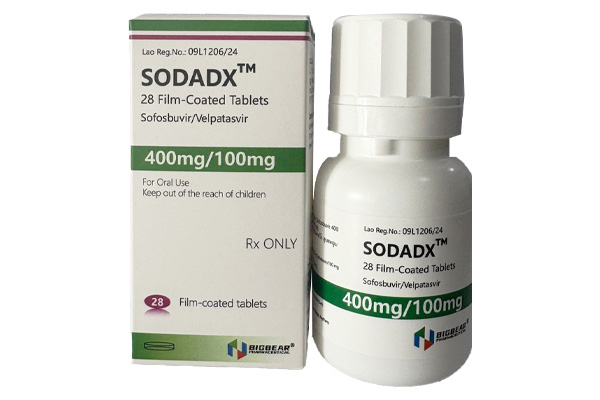
Sofosbuvir and Velpatasvir Tablets represent the first all-oral, pan-genotypic single-tablet regimen for hepatitis C, indicated for patients infected with HCV genotypes 1 to 6.

 AuthenticGuaranteeFast DeliveryPrivacy
 Sofosbuvir and Velpatasvir Tablets are a fixed-dose combination preparation consisting of sofosbuvir and velpatasvir. The combination of the two components covers HCV genotypes 1 to 6, and is indicated for the treatment of chronic hepatitis C virus infection, including patients with non-cirrhosis, compensated cirrhosis and decompensated cirrhosis (ribavirin co-administration required).
This product is indicated for the treatment of chronic hepatitis C virus (HCV) infection in adults.
The recommended dose of Sofosbuvir and Velpatasvir Tablets is one tablet taken orally once daily, with or without food.
Route: Oral.
Tablet handling: Swallow tablets whole. Do not chew or crush the film-coated tablets, as they have a bitter taste.
Food: May be taken with or without food.
Standard regimen: 12 weeks of Sofosbuvir and Velpatasvir Tablets monotherapy.
Special consideration for genotype 3 infection: For patients with compensated cirrhosis and genotype 3 HCV infection, ribavirin may be added.
Standard regimen: 12 weeks of Sofosbuvir and Velpatasvir Tablets in combination with ribavirin.
Note: This recommendation applies to patients co-infected with human immunodeficiency virus (HIV) and those with recurrent HCV infection after liver transplantation. When using with ribavirin, refer to the prescribing information for ribavirin-containing products.
Ribavirin is administered twice daily with food.
For patients weighing < 75 kg: 1,000 mg/day.
For patients weighing ≥ 75 kg: 1,200 mg/day.
Starting dose: 600 mg/day.
If tolerated, the dose may be increased to a maximum of 1,000 mg/day (for < 75 kg) or 1,200 mg/day (for ≥ 75 kg).
If initial dose is not tolerated, reduce the dose based on clinical assessment of hemoglobin levels.
For patients (pre- or post-transplant) with decompensated cirrhosis and genotype 3 HCV infection, the recommended ribavirin dose is 1,000 mg/day (for < 75 kg) or 1,200 mg/day (for ≥ 75 kg).
Note: For ribavirin dose adjustments, refer to the prescribing information for ribavirin-containing products.
Vomiting within 3 hours of dosing: Administer a replacement dose of Sofosbuvir and Velpatasvir Tablets.
Vomiting more than 3 hours after dosing: No replacement dose is needed.
Missed dose within 18 hours of the scheduled time: Take the missed dose as soon as possible, then resume the regular daily dosing schedule.
Missed dose more than 18 hours late: Skip the missed dose and resume the regular daily dosing schedule. Do not take a double dose.
Consider 24 weeks of treatment with Sofosbuvir and Velpatasvir Tablets in combination with ribavirin.
There are no or very limited data (fewer than 300 pregnancy outcomes) on the use of sofosbuvir, velpatasvir, or Sofosbuvir and Velpatasvir Tablets in pregnant women.
Animal studies have not demonstrated direct or indirect harmful effects on reproductive toxicity.The margin of sofosbuvir exposure in rats relative to the recommended clinical dose in humans cannot be fully estimated.
Animal studies have shown potential reproductive toxicity.As a precautionary measure, Sofosbuvir and Velpatasvir Tablets are not recommended for use during pregnancy.
It is unknown whether sofosbuvir, its metabolites, or velpatasvir are excreted in human milk.Animal pharmacokinetic data indicate that velpatasvir and metabolites of sofosbuvir are excreted in milk.The risk to neonates/infants cannot be excluded, so Sofosbuvir and Velpatasvir Tablets should not be used during breastfeeding.
There are no data on the effects of Sofosbuvir and Velpatasvir Tablets on human fertility.Animal studies have not demonstrated harmful effects of sofosbuvir or velpatasvir on fertility.If ribavirin is used concomitantly with Sofosbuvir and Velpatasvir Tablets, refer to the ribavirin prescribing information for detailed recommendations on pregnancy, contraception, and lactation.
No dose adjustment is required.
Mild or moderate impairment: No dose adjustment is required.
Severe impairment (eGFR < 30 mL/min/1.73 m²) or end-stage renal disease (ESRD) requiring dialysis: The safety and efficacy of Sofosbuvir and Velpatasvir Tablets have not been established.
Mild, moderate, or severe impairment (CPT Class A, B, or C): No dose adjustment is required for Sofosbuvir and Velpatasvir Tablets.
Note: Safety and efficacy have been established in patients with CPT Class B cirrhosis, but not fully evaluated in those with CPT Class C cirrhosis.
The safety and efficacy of Sofosbuvir and Velpatasvir Tablets in children and adolescents under 18 years of age have not been established, and no data are available.
The safety assessment of Sofosbuvir and Velpatasvir Tablets is based on pooled Phase 3 clinical trial data from patients infected with HCV genotypes 1, 2, 3, 4, 5, or 6 (with or without compensated cirrhosis), including 1,035 patients who received 12 weeks of treatment with Sofosbuvir and Velpatasvir Tablets.
Among patients treated with 12 weeks of Sofosbuvir and Velpatasvir Tablets, 0.2% permanently discontinued treatment due to adverse events, and 3.2% experienced any serious adverse event. In clinical studies, the most common treatment-emergent adverse events (incidence ≥ 10%) reported in patients receiving 12 weeks of Sofosbuvir and Velpatasvir Tablets were headache, fatigue, and nausea.
The reporting frequency of these and other adverse events was similar between patients receiving Sofosbuvir and Velpatasvir Tablets and those receiving placebo.
This product is contraindicated in patients with a known hypersensitivity to the active ingredients or any of the excipients.
Concomitant use with strong P-glycoprotein (P-gp) inducers or strong cytochrome P450 (CYP) inducers (e.g., rifampin, rifabutin, Hypericum perforatum [St. John’s Wort], carbamazepine, phenobarbital, phenytoin) is contraindicated.These agents significantly reduce the plasma concentrations of sofosbuvir and velpatasvir, which may lead to loss of therapeutic effect of Sofosbuvir and Velpatasvir Tablets.
Prior to initiating treatment with Sofosbuvir and Velpatasvir Tablets, all patients must be screened for current or prior hepatitis B virus (HBV) infection.HBV reactivation has been reported in HCV/HBV co-infected patients who are receiving or have completed HCV direct-acting antiviral (DAA) therapy and have not received HBV antiviral therapy. Some cases have resulted in fulminant hepatitis, hepatic failure, and death.HCV/HBV co-infected patients should be monitored for clinical signs of hepatitis flare or HBV reactivation during and after HCV treatment. Patients with evidence of HBV infection should be managed appropriately.
Sofosbuvir and Velpatasvir Tablets must not be co-administered with other sofosbuvir-containing products.
Serious symptomatic bradycardia and heart block have been observed when sofosbuvir is co-administered with other direct-acting antivirals (DAAs) and amiodarone (with or without other rate-lowering medications). The mechanism is not yet established.The number of cases of amiodarone co-administration during the clinical development of sofosbuvir-containing DAAs is very limited.This combination may be life-threatening and should only be considered if amiodarone is unavoidable and no alternative antiarrhythmic treatment is available.
If co-administration is deemed necessary:
1.Conduct strict monitoring of patients starting Sofosbuvir and Velpatasvir Tablets.
2.Continuously monitor patients with a history of symptomatic bradycardia or heart block in an appropriate clinical setting.
3.Extend monitoring to patients who have discontinued amiodarone in the past few months and are initiating Sofosbuvir and Velpatasvir Tablets, due to amiodarone’s long half-life.
All patients receiving Sofosbuvir and Velpatasvir Tablets with amiodarone (with or without other rate-lowering medications) should be advised to watch for symptoms of bradycardia or heart block and seek immediate medical attention if they occur.
There are no clinical data supporting the use of Sofosbuvir and Velpatasvir Tablets in patients who failed prior treatment with another NS5A inhibitor. However, based on the high barrier to resistance of velpatasvir and the presence of baseline NS5A RAVs (but no NS5A-associated treatment-emergent resistance) in the ASTRAL trials, for patients who failed prior NS5A inhibitor therapy, have high clinical disease progression risk, and have no alternative treatment options, 24 weeks of Sofosbuvir and Velpatasvir Tablets in combination with ribavirin (RBV) may be considered.
Mild or moderate impairment: No dose adjustment is required.
Severe impairment (eGFR < 30 mL/min/1.73 m²) or end-stage renal disease (ESRD) requiring dialysis: The safety and efficacy of Sofosbuvir and Velpatasvir Tablets have not been established.
For patients with a creatinine clearance < 50 mL/min receiving Sofosbuvir and Velpatasvir Tablets in combination with ribavirin, refer to the prescribing information for ribavirin.
Concomitant use with moderate P-gp inducers or moderate CYP inducers (e.g., oxcarbazepine, modafinil, efavirenz) is not recommended, as these agents may reduce the plasma concentrations of sofosbuvir and velpatasvir, leading to decreased efficacy of Sofosbuvir and Velpatasvir Tablets.
Sofosbuvir and Velpatasvir Tablets have been shown to increase tenofovir exposure, particularly when co-administered with tenofovir disoproxil fumarate (TDF) and a pharmacokinetic booster (ritonavir or cobicistat) in HIV regimens.The safety of tenofovir in this context has not been fully established.The risk and benefit of co-administration should be considered, especially in patients with underlying renal risk factors.Patients receiving Sofosbuvir and Velpatasvir Tablets with elvitegravir/cobicistat/emtricitabine/TDF or TDF-containing boosted HIV protease inhibitor regimens (e.g., atazanavir/ritonavir or darunavir/ritonavir) should be monitored for tenofovir-associated adverse reactions.Refer to the prescribing information for these products for renal monitoring recommendations.
The safety and efficacy of Sofosbuvir and Velpatasvir Tablets have not been established in patients with CPT Class C cirrhosis.
The safety and efficacy of Sofosbuvir and Velpatasvir Tablets in post-liver transplant HCV-infected patients have not been evaluated.The potential benefit and risk should be assessed individually, and treatment should be administered at the recommended dose.
Sofosbuvir and Velpatasvir Tablets have no or negligible effect on the ability to drive or operate machinery.
If any issues arise, please contact us immediately.
Email:haiousales@gmail.com

Copyright2024@ BIGBEAR All right reserved BIGBEAR


