
BIGBEAR
PHARMACEUTICALS
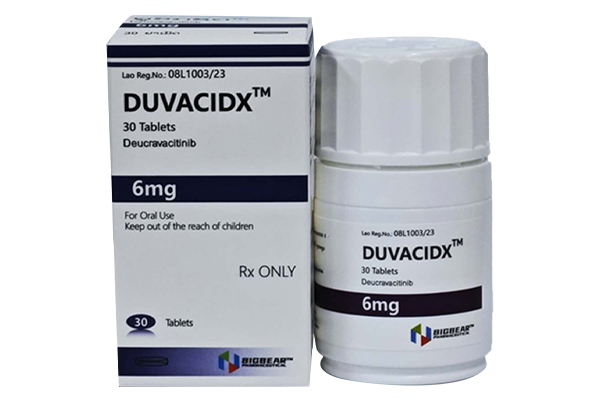
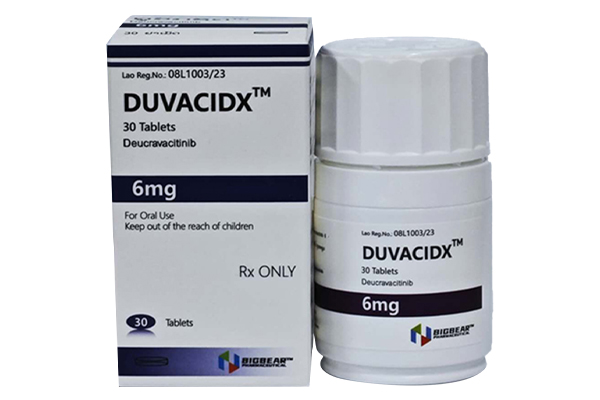
Deucravacitinib Tablets are a first-in-class oral selective tyrosine kinase 2 (TYK2) inhibitor and are deuterated targeted film-coated tablets.

 AuthenticGuaranteeFast DeliveryPrivacy
 The overall administration of deucravacitinib should be carried out under the guidance of professional physicians, and its safety and efficacy are mainly established based on the clinical study data of adult patients with psoriasis.
Deucravacitinib Tablets are indicated for adult patients with moderate to severe plaque psoriasis who are eligible for systemic therapy or phototherapy.
Prior to treatment with this product, patients should be evaluated for active and latent tuberculosis (TB) infection.
Initiate anti‑tuberculosis therapy before starting treatment with this product in patients with a positive test.
Immunizations should be completed in accordance with current immunization guidelines.
The recommended dose of this product is 6 mg orally once daily, with or without food.
Do not crush, split, or chew the tablets.
No dose adjustment is recommended for patients with mild, moderate, or severe renal impairment, or for patients with end‑stage renal disease (ESRD) receiving dialysis.
No dose adjustment is recommended for patients with mild (Child‑Pugh Class A) or moderate (Child‑Pugh Class B) hepatic impairment.
Use of this product is not recommended in patients with severe hepatic impairment (Child‑Pugh Class C).
Concomitant use with other potent immunosuppressants is not recommended.
Pregnancy
Available data from case reports of SOTYKTU use during pregnancy are insufficient to evaluate the drug-associated risk of major birth defects, miscarriage, or other adverse pregnancy or delivery outcomes.
In animal reproductive studies, no effects on embryo-fetal development were observed when deucravacitinib was administered orally to rats and rabbits during organogenesis at doses at least 91 times the maximum recommended human dose (MRHD) of 6 mg once daily.
All pregnancies have a background risk of birth defects, embryo loss, or other adverse outcomes. The background risk of major birth defects and miscarriage in the target population is unknown.
Lactation
There are no data on the presence of deucravacitinib in human milk, the effects on breastfed infants, or the effects on milk production. Deucravacitinib was detected in rat milk. If a drug is excreted in animal milk, it is likely to be excreted in human milk. When considering the developmental and health benefits of breastfeeding for the infant, the clinical need of the mother for this product and any potential adverse effects of this product or the mother's underlying disease on the breastfed infant should be comprehensively considered.
The safety and efficacy of this product in pediatric patients have not been established.
No overall differences in the efficacy of this product were observed between patients aged ≥65 years and younger adult patients.
In PSO-3, a total of 7 patients aged ≥65 years received SOTYKTU treatment. With the extension of exposure period, there was no evidence of an increase in the type and incidence of common adverse events (AEs) or infectious AEs (safety issues) in elderly subjects (≥65 years old). In addition, no overall differences in the efficacy of SOTYKTU were observed between patients aged ≥65 years and younger adult patients.
Adverse reactions occurring in ≥1% of subjects with plaque psoriasis and at an incidence higher than the placebo group include:
upper respiratory tract infection, blood creatine phosphokinase increased, herpes simplex, oral ulcer, folliculitis, acne.
Contraindicated in patients with a history of hypersensitivity to deucravacitinib or any excipient in this product.
Hypersensitivity reactions, such as angioedema, have been reported in subjects receiving SOTYKTU. If a clinically significant hypersensitivity reaction occurs, administer appropriate treatment and discontinue this product.
This product may increase the risk of infections.
Serious infections have been reported in subjects with psoriasis receiving SOTYKTU. The most common serious infections during treatment with SOTYKTU include infectious pneumonia and COVID-19. In PSO-3, no COVID-19 or pneumonia events were reported during the entire study period.
Patients with active or severe infections should avoid using this product.
Before patients receive treatment with this product, consider the risks and benefits of treatment in patients with:
Chronic or recurrent infections;
A history of tuberculosis;
A history of serious or opportunistic infections;
Underlying diseases that may predispose them to infections.
Monitor patients closely for signs and symptoms of infections during and after treatment with this product. During treatment with this product, patients who develop a new infection should undergo timely and comprehensive diagnostic tests, initiate appropriate antibacterial treatment, and be monitored closely. If a patient develops a serious infection, withhold treatment with this product. Do not resume treatment with this product until the infection resolves or is adequately treated.
Viral Reactivation
Herpes virus reactivation (e.g., herpes zoster, herpes simplex) has been reported in SOTYKTU clinical trials. In PSO-1 and PSO-2, during the 16-week placebo-controlled trial period, herpes simplex infection was reported in 17 subjects in the SOTYKTU group and 1 subject in the placebo group.
In PSO-3, during the 16-week placebo-controlled period, herpes simplex infection (oral herpes) was reported in 1 subject in the SOTYKTU group (2.2 per 100 patient-years) and 1 subject in the placebo group (4.5 per 100 patient-years).
In PSO-1, one immunocompetent subject in the SOTYKTU group reported multidermatomal herpes zoster.
During PSO-1, PSO-2, and the open-label extension trial (subjects who completed the controlled trial could enroll), most subjects who reported herpes zoster events during SOTYKTU treatment were under 50 years of age.
In PSO-3, during the 16-week placebo-controlled trial period, herpes zoster events were reported in 4 subjects in the SOTYKTU group (all were localized, non-serious events, none leading to treatment interruption or discontinuation).
The effect of this product on the reactivation of chronic viral hepatitis is unknown. Subjects with positive screening results for hepatitis B or C, chronic hepatitis B, or untreated hepatitis C were excluded from clinical trials. Before the start of treatment with this product and during treatment, consider screening for viral hepatitis and monitoring for reactivation in accordance with clinical guidelines. If signs of reactivation appear, consult a hepatology specialist. This product is not recommended for patients with active hepatitis B or C.
Before initiating treatment with this product, patients should be evaluated for latent and active TB infections. Patients with active TB infections cannot receive treatment with this product. Patients with latent TB infections should initiate anti-tuberculosis therapy before receiving treatment with this product.
For patients with a previous history of latent or active tuberculosis but for whom it is uncertain whether they have received an adequate course of treatment, consider initiating anti-tuberculosis therapy before the start of this product. During treatment, monitor patients receiving this product for signs and symptoms of active TB.
For more detailed drug information, please consult the official package leaflet.
If any issues arise, please contact us immediately.
Email:haiousales@gmail.com

Copyright2024@ BIGBEAR All right reserved BIGBEAR


