
BIGBEAR
PHARMACEUTICALS
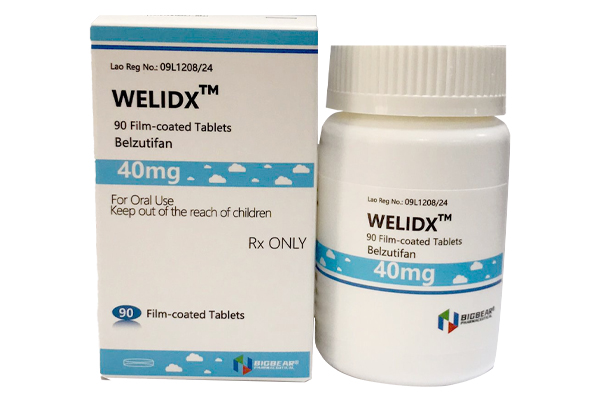
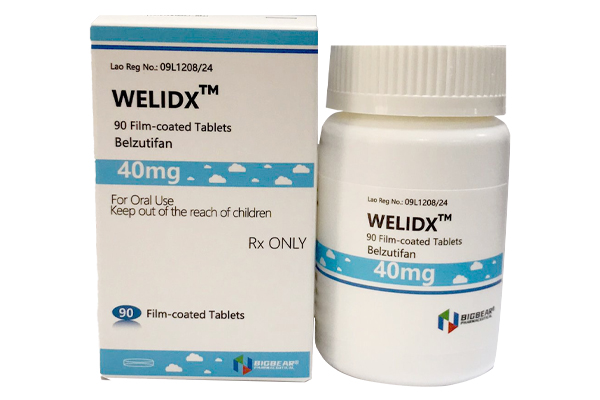
Belzutifan is a first-in-class oral small-molecule hypoxia-inducible factor-2α (HIF-2α) inhibitor.

 AuthenticGuaranteeFast DeliveryPrivacy
 Belzutifan can selectively inhibit the activity of hypoxia-inducible factor-2α (HIF-2α), block the downstream signaling pathways of tumor cells related to proliferation, angiogenesis and abnormal metabolism, and exert an antitumor effect.
Belzutifan is indicated for the treatment of adult patients with von Hippel-Lindau (VHL) disease‑associated renal cell carcinoma (RCC), central nervous system (CNS) hemangioblastoma, or pancreatic neuroendocrine tumor (pNET) who do not require immediate surgery.
The recommended dose of this product is 120mg orally once daily until disease progression or unacceptable toxicity occurs.
Belzutifan tablets should be taken at the same time each day, with or without food.
Patients are advised to swallow the tablets whole. Do not chew, crush, or split belzutifan tablets before swallowing.
If a dose of belzutifan is missed, it may be taken as soon as possible on the same day. Resume the usual daily dosing schedule of belzutifan the next day. Do not take extra tablets to make up for the missed dose.
If vomiting occurs at any time after taking belzutifan, do not re-administer the dose. Take the next dose the following day.
The recommended dose reduction schedule is as follows:
First dose reduction: Belzutifan 80mg orally once daily.
Second dose reduction: Belzutifan 40mg orally once daily.
Third dose reduction: Permanently discontinue treatment
No dose adjustment is recommended for geriatric patients.
Data on the use of Belzutifan Tablets in patients aged 65 years and older are limited.
No dose adjustment is recommended for patients with mild or moderate renal impairment (eGFR ≥ 30mL/min/1.73 m²).
Belzutifan Tablets have not been studied in patients with severe renal impairment.
No dose adjustment is recommended for patients with mild hepatic impairment.
Belzutifan Tablets have not been studied in patients with moderate or severe hepatic impairment.
The safety and efficacy of Belzutifan Tablets in pediatric patients below 18 years of age have not been established. No data are available.
The most common adverse reactions during treatment with Belzutifan Tablets are anemia (90%), fatigue (74%), dizziness (46%) and nausea (39%).
Serious adverse reactions occurring in patients receiving Belzutifan Tablets include anemia, hypoxia and dyspnea (1 patient each).
The most common adverse reactions leading to treatment interruption of Belzutifan Tablets are fatigue (11%), nausea (9.8%), dizziness (4.9%) and anemia (3.3%).
The most common adverse reactions leading to dose reduction of Belzutifan Tablets are fatigue (8.2%), anemia (3.3%) and hypoxia (1.6%).
One patient (1.6%) discontinued Belzutifan Tablets due to an adverse reaction (Grade 1 dizziness).
Contraindicated in patients with hypersensitivity to belzutifan or any excipient contained in the product.
In the clinical trial (LITESPARK-004) of Belzutifan Tablets in patients with VHL disease-associated RCC, anemia was reported in 55 patients (90.2%). Grade 3 anemia occurred in 7 patients (11%). The median time to onset of all-grade anemia events was 30 days (range: 1–255 days). The median number of ESA doses administered to patients was 5 (range: 1–35). Patients received ESAs based on hemoglobin levels and physician judgment.
In another clinical trial (LITESPARK-001) of Belzutifan Tablets at the same dose in patients with advanced solid tumors not associated with VHL disease, anemia was reported in 44 patients (75.9%). Grade 3 anemia occurred in 16 patients (27.6%).
Monitor anemia periodically prior to initiation of Belzutifan Tablets and throughout treatment. For patients who develop Grade 3 anemia, withhold Belzutifan Tablets and treat per standard medical practice, including administration of ESAs and/or blood transfusion, until resolution to Grade ≤2; then resume treatment at the same or reduced dose. Consider discontinuation of Belzutifan Tablets for recurrent Grade 3 anemia.
For patients who develop Grade 4 anemia, withhold Belzutifan Tablets; then resume treatment at a reduced dose or permanently discontinue for recurrent Grade 4 anemia.
The safety of ESA administration for the treatment of anemia in patients with VHL disease receiving Belzutifan Tablets has not been established. Randomized controlled trials in cancer patients receiving concomitant myelosuppressive chemotherapy and ESAs have demonstrated that ESAs increase the risk of death and serious cardiovascular reactions, and reduce progression-free survival and/or overall survival. Refer to the prescribing information of ESAs for additional information.
Belzutifan Tablets can cause severe hypoxia, which may require treatment discontinuation, supplemental oxygen, or hospitalization. Monitor patients' oxygen saturation using pulse oximetry prior to initiation of Belzutifan Tablets and throughout treatment, with increased monitoring frequency during the first 6 months of treatment. Smoking cessation is advised given the risk of hypoxia.
For Grade 2 hypoxia, consider providing supplemental oxygen and continue or withhold treatment. If treatment is withheld, resume Belzutifan Tablets at a reduced dose. For patients who develop Grade 3 hypoxia, withhold Belzutifan Tablets, treat hypoxia, and consider dose reduction. If Grade 3 hypoxia recurs, discontinue treatment. For Grade 4 hypoxia, permanently discontinue treatment with Belzutifan Tablets.
Based on animal study results, Belzutifan Tablets may cause fetal harm, including fetal loss, in humans. In rat studies, Belzutifan Tablets caused embryo-fetal toxicity when administered during organogenesis at maternal exposures below human exposures at the recommended daily dose of 120 mg. Due to the potential risk to the fetus, females of reproductive potential are advised to use highly effective contraceptive methods during treatment with Belzutifan Tablets and for 1 week after the last dose. Males with female partners of reproductive potential are advised to use highly effective contraceptive measures during treatment with Belzutifan Tablets and for 1 week after the last dose.
For more detailed drug information, please consult the official package leaflet.
If any issues arise, please contact us immediately.
Email:haiousales@gmail.com

Copyright2024@ BIGBEAR All right reserved BIGBEAR


