
BIGBEAR
PHARMACEUTICALS
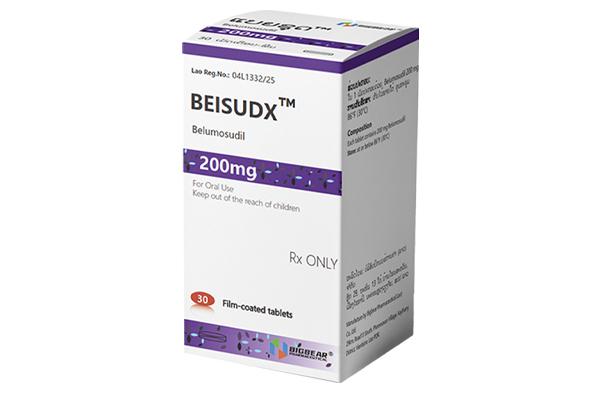
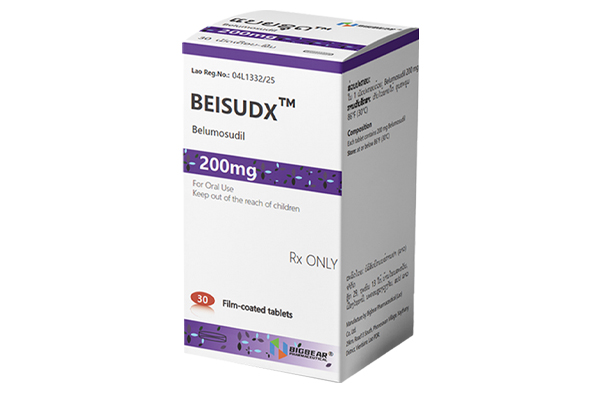
Belumosudil Mesylate Tablets are a kinase inhibitor that exerts its therapeutic effect by inhibiting the activity of ROCK2 and ROCK1 to regulate immune responses and fibrotic signaling pathways.

 AuthenticGuaranteeFast DeliveryPrivacy
 Belumosudil was approved by the U.S. Food and Drug Administration (FDA) in July 2021 for the treatment of chronic graft-versus-host disease (cGVHD), marking the official clinical application of another important innovative drug in this field.
Indications
Indicated for the treatment of patients aged 12 years and older with chronic graft-versus-host disease (cGVHD) who have an inadequate response to corticosteroids or other systemic therapies.
The recommended dose is 0.2 g orally once daily, continued until progression of chronic graft-versus-host disease (cGVHD) necessitates new systemic therapy.
Swallow tablets whole: Do not cut, crush, or chew the tablets.
Take with food at approximately the same time each day.
Missed dose: Do not take an extra dose to make up for a missed dose.
No studies of Belumosudil Mesylate Tablets have been conducted in patients with severe hepatic impairment or severe renal impairment. Patients with severe hepatic or renal impairment should carefully weigh the risks and potential benefits before initiating treatment.
Monitor total bilirubin, aspartate aminotransferase (AST), and alanine aminotransferase (ALT) at least once monthly.
Dose adjustments should be made according to the following guidelines based on adverse reaction severity.
Severity: Grade 3 AST or ALT (5× to 20× the upper limit of normal [ULN]), or Grade 2 bilirubin (1.5× to 3× ULN).
Dose adjustment: Withhold Belumosudil Mesylate Tablets until bilirubin, AST, and ALT recover to Grade 0-1, then resume at the recommended dose.
Severity: Grade 4 AST or ALT (>20× ULN).
Dose adjustment: Permanently discontinue Belumosudil Mesylate Tablets.
Severity: ≥ Grade 3 bilirubin (>3× ULN) or Grade 3 adverse reactions.
Dose adjustment: Withhold Belumosudil Mesylate Tablets until recovery to Grade 0-1, then resume at the recommended dose.
Severity: Grade 4 adverse reactions.
Dose adjustment: Permanently discontinue Belumosudil Mesylate Tablets.
Based on CTCAE v 4.03Abbreviations: AST = Aspartate Aminotransferase; ALT = Alanine Aminotransferase; ULN = Upper Limit of Normal
When co-administered with strong CYP3A inducers, increase the dose of Belumosudil Mesylate Tablets to 0.2 g twice daily.
When co-administered with proton pump inhibitors, increase the dose of Belumosudil Mesylate Tablets to 0.2 g twice daily.
Based on findings from animal studies of Belumosudil Mesylate and its mechanism of action (see [Clinical Pharmacology]), this drug may cause fetal harm when administered to pregnant women. Currently, there are no human data to evaluate the drug-related risks of Belumosudil Mesylate in pregnant women.
In reproductive toxicity studies, pregnant rats and rabbits were treated with Belumosudil Mesylate during organogenesis. At maternal exposures (AUC) that were ≥3 times (rats) and ≥0.07 times (rabbits) the human exposure at the recommended clinical dose, adverse developmental outcomes were observed, including altered growth, embryo-fetal death, and embryo-fetal malformations.
Pregnant women and females of reproductive potential should be informed of the potential risk to the fetus.
There are currently no data on the presence of Belumosudil Mesylate or its metabolites in human milk, or on its effects on breastfed infants or milk production. Because breastfed infants may experience serious adverse reactions from Belumosudil Mesylate, it is recommended that lactating women discontinue breastfeeding during treatment with Belumosudil Mesylate Tablets and for at least 1 week after the last dose.
Females of reproductive potential should have their pregnancy status verified before initiating treatment with Belumosudil Mesylate Tablets.
It is recommended that females of reproductive potential use effective contraception during treatment with Belumosudil Mesylate Tablets and for at least 1 week after the last dose. If a patient becomes pregnant during treatment or while using this drug, they should be informed of the potential hazard to the fetus.
Male patients with female partners of reproductive potential should also use effective contraception during treatment and for at least 1 week after the last dose.
Based on studies in rats and dogs, Belumosudil Mesylate Tablets may impair fertility in males or females, and the effect on fertility is reversible.
The safety and effectiveness of Belumosudil Mesylate Tablets have been established in pediatric patients aged 12 years and older. Sufficient and well-controlled clinical trials in adults, along with additional population pharmacokinetic data, demonstrate that age and body weight do not have clinically meaningful effects on the pharmacokinetics of the drug.
It is expected that drug exposure in pediatric patients aged 12 years and older will be similar to that in adults, and the disease course in pediatric and adult patients is sufficiently similar to allow extrapolation of adult data to pediatric patients. These findings collectively support the use of Belumosudil Mesylate in this age group.
The safety and effectiveness of Belumosudil Mesylate Tablets in pediatric patients younger than 12 years have not been established.
In the clinical study of Belumosudil Mesylate Tablets involving 186 patients with cGVHD, 26% of patients were aged 65 years and older. No clinically meaningful differences in safety or effectiveness were observed between this population and younger patients.
One patient reported a fatal adverse reaction, which included severe nausea, vomiting, diarrhea, and multi-organ failure.
18% of patients permanently discontinued Belumosudil Mesylate Tablets due to adverse reactions. The adverse reaction leading to permanent discontinuation in more than 3% of patients was nausea (4%).
29% of patients had temporary treatment interruption due to adverse reactions. Adverse reactions leading to temporary interruption in 2% or more of patients included infection (11%), diarrhea (4%), as well as fatigue, dyspnea, hemorrhage, hypotension, abnormal liver function tests, nausea, fever, edema, and renal failure (each 2%).
The most common adverse reactions (≥20%), including abnormal laboratory findings, were infection, fatigue, nausea, diarrhea, dyspnea, cough, edema, hemorrhage, abdominal pain, musculoskeletal pain, headache, decreased blood phosphorus, increased γ-glutamyl transferase, decreased lymphocyte count, and hypertension.
Hypersensitivity to any component of this product is contraindicated.
Based on findings from animal studies of Belumosudil Mesylate and its mechanism of action, this drug may cause fetal harm when administered to pregnant women. In reproductive toxicity studies, pregnant rats and rabbits were given Belumosudil Mesylate during the period of organogenesis. At maternal exposures (AUC) lower than those achieved with the recommended human dose, the drug resulted in adverse developmental outcomes, including embryo-fetal death and malformations.
Pregnant women should be informed of the potential risk to the fetus. It is recommended that female patients of reproductive potential, and male patients with female partners of reproductive potential, use effective contraception during treatment with Belumosudil Mesylate Tablets and for at least 1 week after the last dose.
If any issues arise, please contact us immediately.
Email:haiousales@gmail.com

Copyright2024@ BIGBEAR All right reserved BIGBEAR


