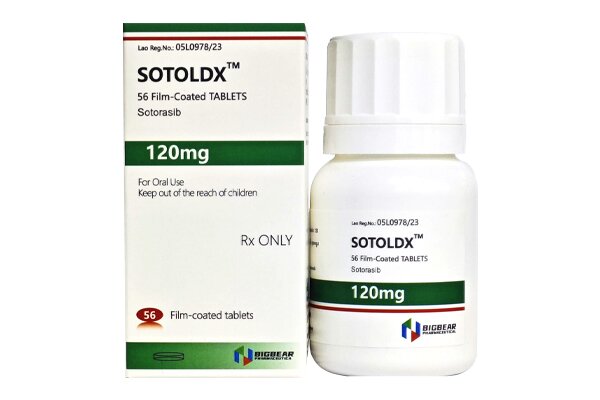
Sotorasib is a KRASG12C inhibitor developed by Amgen. It received accelerated approval from the U.S. Food and Drug Administration (FDA) in May 2021.
I. Serious Side Effects of Sotorasib
If you experience any of the following side effects while taking sotorasib, consult your doctor immediately:
Chest pain or tightness, cough, dark urine, fever or chills, light-colored stools, loss of appetite, nausea or vomiting, sneezing, sore throat, stomach pain, difficulty breathing, unusual fatigue or weakness, yellowing of the eyes or skin, etc.
II. Other Side Effects of Sotorasib
Some side effects are mild and may resolve spontaneously during treatment.
Common Side Effects
If any of the following side effects persist, consult your doctor:
Blistering, crusting, inflammation, itching, or redness of the skin; constipation; dry, cracked, or peeling skin; diarrhea; difficulty moving; joint or bone pain; fatigue or loss of strength; muscle aches, cramps, pain, or stiffness; flat or raised rashes on the skin; swelling of the hands, ankles, feet, or lower legs; testicular swelling, etc.
III. Side Effects for Healthcare Professionals
Common Adverse Reactions
Common adverse reactions to sotorasib include diarrhea, musculoskeletal pain, nausea, fatigue, hepatotoxicity, and cough; the most common laboratory abnormalities include lymphopenia, decreased hemoglobin, elevated aspartate aminotransferase (AST), elevated alanine aminotransferase (ALT), decreased calcium, elevated alkaline phosphatase, increased proteinuria, and decreased sodium.
Serious Adverse Reactions
Serious adverse reactions to sotorasib include pneumonia, hepatotoxicity, and diarrhea; the most common severe (grade 3 or higher) adverse reactions are elevated ALT, elevated AST, and diarrhea. Fatal adverse reactions include respiratory failure, pneumonia, cardiac arrest, heart failure, gastric ulcer, and pneumonia.
Hematologic Disorders
Very common (10% or more): Lymphopenia (up to 48%), decreased hemoglobin (up to 43%), prolonged activated partial thromboplastin time (up to 23%), anemia.
Gastrointestinal Disorders
Very common (10% or more): Diarrhea (up to 42%), nausea (up to 26%), vomiting (up to 17%), constipation (up to 16%), abdominal pain (including abdominal pain, upper abdominal pain, lower abdominal pain; up to 15%).
Not reported frequency: Gastric ulcer.
Liver
Very common (10% and above): Elevated AST (up to 39%), elevated ALT (up to 38%), hepatotoxicity (including elevated ALT, elevated AST, elevated bilirubin, drug-induced liver injury, hepatitis, hepatotoxicity, abnormal liver function tests, elevated transaminases; up to 25%).
Other
Very common (10% and above): Decreased calcium (up to 35%), elevated alkaline phosphatase (up to 33%), decreased sodium (up to 28%), fatigue (including fatigue, weakness; up to 26%), decreased albumin (up to 22%), edema (including generalized edema, localized edema, peripheral edema, periorbital edema, testicular edema; up to 15%), fever.
Common (1% to 10%): Peripheral edema.
Musculoskeletal System
Very common (10% and above): Musculoskeletal pain (including back pain, bone pain, musculoskeletal chest pain, musculoskeletal discomfort, musculoskeletal pain, myalgia, neck pain, non-cardiac chest pain, limb pain; up to 35%), joint pain (up to 12%).
Urogenital System
Very common (10% and above): Elevated proteinuria (up to 29%).
Common (1% to 10%): Urinary tract infection.
Respiratory System
Very common (10% and above): Cough (including cough, sputum production, upper airway cough syndrome; up to 20%), dyspnea (including dyspnea, exertional dyspnea; up to 16%), pneumonia (including pneumonia, aspiration pneumonia, bacterial pneumonia, staphylococcal pneumonia; up to 12%).
Not reported frequency: Respiratory failure, pneumonia, interstitial lung disease (ILD).
Cardiovascular System
Common (1% to 10%): Hypertension.
Unreported frequency: Cardiac arrest, heart failure.
Metabolic disorders
Very common (10% and above): Decreased appetite (up to 13%).
Common (1% to 10%): Hypokalemia, hyponatremia, hypocalcemia.
Skin disorders
Very common (10% and above): Rash (including dermatitis, acneiform dermatitis, rashes, maculopapular rashes, pustular rashes; up to 12%).
Nervous system disorders
Very common (10% and above): Headache.