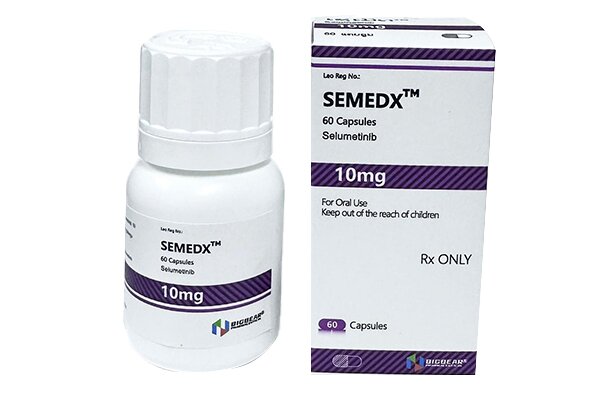
The U.S. Food and Drug Administration (FDA) approved on September 10 the oral selective MEK inhibitor Koselugo (selumetinib) in oral granule and capsule formulations for the treatment of pediatric patients aged 1 year and older with symptomatic, inoperable plexiform neurofibromas (PN) of neurofibromatosis type 1 (NF1). Previously, Koselugo was only available in capsule form for patients aged 2 years and older.
The approval of the oral granule formulation is based on a bioavailability study in healthy adults, and exposure-matched results from the SPRINTStratumI trial (which evaluated the efficacy of capsules in patients aged 2 years and older) and the SPRINKLE study (ClinicalTrials.gov identifier: NCT05309668). The SPRINTStratumI trial evaluated the efficacy of the capsule formulation in patients aged 2 years and older, and the SPRINKLE study is currently evaluating the efficacy of the oral granule formulation in patients aged 1 year and older.
The study results showed comparable exposure levels for both formulations, supporting the extrapolation of efficacy to younger patients.
Koselugo's new oral granule formulation is available in 5 mg and 7.5 mg dosage strengths. The oral granules are packaged in capsules and should be opened within 30 minutes of preparation and taken with smooth yogurt or fruit puree (e.g., apple, banana, pear, or strawberry); the capsule shell should not be swallowed. The oral granules should not be added to liquids or mixed with grapefruit or any juice, puree, or jam containing Seville oranges.
The recommended dose for either capsules or oral granules is based on body surface area. Dosage adjustments are recommended for patients with hepatic impairment or those taking potent or intermediate-potency CYP3A inhibitors or fluconazole.
Furthermore, Koselugo's prescribing information includes the following warnings and precautions: cardiomyopathy, ocular toxicity, gastrointestinal toxicity, skin toxicity, elevated creatine phosphokinase, elevated vitamin E levels, and increased risk of bleeding (Koselugo capsules), as well as embryo-fetal toxicity. The incidence rates of warnings and precautions have been updated to include more pediatric patient data; no new safety signals have been identified.