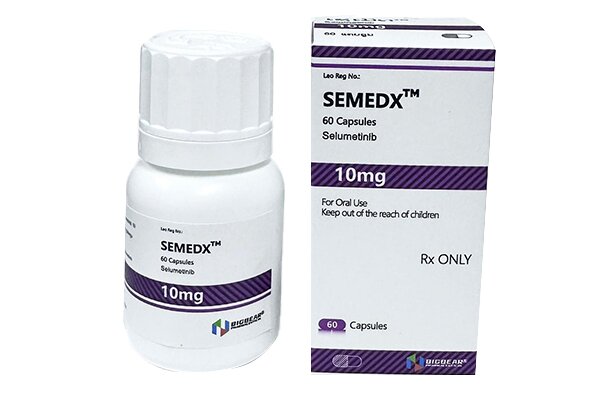
On November 19, 2025, AstraZeneca announced that the U.S. Food and Drug Administration (FDA) has approved its mitogen-activated protein kinase kinase 1 and 2 (MEK1/2) inhibitor, Koselugo (selumetinib), for the treatment of adult patients with symptomatic, unresectable plexiform neurofibromatosis (PN) of neurofibromatosis type 1 (NF1). In September 2025, the FDA approved selumetinib capsules and granules for pediatric patients aged 1 year and older.
This approval is based on data from the randomized, double-blind, placebo-controlled phase 3 KOMET study (ClinicalTrials.gov identifier: NCT04924608), which evaluated the safety and efficacy of Koselugo in adult patients with NF1 and symptomatic, unresectable PN (defined as PN that cannot be completely removed due to encapsulation or proximity to vital structures, invasiveness, or high vascularity, and which does not lead to serious complications).
Study participants (N=145) were randomly assigned 1:1 to either the Koselugo group (n=71) or the placebo group (n=74), receiving twice-daily dosing for 12 cycles (28 days per cycle).
The primary endpoint was the confirmed overall response rate (ORR) at the end of cycle 16, assessed by an independent central review according to the efficacy evaluation criteria for neurofibromatosis and schwannomatosis.
Results showed a confirmed objective response rate (ORR) of 20% (95% CI, 11-31) in the Koselugo group and 5% (95% CI, 2-13) in the placebo group.
Notably, 86% of patients treated with Koselugo observed a duration of response (DOR) of at least 6 months; the median DOR in the Koselugo group was not reached (95% CI, 11.5, not estimable).
The most common adverse reactions in adults were rash (all patients), acneiform dermatitis, and diarrhea. Prescribing information includes warnings and precautions regarding left ventricular dysfunction, ocular toxicity, gastrointestinal toxicity, skin toxicity, elevated creatine phosphokinase, elevated vitamin E levels, and increased risk of bleeding (Koselugo capsules), as well as embryo-fetal toxicity. Adverse reactions observed in adult patients treated with Koselugo are consistent with the known safety profile of selumetinib.