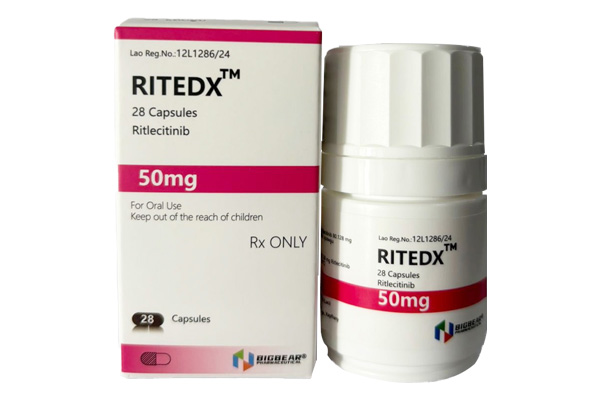
As a selective Janus kinase (JAK) inhibitor, ritlecitinib modulates immune responses mainly by inhibiting the activities of JAK1 and JAK3, providing a new therapeutic strategy for various autoimmune diseases.
Indicated Population and Contraindications
Indicated Population
Patients aged 12 years and older with alopecia areata, or those with inadequate response to other therapies (e.g., corticosteroids, immunosuppressants).
Contraindications
Active infections, severe hepatic or renal impairment, pregnancy, and lactation.
Research Progress and Limitations
Ritlecitinib has been submitted for marketing approval in the United States, the European Union, and other regions. In China, it is in Phase III clinical development.Its advantages include convenient oral administration and high target selectivity. However, long-term safety data are still being accumulated, and efficacy may be limited in some patients.
Possible Adverse Reactions
Common Adverse Reactions
Ritlecitinib may cause mild adverse reactions that usually do not require medical intervention:
Common: diarrhea
Less common: skin defects, papules, oral swelling or inflammation
Serious Adverse Reactions
Ritlecitinib may also cause severe adverse reactions that require medical attention:
Less common: burning, itching, pain in hair-bearing areas, pus at hair roots; painful blisters on the trunk
Important Precautions
Live vaccines should be avoided during treatment.
Concomitant use with other immunosuppressants may increase the risk of adverse reactions.
Treatment should be individualized, and patients require regular follow-up to evaluate efficacy and safety.
Ritlecitinib provides a new therapeutic option for autoimmune diseases but must be used strictly under medical supervision to balance benefits and risks.