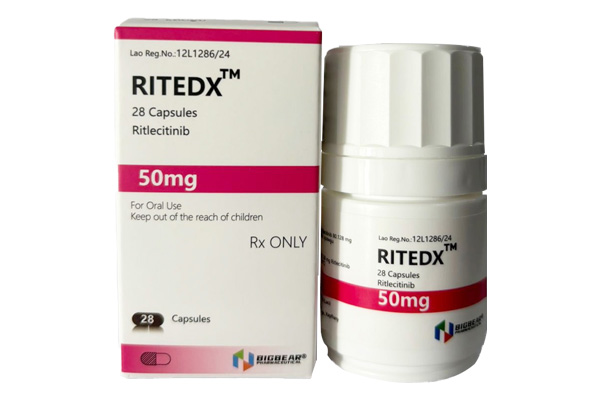
Ritlecitinib is an oral small‑molecule drug belonging to the class of dual JAK3/TEC kinase inhibitors, mainly used for the treatment of autoimmune diseases such as alopecia areata and rheumatoid arthritis. Its mechanism of action involves blocking the JAK‑STAT signaling pathway, inhibiting the release of inflammatory factors, and thereby regulating abnormal immune responses. Clinical studies have demonstrated significant hair regrowth effects in patients with moderate to severe alopecia areata, with a manageable safety profile. However, it must be used under medical supervision.
Mechanism of Action and Targets
Ritlecitinib interferes with intracellular signal transduction in immune cells by selectively inhibiting JAK3 and the TEC kinase family (including BMX, ITK, etc.). The JAK‑STAT pathway is a key pathway for the function of multiple inflammatory factors such as IL‑15 and IL‑21. Inhibition of this pathway reduces abnormal activation of immune cells including T cells and B cells, thereby alleviating tissue damage caused by autoimmune responses.
Indications and Efficacy
Alopecia Areata
In Phase III clinical trials, approximately 23% of adult patients achieved scalp hair coverage of ≥80% after 24 weeks of treatment, compared with only 1.6% in the control group. Improvement was also observed in eyebrow and eyelash growth.
Other Autoimmune Diseases
Studies for rheumatoid arthritis, Crohn’s disease, and other conditions are ongoing. Preliminary data indicate relief of inflammatory symptoms.
Dosage and Safety
Administration
Ritlecitinib is generally administered orally once daily. The dosage should be adjusted according to the disease condition.
Common Adverse Reactions
Adverse events include headache, upper respiratory tract infection, diarrhea, etc., most of which are mild to moderate in severity.
Serious Risks
Ritlecitinib may increase the risk of infections (e.g., herpes zoster), dyslipidemia, or elevated creatine kinase. Regular monitoring of liver function and complete blood count is required.