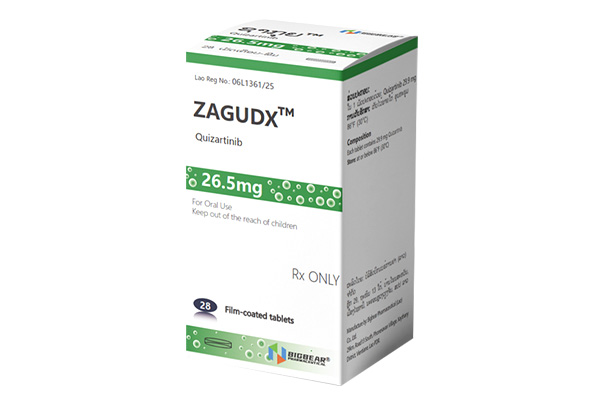
Yesterday, Daiichi Sankyo Pharmaceutical announced in a press release that the Japanese Ministry of Health, Labour and Welfare (MHLW) has approved the targeted anticancer drug Vanflyta (quizartinib), an oral FLT3 inhibitor, for use in combination with standard cytarabine and anthracycline induction chemotherapy, as well as standard cytarabine consolidation chemotherapy, and as maintenance monotherapy for the treatment of newly diagnosed FLT3-ITD mutation-positive acute myeloid leukemia (AML).
It is worth noting that this is the second indication approved for this drug in Japan. It was first approved in 2019 as a monotherapy for the treatment of adult patients with relapsed/refractory FLT3-ITD mutation-positive AML. This new approval makes it the first and only FLT3 inhibitor approved in Japan for the treatment of newly diagnosed AML.
AML is an aggressive blood and bone marrow cancer that causes the uncontrolled growth and accumulation of malignant white blood cells that cannot function properly and interfere with the production of normal blood cells. AML is also the most common adult leukemia in Japan, with approximately 7,000 new cases diagnosed annually. The reported five-year survival rate for adult patients is 21.1%. Up to 37% of newly diagnosed AML cases have FLT3 gene mutations, with 80% of these having FLT3-ITD mutations, leading to a particularly unfavorable prognosis, including an increased risk of relapse and shortened overall survival.
The approval is based on results from the Quantum-First trial, published in *The Lancet Oncology*. In this study, in newly diagnosed FLT3-ITD-positive AML patients, VANFLYTA in combination with standard cytarabine and anthracyclines for induction therapy, followed by standard cytarabine consolidation therapy, and then continued as maintenance monotherapy after consolidation therapy, reduced the risk of death by 22.4% compared to standard chemotherapy alone. After a median follow-up of 39.2 months, the median overall survival was 31.9 months for patients receiving VANFLYTA (n=268) and 15.1 months for patients receiving chemotherapy (n=271).
Regarding safety, the most common adverse events in the 265 patients treated with VANFLYTA were neutropenia (25.0%), thrombocytopenia (22.7%), nausea (20.6%), and QT interval prolongation on ECG (19.3%). The safety profile of VANFLTYA in this trial was consistent with previous use, and no new safety issues were identified.