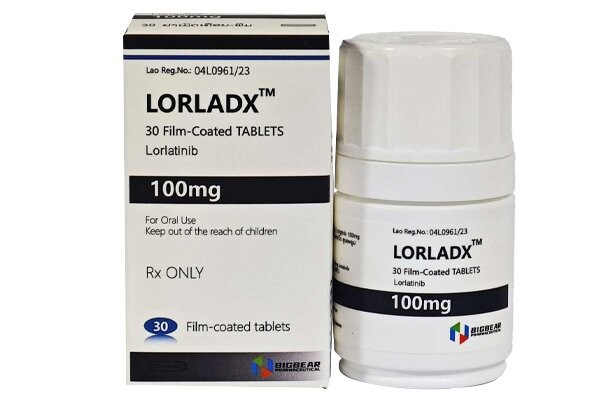
Lorlatinib, the world's first third-generation ALK (anaplastic lymphoma kinase)/ROS1 tyrosine kinase inhibitor (TKI), was developed by Pfizer for the treatment of patients with ALK-positive locally advanced or metastatic non-small cell lung cancer (NSCLC).
Lorlatinib Indications
Non-Small Cell Lung Cancer (NSCLC)
Lorlatinib is used to treat adult patients with ALK-positive metastatic NSCLC (the FDA has designated it as an orphan drug for the treatment of ALK-positive or ROS-1-positive NSCLC).
Lorlatinib Dosage and Administration
1. Pretreatment Screening
(1) Confirm ALK positivity in tumor specimens from patients with metastatic NSCLC.
(2) Confirm pregnancy status in women of reproductive potential before initiating treatment.
(3) Assess serum cholesterol and triglyceride levels before initiating treatment; initiate or optimize lipid-lowering therapy according to clinical indications.
(4) Perform an electrocardiogram (ECG) before initiating treatment.
(5) Assess blood pressure before starting treatment; blood pressure must be controlled before medication.
(6) Assess fasting blood glucose levels before starting medication.
(7) Assess concomitant medications, including prescription drugs, over-the-counter drugs, and dietary or herbal supplements. Lorlatinib should not be used concurrently with potent CYP3A inducers.
2. Administration
(1) Oral Administration
Lorlatinib is taken once daily at the same time, with or without food. Swallow the tablet whole; do not crush, chew, or break it. Do not take if the tablet is broken, cracked, or incomplete.
(2) Management of Missed Doses/Vomiting
If a dose of lorlatinib is missed, take it as soon as possible, unless the next dose is ≤4 hours away. Do not take two doses simultaneously to make up for a missed dose. If vomiting occurs after taking the medication, take the next dose at the usual time; do not take an extra dose.
3. Usual Adult Dosage
Non-Small Cell Lung Cancer
Lorlatinib: 100 mg orally once daily. Continue treatment until disease progression or unacceptable toxicity.
Adverse Reactions of Lorlatinib
1. Adverse Reactions (≥20%)
Edema, peripheral neuropathy, weight gain, cognitive impairment, fatigue, dyspnea, arthralgia, diarrhea, mood effects, cough.
2. Laboratory Abnormalities (≥20%)
Hypercholesterolemia, hypertriglyceridemia, hyperglycemia, elevated AST or ALT levels, hypoalbuminemia, anemia, thrombocytopenia, lymphopenia, elevated lipase or amylase levels, elevated alkaline phosphatase levels, hypophosphatemia, hyperkalemia, hypomagnesemia.
Precautions for Lorlatinib
1. Serious Hepatotoxicity Due to Concomitant Use with Potent CYP3A Inducers
Contraindicated for concomitant use with potent CYP3A inducers. Before initiating lorlatinib treatment, discontinue potent CYP3A inducers and wait for three plasma half-lives of the inducer.
Avoid concomitant use with moderate CYP3A inducers.
2. Central Nervous System Effects
A variety of central nervous system adverse reactions have been reported, including seizures, psychiatric symptoms, and changes in cognitive function (including memory impairment, cognitive disturbances, and amnesia), mood (including suicidal ideation/suicidal tendency, irritability, anxiety, depression, and mood instability), speech, mental state, and sleep. Central nervous system effects are usually mild and intermittent, improving or resolving with dose adjustment.
3. Hyperlipidemia
Assess serum cholesterol and triglycerides before starting treatment, at 1 month and 2 months after starting treatment, and periodically thereafter. Initiate lipid-lowering therapy or increase the dose of existing lipid-lowering therapy in patients with hyperlipidemia. Depending on the severity, a temporary interruption of treatment may be necessary, followed by resumption of lorlatinib treatment at the same or lower dose.
4. Atrioventricular Block
Prolonged PR intervals and atrioventricular block may occur. ECG monitoring should be performed regularly before and during lorlatinib treatment. If atrioventricular block occurs, treatment should be interrupted; dose reduction or pacemaker implantation may be necessary. If third-degree atrioventricular block recurs in patients without a pacemaker, lorlatinib should be permanently discontinued.
5. Interstitial Lung Disease/Pneumonia
Severe or life-threatening interstitial lung disease/pneumonia may occur. Patients experiencing worsening respiratory symptoms suggestive of interstitial lung disease or pneumonia (e.g., dyspnea, cough, fever) should be promptly evaluated. Treatment should be immediately interrupted in patients suspected of having interstitial lung disease/pneumonia. Lorlatinib should be permanently discontinued in patients developing any degree of treatment-related interstitial lung disease or pneumonia.
6. Hypertension
Hypertension has been reported in patients receiving lorlatinib. The median time to onset of hypertension is 6.4 months. Monitor blood pressure 2 weeks after starting treatment, and at least monthly thereafter. Control blood pressure before starting treatment.
7. Hyperglycemia
Hyperglycemia has been reported in patients receiving lorlatinib. The median time to onset of hyperglycemia is 4.8 months. Assess fasting blood glucose regularly before and after starting lorlatinib treatment. If hyperglycemia occurs, treatment may need to be temporarily interrupted, dose reduced, or permanently discontinued, depending on the severity.
8. Fetal/Neonatal Morbidity and Death
Potential harm to the fetus. Avoid pregnancy during treatment. Women of reproductive potential are advised to confirm their pregnancy status before starting treatment. Women of reproductive potential should use effective non-hormonal contraception during treatment and for ≥6 months after discontinuation. Inform pregnant women and women of reproductive potential of the potential fetal risks. Men whose partners are women of reproductive potential should use effective contraception during treatment and for ≥3 months after discontinuation.
Drug Interactions with Lorlatinib
1. Drugs Affecting Hepatic Microsomal Enzymes
(1) Potent CYP3A Inducers
Serious risk of hepatotoxicity. Concomitant use is prohibited. Furthermore, it may reduce peak plasma concentrations and exposure to lorlatinib. Discontinue the potent CYP3A inducer and wait for three plasma half-lives of the potent CYP3A inducer before initiating lorlatinib treatment.
(2) Moderate CYP3A Inducers
Risk of hepatotoxicity is unknown. Avoid concomitant use. If concomitant use cannot be avoided, increase the lorlatinib dose to 125 mg once daily.
(3) Potent CYP3A Inhibitors
May increase plasma concentrations of lorlatinib, which may increase the incidence and severity of adverse reactions. Avoid concomitant use. If concomitant use cannot be avoided, reduce the Lorlatinib dose from 100 mg to 75 mg once daily, or from 75 mg to 50 mg once daily. If a potent CYP3A inhibitor is discontinued, resume the previously tolerated Lorlatinib dose after three plasma half-lives of the potent CYP3A inhibitor.
2. Drugs metabolized by hepatic microsomal enzymes
(1) May reduce plasma concentrations of CYP3A substrates and decrease their efficacy.
(2) Avoid concomitant use with CYP3A substrates where even small changes in concentration may lead to serious treatment failure. If concomitant use cannot be avoided, the dose of the CYP3A substrate may need to be adjusted.
3. Drugs affected by transport systems
(1) P-gp or UGT1A substrates
(2) May reduce plasma concentrations of P-gp or UGT1A substrates and decrease their efficacy.
(3) Avoid concomitant use of Lorlatinib with P-gp substrates that have a narrow therapeutic window. If concomitant use cannot be avoided, refer to the P-gp substrate manufacturer's instructions for dosage recommendations.
4. Specific Medications
Concomitant use of Lorlatinib with acetaminophen, bupropion, hormonal contraceptives, fexofenadine, fluconazole, or other similar medications requires consultation with a doctor.
Note: For detailed information, please refer to the original drug instructions. Specific medication use should be performed according to your doctor's prescription.