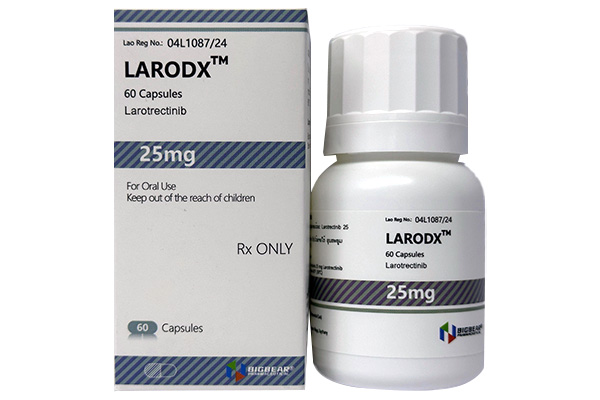
EMA CHMP Positive Review Opinion
Recently, the Committee for Medicinal Products for Human Use (CHMP) of the European Medicines Agency (EMA) issued a positive review opinion recommending the approval of Bayer’s targeted anticancer agent Vitrakvi (larotrectinib) for the treatment of pediatric and adult patients with solid tumors harboring neurotrophic receptor tyrosine kinase (NTRK) gene fusions.
Approved Indication
NTRK gene fusion-positive, locally advanced or metastatic solid tumors, or tumors where surgical resection is likely to result in severe complications, and for which no satisfactory alternative treatment options exist.
Prior U.S. FDA Approval
Previously, Vitrakvi had already been approved by the U.S. FDA for pediatric and adult patients with advanced solid tumors harboring NTRK gene fusions, including those with:
No known acquired resistance mutations
Metastatic disease or tumors where surgical resection would lead to severe complications
No satisfactory alternative treatment options, or disease progression following prior therapy
This European approval solidifies Vitrakvi as the first oral TRK inhibitor and the first tissue-agnostic ("tumor-agnostic") broad-spectrum anticancer drug.
Mechanism of Action
Vitrakvi is a potent, oral, selective inhibitor of tropomyosin receptor kinases (TRKs), directly targeting TRKA, TRKB, and TRKC to shut down the oncogenic signaling pathways driving TRK fusion-positive tumor growth.
It exhibits significant and durable antitumor activity against TRK fusion-positive tumors, including primary central nervous system (CNS) tumors and brain metastases, regardless of patient age or tumor histology.
Clinical Trial Data Supporting CHMP Opinion
The positive opinion is based on pooled data from 102 patients across three clinical studies:
Phase I study in adult patients
Phase II NAVIGATE study in adult and pediatric patients
Phase I/II SCOUT study in pediatric patients
Study Population
93 patients in the primary analysis population
9 additional patients with primary CNS tumors
Key Efficacy Results
Primary Analysis Set (n=93)
Overall Response Rate (ORR): 72% (95% CI: 62–81)
Complete Response (CR): 16%
Partial Response (PR): 55%
Extended Analysis (including primary CNS tumors, n=102)
ORR: 67% (95% CI: 57–76)
CR: 15%
PR: 51%
Response Durability and Survival
Median Duration of Response (DOR): not yet reached (range: 1.6+ to 38.7+ months)
75% of patients had DOR ≥ 12 months
1-year overall survival rate: 90% (95% CI: 83–97)