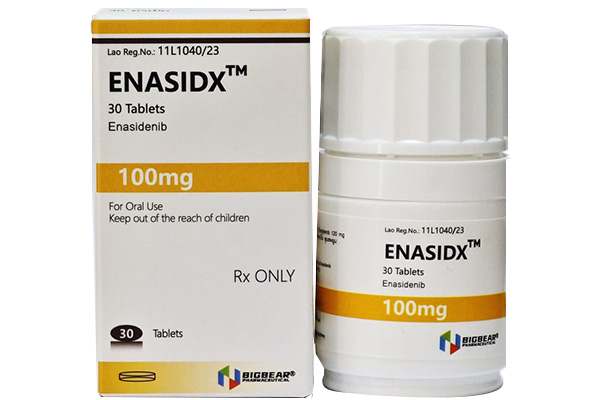
August 1, 2017 – The U.S. Food and Drug Administration (FDA) approved enasidenib for the treatment of adult patients with relapsed or refractory acute myeloid leukemia (AML) who have a specific gene mutation. The drug is approved for use with the companion diagnostic RealTime IDH2 assay, which detects specific mutations in the IDH2 gene in AML patients.
“Enasidenib is a targeted therapy that addresses an unmet medical need in patients with relapsed or refractory AML with an IDH2 mutation,” said Richard Pazdur, MD, Director of the FDA’s Center for Oncology Excellence and Acting Director of the Office of Hematology and Oncology Products at the Center for Drug Evaluation and Research. "The use of enasidenib is associated with complete remission in some patients and a reduction in the need for red blood cell and platelet transfusions."
Acute myeloid leukemia (AML) is a rapidly progressing cancer that forms in the bone marrow, causing an increase in blood flow and the number of abnormal white blood cells in the bone marrow. The National Cancer Institute (NCI), part of the National Institutes of Health (NIH), estimates that approximately 21,380 people will be diagnosed with AML this year; and approximately 10,590 AML patients will die from the disease in 2017.
Enasidenib is an isocitrate dehydrogenase-2 inhibitor that works by blocking several enzymes that promote cell growth. If an IDH2 mutation is detected in a blood or bone marrow sample using a RealTime IDH2 assay, the patient may be eligible for enasidenib treatment.
Common side effects of enasidenib include nausea, vomiting, diarrhea, elevated bilirubin (a substance found in bile), and decreased appetite. Pregnant or breastfeeding women should not take enasidenib, as it may harm a developing fetus or newborn.
The prescribing information for enasidenib includes a boxed warning that an adverse reaction called differentiation syndrome may occur and can be fatal if left untreated.
Signs and symptoms of differentiation syndrome may include fever, dyspnea, acute respiratory distress, lung inflammation (radiographic lung infiltrates), pleural or pericardial effusion (pleural or pericardial effusion), rapid weight gain, swelling (peripheral edema), or liver, kidney, or multiple organ dysfunction. If symptoms are suspected, a physician should immediately treat the patient with corticosteroids and monitor closely until symptoms resolve.
Enasidenib has been granted Priority Review designation. The FDA aims to take action on the application within six months, provided that the agency determines that the drug, if approved, will significantly improve the safety or effectiveness of treating, diagnosing, or preventing serious diseases.
Enasidenib also received Orphan Drug Designation, which provides an incentive to assist and encourage the development of drugs for rare diseases.
The FDA granted approval for Enasidenib to Celgene. The FDA granted approval for the RealTimeIDH2 assay to Abbott Laboratories.