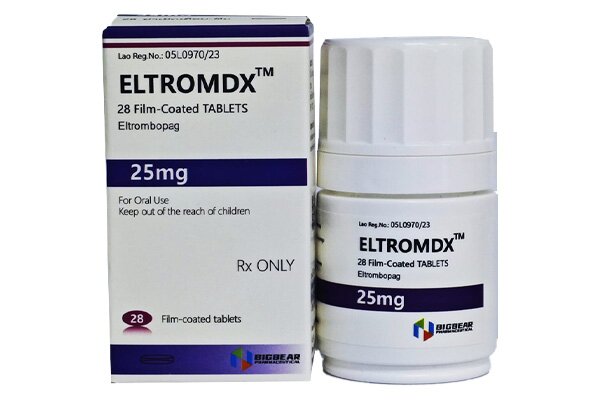
The immunotherapy drug Promacta (eltrombopag) has recently received FDA approval to expand its label. It is now indicated for use in combination with standard immunosuppressive therapy (IST) as a first-line treatment for severe aplastic anemia (SAA) in adults and pediatric patients aged 2 years and older.
Novartis Promacta Becomes the First First-Line Drug for SAA
With this expanded indication, Promacta becomes the first new drug approved in the U.S. for newly diagnosed SAA patients in over a decade. Eltrombopag is an oral thrombopoietin (TPO) receptor agonist that increases platelet levels by inducing the proliferation and differentiation of bone marrow stem cells.
Data analysis from a clinical study sponsored by the National Heart, Lung, and Blood Institute (NHLBI) showed that among treatment-naïve SAA patients, 79% (95% CI: 69-87) achieved a response after 6 months of first-line treatment with Promacta plus standard IST. The complete response (CR) rate was 44%, which is 27% higher than historical CR data for standard IST alone. Additionally, for patients receiving Promacta with horse anti-thymocyte globulin (h-ATG) and cyclosporine (CsA) for 6 months followed by CsA maintenance, the median duration of response reached 24.3 months.
SAA is a potentially life-threatening condition, and many patients fail to respond to current initial treatment protocols. This approval is excellent news for the SAA community, as integrating Promacta into standard IST regimens significantly improves both overall and complete response rates, helping to reduce the number of patients who do not respond to initial therapy.
Beyond severe aplastic anemia, eltrombopag is currently approved for several other indications:
Chronic ITP: Treatment of thrombocytopenia in adults with chronic immune (idiopathic) thrombocytopenic purpura who have had an insufficient response to other medicines.
Refractory SAA: Patients with SAA who are refractory to other treatments.
Chronic Hepatitis C: Treatment of thrombocytopenia in patients with chronic hepatitis C (CHC) to allow for the initiation and maintenance of interferon-based therapy.
Pediatric ITP: Treatment of thrombocytopenia in pediatric patients aged 1 year and older with ITP who have had an insufficient response to corticosteroids, immunoglobulins, or splenectomy.