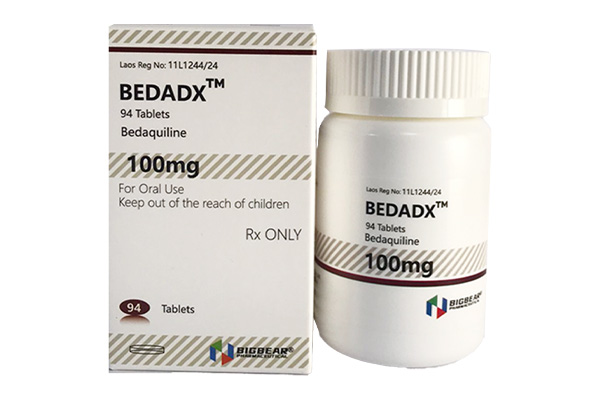
2026 Price of Bedaquiline
The Lao Da Xiong version of bedaquiline is available as 100 mg × 94 tablets per box, at approximately 209 US dollars per box. This has greatly improved drug accessibility. Prices may fluctuate depending on procurement channels, regions, and medical institutions.
Indications of Bedaquiline (Belumosudil)
Core Indication
As part of a combination treatment regimen, bedaquiline is indicated for the treatment of pulmonary tuberculosis (TB) in adults and children (2 years of age and older, weighing at least 8 kg).The causative pathogen must be Mycobacterium tuberculosis that is resistant to at least both rifampicin and isoniazid (i.e., multidrug-resistant tuberculosis, MDR-TB).
Key Treatment Principles
Bedaquiline must be used in combination with at least 3 other drugs to which the patient’s MDR-TB isolate is susceptible in vitro. If in vitro susceptibility data are unavailable, it may be combined with at least 4 drugs likely to be active against the isolate.
Administration under directly observed therapy (DOT) by healthcare professionals is recommended to ensure treatment adherence and prevent the emergence of drug resistance.
Contraindications and Important Warnings for Bedaquiline
While there are no absolute contraindications explicitly stated in the prescribing information, bedaquiline carries several life-threatening risks that require close monitoring.
QTc Interval Prolongation
Bedaquiline can prolong the cardiac QTc interval, potentially leading to fatal arrhythmias.
Monitoring Requirements: ECG and electrolytes (potassium, calcium, magnesium) must be monitored before treatment initiation, at Week 2 of treatment, and regularly thereafter.
Discontinuation Criteria: Discontinue bedaquiline immediately if clinically significant ventricular arrhythmia occurs or if the QTc interval exceeds 500 ms.
Drug Interaction: Avoid concomitant use with other QTc-prolonging drugs (e.g., certain fluoroquinolones, clarithromycin).
Mortality Imbalance
Clinical trials observed a higher mortality rate in the bedaquiline treatment group compared to the placebo group, with the underlying cause unknown.
Physicians must rigorously assess the benefit-risk balance, especially for critically ill patients.
Hepatotoxicity
Bedaquiline may cause elevated liver enzymes, liver injury, or even liver failure.
Monitoring Requirements: Liver function must be monitored before treatment and monthly during therapy.
Discontinuation Criteria: Discontinue treatment if:
Transaminase elevation is accompanied by bilirubin elevation > 2× upper limit of normal (ULN),
Transaminase elevation > 8× ULN,
Transaminase elevation > 5× ULN persists for more than 2 weeks.
Special Populations
Lactating Women
Avoid breastfeeding during treatment and for 27.5 months after the last dose, as bedaquiline is extensively excreted into human milk.
Severe Hepatic or Renal Impairment
Use with caution in patients with severe hepatic or renal impairment. Use only when benefits outweigh risks, with intensified monitoring.
Drug Interactions
Concomitant use with strong or moderate CYP3A4 inducers (e.g., rifampicin, rifapentine, efavirenz) is contraindicated, as these drugs significantly reduce bedaquiline plasma concentrations and may lead to treatment failure.