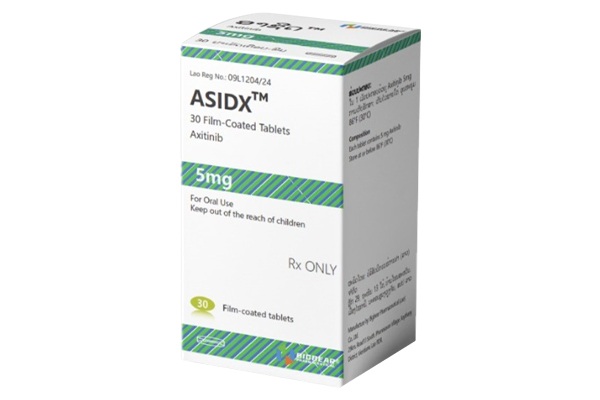
Friday, August 8, 2025 — A study published online in Nature Medicine on August 6 demonstrated that the treatment regimen of pembrolizumab combined with axitinib delivers durable clinical benefits for patients with advanced renal cell carcinoma (RCC).
Brian I. Rini, MD, from the Vanderbilt-Ingram Cancer Center in Nashville, Tennessee, and his colleagues conducted an efficacy analysis and a prespecified exploratory biomarker analysis of the phase 3 KEYNOTE-426 clinical trial. The trial evaluated the first-line treatment of pembrolizumab plus axitinib with a follow-up of at least five years, aiming to investigate the long-term durability of clinical outcomes in patients with RCC.
Study results showed that compared with sunitinib, pembrolizumab combined with axitinib provided durable benefits in overall survival (OS) and progression-free survival (PFS) (with hazard ratios [HRs] of 0.84 and 0.69, respectively); additionally, the objective response rate (ORR) was significantly higher in the combination therapy group (60.6% vs. 39.6%).
Biomarker Study Findings
1.T-cell inflammatory gene signature: In the pembrolizumab plus axitinib group, the 18-gene T-cell inflammatory expression profile was positively correlated with OS, PFS and ORR.
2.Angiogenesis Signature: This signature was positively correlated with OS in the combination therapy group, and also showed positive correlations with OS, PFS and ORR in the sunitinib group.
3.Gene mutations: In the combination therapy group, PBRM1 mutation was positively correlated with ORR.
"In the first-line treatment of advanced renal cell carcinoma, there remains an unmet need for biomarkers that can predict patient prognosis," stated Dr. Rini. "While our analysis revealed that certain RNA signatures hold potential clinical value in identifying patients who stand to benefit the most from specific therapies, further prospective clinical studies are warranted."