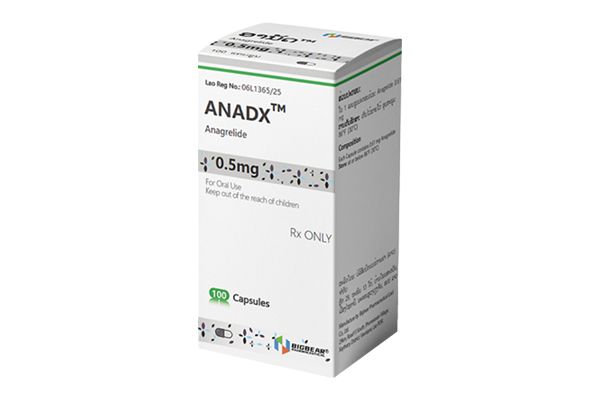
The U.S. FDA has approved Agrylin (anagrelide) for the treatment of thrombocytosis associated with essential thrombocythemia and polycythemia vera. It may also be used for thrombocytosis accompanied by other myeloproliferative diseases, such as myelofibrosis and myelodysplastic syndrome.
Clinical Efficacy of Agrylin
Agrylin demonstrates remarkable efficacy in the treatment of thrombocytosis. It can reduce platelet counts by 50% within one week in 84% of patients, with resolution of symptoms related to thrombocytosis. The overall response rate exceeds 80%, a profile unmatched by other agents in its class.
As a selective platelet‑reducing agent, Agrylin acts specifically on the megakaryocytic lineage, primarily reducing platelet production by inhibiting megakaryocyte maturation (reducing megakaryocyte size and ploidy). It also inhibits cyclic adenosine monophosphate phosphodiesterase activity, thereby suppressing platelet aggregation and reducing thrombotic events.
Thrombosis and hemorrhage are major causes of morbidity and mortality in patients with myeloproliferative disorders, which are often associated with platelet activation and hypercoagulability. Clinical studies show that Agrylin produces significant therapeutic effects across all types of myeloproliferative diseases, with an overall response rate of up to 93%. It also helps normalize platelet coagulation function, an effect not observed with hydroxyurea therapy.
Contraindications and Precautions
Agrylin is contraindicated in patients with hypersensitivity to the active ingredient or any component of the formulation. It is also contraindicated in pregnant women or women planning to become pregnant. Caution should be exercised in patients with severe cardiovascular, hepatic, or renal diseases.
Adverse Reactions
Potential adverse reactions of Agrylin include the following:
1.Cardiovascular system: fatigue, palpitations, edema; individual cases may develop cardiac arrhythmias.
2.Gastrointestinal system: abdominal pain, nausea, abdominal distension (incidence approximately 10%), and elevated liver transaminases.
3.Respiratory system: dyspnea, pulmonary fibrosis, and pulmonary infiltration.
4.Nervous system: headache (incidence up to 50% in Asian populations), dizziness, weakness, blurred vision or severe visual impairment.